
Car Door Seal Adhesive: 5 Options Compared

For a dedicated car door weatherstrip repair, 3M Super Weatherstrip Adhesive 08008 is the strongest match because it is made to bond weatherstripping and comes in a 5-fluid-ounce tube. Choose 3M Super Weatherstrip Adhesive 03602 for a smaller 1-fluid-ounce tube; the silicone sealants are broader-purpose alternatives if their material and application match your repair.
Weatherstripping is the flexible seal around a door opening that helps close gaps. Adhesive choice depends on the seal material and the surfaces it must bond to.
We earn a commission if you buy through links on this page. As an Amazon Associate I earn from qualifying purchases. Products are compared on manufacturer specifications, not hands-on testing.
- Best overall: 3M Super Weatherstrip Adhesive 08008 – Made to bond weatherstripping and provides 5 fluid ounces.
- Best for small repairs: 3M Super Weatherstrip Adhesive 03602 – A 1-fluid-ounce weatherstrip and gasket adhesive tube.
- Best for silicone versatility: Permatex 81158 Black RTV Silicone, 3 oz – Black RTV silicone is listed for weather stripping and multiple other materials.
| Product | Best for | Adhesive type | Color | Tube size | Shop |
|---|---|---|---|---|---|
| 3M Super Weatherstrip Adhesive 08008 | Dedicated weatherstrip repairs | Weatherstrip and gasket adhesive | Black | 5 fl oz | Check Price on Amazon |
| 3M Super Weatherstrip Adhesive 03602 | Small seal repairs | Weatherstrip and gasket adhesive | Black | 1 fl oz | Check Price on Amazon |
| LIKFCBOND Automotive Adhesive, 50 ml | Precise application | Automotive silicone adhesive | Black | 50 ml | Check Price on Amazon |
| Permatex 81158 Black RTV Silicone, 3 oz | Multi-material repairs | General-purpose RTV silicone | Black | 3 oz | Check Price on Amazon |
| Permatex 80050 Clear RTV Silicone, 3 oz | Clear silicone repairs | General-purpose RTV silicone | Clear | 3 oz | Check Price on Amazon |
Car Door Seal Adhesives
Compare the adhesive formulations and tube sizes against the seal and surfaces you need to join.
3M Super Weatherstrip Adhesive 08008

This weatherstrip-specific formula is the clearest choice when the job is reattaching a car door seal. The 5-fluid-ounce tube is larger than the 1-fluid-ounce option, and the adhesive is made to bond weatherstripping, headliners, and gaskets. The maker says the flexible, waterproof bond resists vibration, oils, solvents, detergents, and temperature changes. It can be brushed and spread from the tube and bonds vinyl, metal, fabrics, and rubber. Its black color may show against a light-colored seal, so consider appearance when the adhesive line will remain visible.
Bottom line: Choose it for a dedicated weatherstrip adhesive in a larger tube.
3M Super Weatherstrip Adhesive 03602

The 1-fluid-ounce size makes this a compact option for a limited door-seal repair rather than a larger project. It is a black weatherstrip and gasket adhesive intended to bond rubber to metal and form a flexible, waterproof seal. The maker says it resists heat, cold, vibration, oils, solvents, and detergents, and that it becomes tacky in minutes. That quick grab may help hold a seal as the bond develops, but the small tube is a practical limitation if you need to reattach seals on several doors. Confirm the seal and bonding surface are compatible before applying.
Bottom line: Pick it when you need a smaller tube for a limited rubber-to-metal repair.
LIKFCBOND Automotive Adhesive, 50 ml
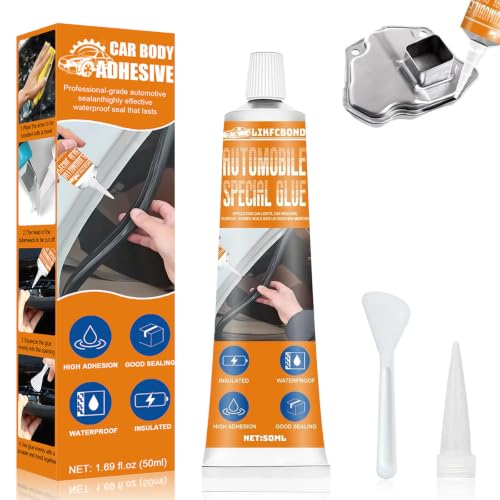
A pointed nozzle sets this 50-milliliter black automotive adhesive apart for controlled application around a door seal. The maker says it bonds metal, plastic, vinyl, and weather stripping, and describes the cured bond as weatherproof, waterproof, and temperature-resistant. Its gap-filling claim may matter where the repair involves an uneven joint, but a seal that is detached over a wide area may require more material than this tube provides. The field also mentions use on interior and exterior automotive parts, so match the intended repair surface to the materials before choosing it.
Bottom line: Choose it for a small repair where nozzle control is useful.
Permatex 81158 Black RTV Silicone, 3 oz

This 3-ounce black RTV silicone covers more than weatherstripping, with uses that include glass, metal, plastics, fabric, vinyl, and vinyl tops. The maker says the flexible, waterproof sealant resists water, weather, and vibration, and gives a temperature range of -75°F to 450°F. It is sensor-safe and suitable for indoor or outdoor use according to the maker. Unlike a formula focused specifically on weatherstrip and gasket bonding, this is a general-purpose sealant; buyers seeking a dedicated trim adhesive may prefer that narrower formulation. The maker notes that clamping may be needed until the silicone is firm.
Bottom line: Pick it when a black RTV sealant suits the materials and broader repair.
Permatex 80050 Clear RTV Silicone, 3 oz

Clear color distinguishes this 3-ounce RTV silicone from the black adhesives, which may matter when a bead remains visible on a light seal or trim. The maker lists weatherstripping among its uses, alongside glass, metal, plastics, fabric, vinyl, and vinyl tops. It is described as flexible and waterproof, with a temperature range of -75°F to 400°F, and as sensor-safe for indoor or outdoor applications. This is a general-purpose sealant rather than a weatherstrip-specific adhesive, so it may not be the right formulation for every reattachment job. Match the adhesive to both surfaces before use.
Bottom line: Choose it when clear silicone is preferable and the materials fit.
How to choose car door seal adhesive
Choose by the seal material and the surface it must bond to, not by color or tube size alone. Rubber-to-metal repairs call for an adhesive whose uses include both materials; silicone sealants may suit broader materials but are not automatically interchangeable with weatherstrip-specific formulas. A useful decision rule is to favor a weatherstrip-and-gasket adhesive when the repair is a detached rubber seal on metal, and consider general-purpose RTV when the repair involves materials such as glass, plastic, fabric, or vinyl. Black adhesive can be conspicuous on a pale seal, while clear silicone may blend better there. Clean, dry bonding surfaces matter: remove loose residue without damaging the seal or paint, then apply only where the bond needs to form.
Preparing a door seal for bonding
Preparation helps prevent a new bond from failing against dirt, oil, or old adhesive. Automotive door seals flex each time the door opens, so a narrow, continuous bond on clean contact surfaces is more useful than smearing adhesive across the visible face. Remove loose old adhesive carefully; avoid stretching or cutting the rubber while working around corners. Test the seal’s position before applying adhesive so it sits naturally and does not pull away when the door closes. Keep the adhesive off painted or visible trim unless its instructions allow that use. Work with ventilation, avoid eye and skin contact, and follow the product’s label for handling and cure precautions.
Weatherstrip adhesive and RTV silicone compared
Weatherstrip adhesives are formulated for attaching automotive seals and gaskets, while RTV silicone is a general-purpose sealant that can also be listed for weatherstripping. The distinction matters most when the seal must withstand repeated flexing at a door edge. Compare the intended material pairing and color, then choose the smallest tube that covers the repair without interrupting the bead. The table summarizes the options by type and material role; it does not establish that different formulations can replace one another.
| Repair need | Adhesive type to consider | Check before choosing |
|---|---|---|
| Rubber seal on metal | Weatherstrip and gasket adhesive | Both materials appear among intended uses |
| Mixed materials or sealing | General-purpose RTV silicone | Seal material and bond purpose match |
| Visible repair on a light surface | Clear silicone option | Adhesive color and final bead visibility |
Applying adhesive without common mistakes
Apply adhesive only after dry-fitting the seal and identifying the actual bonding surfaces. A common mistake is using more product than needed; excess can squeeze onto paint, trim, or the exposed rubber when the door closes. Another is closing or moving the door before the bond has had the time specified on the product label. Some silicone products may need clamping until firm, while the 3M 03602 specifications say no clamping is needed; do not assume one product’s handling applies to another. Keep uncured adhesive away from occupants and allow ventilation. If a seal is torn, hardened, or misshapen, adhesive alone may not restore its fit.
Frequently Asked Questions
Can silicone sealant attach a car door weatherstrip?
Some general-purpose RTV silicone sealants list weatherstripping among their uses, but that does not make every silicone suitable for every seal. Check that the seal and mating surface are among the materials the adhesive is intended to bond.
How long should car door seal adhesive cure?
Cure and handling time depend on the formulation, bead size, temperature, and humidity. Use the product label’s cure guidance, and do not move or load the seal before the bond is ready.
Should I use black or clear adhesive on a door seal?
Choose based on the visible color of the seal and surrounding trim. Black can be more noticeable on pale materials, while clear silicone may be less conspicuous, though a clear bead can still show.
Do I need to remove old adhesive first?
Remove loose old adhesive and contamination from the bonding area before attaching the seal. Avoid scraping so aggressively that you damage the rubber or painted surface.
Can I close the car door while adhesive cures?
Do not close or operate the door until the adhesive’s label says the seal can be moved or loaded. A door can press the seal out of position or transfer uncured adhesive to trim.