
DuroMax 15000-Watt Generators Compared by Output

DuroMax XP15000HXT+ is the closest fit for a DuroMax 15,000-watt generator, with 15,000 starting watts, 12,000 running watts and gasoline, propane or natural gas operation. Choose a different model if you need inverter output, a lower-capacity unit or a much higher output.
A portable generator supplies backup power through its outlets or a properly installed transfer setup; match continuous running watts to the loads you need to operate at the same time.
We earn a commission if you buy through links on this page. As an Amazon Associate I earn from qualifying purchases. Products are compared on manufacturer specifications, not hands-on testing.
- Best overall: DuroMax XP15000HXT+ – Its 15,000 starting watts and 12,000 running watts align most closely with the requested capacity.
- Best for dual-fuel backup: DuroMax XP13000EH – It offers gas or propane operation and a 50-amp transfer-switch-ready outlet.
- Best for inverter output: DuroMax XP11000iH – It pairs inverter technology with 9,000 running watts and remote start.
| Product | Best for | Output | Fuel | Weight | Shop |
|---|---|---|---|---|---|
| DuroMax XP15000HXT+ | High-output backup | 15,000 starting / 12,000 running W | Gasoline, propane, natural gas | 245 lb | Check Price on Amazon |
| DuroMax XP13000EH | Dual-fuel backup | 13,000 W | Gasoline, propane | 234 lb | Check Price on Amazon |
| DuroMax XP11000iH | Clean power needs | 11,000 peak / 9,000 running W | Gasoline, propane | 216 lb | Check Price on Amazon |
| DuroMax XP28000iHT | Very high output | 28,000 W | Gasoline, propane, natural gas | 466 lb | Check Price on Amazon |
DuroMax 15,000-Watt Generators Compared
Compare the closest capacity match with related DuroMax models that trade output for fuel flexibility or inverter features.
DuroMax XP15000HXT+

DuroMax XP15000HXT+ is the capacity match here, with 15,000 starting watts and 12,000 running watts. DuroMax says its tri-fuel EFI setup runs on gasoline, propane or natural gas; the included AGM gel battery and outlets include GFCI 120V household, 30-amp and 50-amp receptacles. At 245 pounds, it is a substantial portable unit, so plan how it will be moved and positioned before an outage. Its running output—not the starting figure—is the key limit for simultaneous loads, and its size may be more than a small essential-load setup needs.
Bottom line: Choose this for the closest match to 15,000 watts and three fuel options.
DuroMax XP13000EH

DuroMax XP13000EH is a lower-capacity alternative with gas-or-propane operation and electric push-button start. DuroMax says the unit has a 50-amp transfer-switch-ready outlet, a front-facing fuel selector and an all-metal frame and power panel. Its 234-pound weight is close to the exact-match model, but its 13,000-watt output is below 15,000 watts. The product features do not give separate starting and running figures, so buyers sizing a set of simultaneous household loads should confirm the continuous output before choosing it.
Bottom line: Choose this if dual-fuel operation matters more than matching 15,000 watts.
DuroMax XP11000iH

DuroMax XP11000iH stands apart by combining inverter technology with remote start and CO Alert, at 9,000 running watts and 11,000 peak watts. DuroMax says its inverter output is clean and stable for sensitive electronics, and the generator uses gasoline or propane. This makes it a better fit when power quality and a smaller load plan matter more than reaching 15,000 watts. The lower running output limits how many high-draw appliances can operate together, so add the running-watt requirements before relying on it for whole-home backup.
Bottom line: Choose this when inverter output and remote start outweigh higher capacity.
DuroMax XP28000iHT
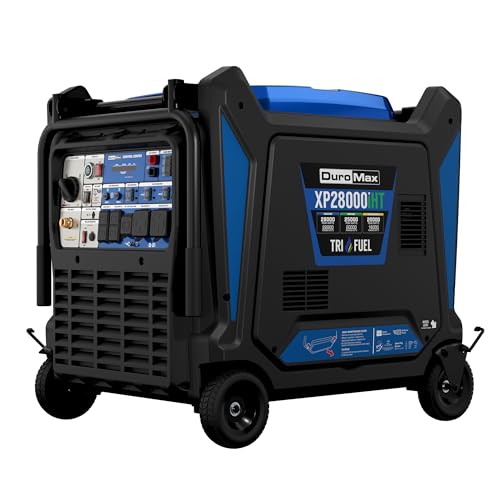
DuroMax XP28000iHT is a substantially larger-capacity option, rated at 28,000 watts and built as a tri-fuel inverter generator. DuroMax says it produces quiet, clean sine-wave power; the features also include two 50-amp outlets and a 3/4-inch natural-gas hose with quick-connect fittings. Its 466-pound weight and 42-inch length make placement and movement a much bigger planning factor than for the smaller units. This model is not a close match to a 15,000-watt need; consider it only if the higher output and natural-gas connection suit the planned installation.
Bottom line: Choose this only if your load plan calls for substantially more than 15,000 watts.
How to size a generator for household loads
Size a generator by running watts first, then account for startup surges from motors. Refrigerators, sump pumps and air conditioners can draw more power briefly when starting than while running, so add the running watts of loads that will operate together and compare that total with generator running capacity. A simple rule: if the planned continuous load exceeds 12,000 watts, DuroMax XP15000HXT+ may not cover it continuously even though its starting rating is 15,000 watts. Avoid assuming every circuit in a home can run at once; prioritize essentials and stagger motor starts. A licensed electrician can size a transfer switch and identify which circuits it can safely supply.
Fuel options and generator runtime planning
Fuel flexibility changes how a backup generator fits an outage plan. Gasoline is widely used but needs safe, approved storage; propane can be stored in a suitable cylinder, while natural gas relies on a compatible connection and an available utility supply. Fuel availability and the generator’s output can change by fuel, so check the fuel-specific ratings before sizing loads. Keep gasoline in an approved container away from living areas and ignition sources, and never refuel a hot generator. The tri-fuel options on DuroMax XP15000HXT+ and DuroMax XP28000iHT offer more fuel choices than the gas-and-propane alternatives, but access to each fuel source still determines what is practical during an extended outage.
Portable generator placement and transfer connections
Run a portable generator outdoors at least 20 feet from the home, with exhaust directed away from doors, windows and vents; carbon monoxide can enter a building and become fatal. Never use a generator in a garage, even with the door open. A transfer switch or approved interlock lets a generator supply selected household circuits while separating them from utility power; do not connect a generator to a wall outlet, which can backfeed power onto lines. Have an electrician verify the generator-to-home connection and the correct receptacle and cable ratings. CO shutdown features are an added safeguard, not a substitute for safe placement.
Choosing between inverter and conventional generators
Inverter generators convert engine output into regulated electricity, which can be useful for sensitive electronics; conventional portable generators focus on supplying power through their rated outlets. The products here identify inverter technology on DuroMax XP11000iH and DuroMax XP28000iHT, while DuroMax XP15000HXT+ and DuroMax XP13000EH emphasize high output and home-backup receptacles. Compare usable running watts as well as power type: a cleaner output does not make a lower-capacity unit suitable for a larger load. For electronics, use properly grounded cords and avoid overloading outlets. For home backup, choose a model only after confirming its running-watt capacity and the electrical connection plan meet the loads you intend to serve.
Frequently Asked Questions
How many watts does a refrigerator need from a generator?
Many household refrigerators use roughly 100 to 800 running watts, with a higher brief startup surge. Check the appliance label or manual and include other simultaneous loads in the total.
Can a portable generator power central air conditioning?
Some can, but the deciding factors are the air conditioner’s running watts and compressor startup surge. Check its nameplate and have an electrician assess starting requirements before connecting it.
How far should a generator be from a house?
Place a portable generator at least 20 feet from the home, with exhaust directed away from openings. Never operate one in a garage or enclosed space because carbon monoxide can build up.
Can I connect a generator to a household outlet?
No. Plugging a generator into a wall outlet can backfeed utility lines and endanger workers or neighbors. Use a correctly installed transfer switch or approved interlock installed by a qualified electrician.
Do inverter generators work with sensitive electronics?
Inverter generators are designed to provide regulated output suitable for sensitive electronics, though the specific output quality depends on the model. Use grounded connections and keep the total load within the generator’s running-watt rating.