
Cheese Cloths for Straining: 5 Sizes Compared

For most kitchen straining, Grade 100 Hemmed 20-Inch Cloths is a practical choice because it pairs eight hemmed 20-inch squares with a Grade 100 weave. Choose a different option if you need a larger single cloth, a smaller precut piece, or a specific pack size.
Cheesecloth is a porous cotton fabric used to separate solids from liquids; folding it adds filtration but slows drainage.
We earn a commission if you buy through links on this page. As an Amazon Associate I earn from qualifying purchases. Products are compared on manufacturer specifications, not hands-on testing.
- Best overall: Grade 100 Hemmed 20-Inch Cloths – Eight hemmed 20-inch squares provide multiple ready-to-use pieces.
- Best for large batches: Organic GOTS-Certified 36-Inch Cloth – Its 36-inch square offers more coverage and can be cut to size.
- Best for small batches: Four Precut 15-Inch Cloths – Four precut 15-inch squares suit smaller bowls and straining tasks.
| Product | Best for | Cut size | Pieces | Weave | Shop |
|---|---|---|---|---|---|
| Grade 100 Hemmed 20-Inch Cloths | Everyday straining | 20 × 20 in | 8 | 40 × 50 threads/in | Check Price on Amazon |
| 12-Pack Unbleached 20-Inch Cloths | More cloths | 20 × 20 in | 12 | Grade 100 | Check Price on Amazon |
| Six Unbleached 20-Inch Cloths | Six-piece set | 20 × 20 in | 6 | Grade 100 | Check Price on Amazon |
| Organic GOTS-Certified 36-Inch Cloth | Large coverage | 36 × 36 in | — | 56 × 41 threads/in | Check Price on Amazon |
| Four Precut 15-Inch Cloths | Small batches | 15 × 15 in | 4 | Grade 100 | Check Price on Amazon |
Cheese Cloths for Straining Compared
Compare the cut size, quantity and weave to match the cloth to your bowl, sieve or batch size.
Grade 100 Hemmed 20-Inch Cloths

Eight hemmed squares make this a convenient choice when you want multiple ready-to-use cloths rather than one large piece to cut. Each square measures 20 × 20 inches, and the cotton is unbleached. The maker identifies the weave as Grade 100 and gives a thread count of 40 × 50 per inch. This set suits routine straining in a kitchen where separate cloths are useful for different foods or batches. The limitation is its fixed square size: a large stockpot or wide vessel may need a larger piece or a different setup.
Bottom line: Choose this set for several ready-cut cloths sized for ordinary kitchen tasks.
12-Pack Unbleached 20-Inch Cloths

This pack contains the most pieces among the precut 20-inch options, making it suited to cooks who want a larger supply of separate cloths. The unbleached cotton squares have hems on all four edges, and the maker identifies them as Grade 100. Each piece is 20 × 20 inches, so the coverage is comparable to other 20-inch squares rather than a substitute for a large continuous cloth. Choose another option if you need a thread count or a single oversize sheet; those distinctions matter when matching filtration to a particular recipe.
Bottom line: Pick this pack when having twelve separate 20-inch squares matters most.
Six Unbleached 20-Inch Cloths

This six-piece option combines 20-inch precut squares with unbleached cotton and a Grade 100 designation. It is a straightforward fit for home straining when a smaller set is preferable to a larger pack. Unlike the 36-inch cloth, these pieces are already cut to a set size; that can be limiting when a wide bowl needs more fabric coverage.
Bottom line: Choose the six-piece set when you want a moderate quantity of 20-inch squares.
Organic GOTS-Certified 36-Inch Cloth
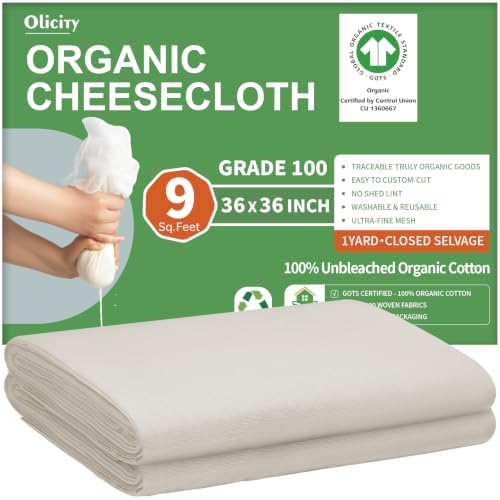
The 36-inch square is the largest single cloth here, and its closed edges are intended to reduce loose lint during food use. The product identifies its cotton as organic and GOTS certified, with a 56 × 41 thread count per inch and a Grade 100 weave. The maker says this tighter weave can allow one layer instead of three for straining; actual layering needs depend on the food and desired flow. This cloth suits large vessels or users who want to cut fabric to a custom size. Its limitation is that it is not sold as a multi-piece pack.
Bottom line: Pick the large square for broad coverage or a cut-to-size cloth.
Four Precut 15-Inch Cloths

These four 15-inch squares are the smallest precut option in this group, a useful difference for smaller bowls, jars or limited batches. The product identifies the fabric as unbleached cotton with a Grade 100 weave and reinforced stitching at the edges. Its purpose is fine straining and cooking tasks such as cheese making. The shorter sides mean less fabric to drape over a wide vessel, so measure the opening before choosing it for a broad bowl. For larger batches, a 20-inch or 36-inch option gives more coverage.
Bottom line: Choose these smaller squares for compact vessels and modest batches.
How to Choose Cheese Cloths for Straining
Match cloth area to the vessel first: a 15-inch square fits smaller setups, while 20-inch squares cover more of a bowl or sieve. A 36-inch square offers the most coverage here and can be cut, but a larger cloth is harder to handle and store. Cheesecloth is porous; folding two or more layers catches finer particles but slows liquid flow. For a coarse first pass, use one layer, then add a layer if the result needs more filtering. Grade labels and thread counts can help compare products, but grade terminology is not a universal performance guarantee, so consider the fabric dimensions and intended task too.
Choosing Cloth Size for Bowls and Sieves
Leave enough fabric beyond the rim to hold the cloth securely: a square should extend several inches past the opening on every side before you add food. For a 10-inch-wide sieve, a 20-inch square provides about 5 inches of overhang per side when centered, while a 15-inch square provides about 2.5 inches. Those are geometric estimates, not a guarantee of fit around a deep or unusually shaped vessel. Use a larger cloth when you need to gather the corners into a bundle or strain a large batch. A cloth that barely reaches the rim can slip into the food or make it difficult to lift the solids.
Cheesecloth Weave and Layer Choices
Use one layer for faster flow and add layers when the liquid needs finer filtration; each fold makes the cloth more restrictive. Product grade labels are useful for comparing items within a seller’s range, but the number alone does not define a single industry-wide weave measurement. Thread count, where supplied, gives another way to describe the fabric: a 56 × 41 threads per inch is a specific weave figure, while a Grade 100 label without that count is less precise for direct comparison. A sieve or strainer beneath the cloth supports its weight and helps maintain an even surface while liquid drains.
Cleaning and Food-Safe Use
Rinse a food-contact cloth promptly after use so dairy residue, pulp or seeds do not dry into the weave. Wash it thoroughly with detergent, rinse until no soap remains, and dry it completely before storage; trapped moisture can lead to musty odors. Keep cloths used for food separate from those used for crafts or cleaning. Cotton cloth can shrink or wear with repeated washing, so avoid pulling hard on a wet piece, especially when it is holding a heavy bundle. Do not use a cloth with frayed threads in food, and replace it if it develops holes that interfere with straining.
| Need | Useful choice | Reason |
|---|---|---|
| Smaller vessel or batch | 15-inch square | Less excess fabric to manage |
| Routine kitchen straining | 20-inch square | Ready-cut general-purpose size |
| Wide coverage or custom sizing | 36-inch square | Largest single piece in this group |
Frequently Asked Questions
Should cheesecloth be wet before straining?
Rinsing and wringing out a clean cloth before use can help it sit against a sieve instead of shifting. Wet cloth also tends to cling to the support, but wring it well so excess water does not dilute the food.
How many layers of cheesecloth should I use?
Start with one layer for faster drainage and add a layer when the liquid still contains particles you want to catch. Two or more layers slow flow, so allow extra draining time for thicker mixtures.
Can cheesecloth be reused after straining?
Yes, reusable cotton cloth can be washed after food use if it remains intact and clean. Rinse residue promptly, wash thoroughly, and dry fully before storing to reduce lingering odors and moisture.
What size cheesecloth fits a 10-inch sieve?
A 20-inch square gives approximately 5 inches of overhang on each side when centered over a 10-inch opening. A 15-inch square gives about 2.5 inches, so a deep sieve or gathered bundle may call for more fabric.
Does a higher cheesecloth grade mean finer straining?
A grade can indicate a tighter weave within a product range, but grade labels are not a universal measure of filtration across every maker. Compare any thread count and choose layers based on the food and desired flow.