
Chevy Traverse Cross Bars: 4 Models Compared by Fit

For a Traverse with raised side rails, KINGGERI 300 lb Cross Bars is the closest match because it specifies a 300-pound capacity and fit for 2022–2027 models. Choose a different option if you need a higher stated load rating or your Traverse has a different rail setup.
Cross bars span the roof rails to support compatible rooftop carriers; the vehicle’s roof, rails, and accessory limits still govern the safe load.
We earn a commission if you buy through links on this page. As an Amazon Associate I earn from qualifying purchases. Products are compared on manufacturer specifications, not hands-on testing.
- Best overall: KINGGERI 300 lb Cross Bars – Specifies 2022–2027 Traverse fit with raised side rails and a 300-pound maximum load.
- Best for higher stated capacity: KINGGERI 330 lb Cross Bars – Claims a 330-pound maximum load and fit for 2022–2027 models with raised side rails.
- Best for lockable crossbars: HmmtyRack 330 lb Cross Bars – Combines a 330-pound maximum load with metal locks and 2022–2027 fit.
| Product | Best for | Fits | Maximum load | Bar length | Shop |
|---|---|---|---|---|---|
| KINGGERI 300 lb Cross Bars | Raised-rail fit | Traverse 2022–2027, raised rails | 300 lb | 37 in | Check Price on Amazon |
| HmmtyRack 330 lb Cross Bars | Higher load claim | Traverse 2022–2027 | 330 lb | 43.9 in | Check Price on Amazon |
| KINGGERI 330 lb Cross Bars | Raised-rail capacity | Traverse 2022–2027, raised rails | 330 lb | — | Check Price on Amazon |
| FengYu 300 lb Cross Bars | Tie-down points | Traverse 2022–2027, raised rails | 300 lb | 39 in | Check Price on Amazon |
Chevy Traverse Cross Bars Compared
Compare the vehicle fit and capacities, and confirm your roof-rail configuration before choosing.
KINGGERI 300 lb Cross Bars

Among these cross bars, this set explicitly pairs 2022–2027 Traverse fit with raised side rails and a 300-pound maximum load. KINGGERI says the bars use aluminum, metal mechanism locks, and plastic brackets; four bracket tie-down loops provide points for securing compatible cargo. The bar length is 37 inches. This option suits owners who prioritize the raised-rail fit over a higher capacity claim. Its 300-pound rating is not a guarantee that the vehicle roof or a carrier can carry that much, so use the lowest applicable limit.
Bottom line: Choose this if your Traverse has raised side rails and 300 pounds meets the applicable load limit.
HmmtyRack 330 lb Cross Bars

At 330 pounds, this set has the highest maximum load among the options that specify a capacity, and it gives a 43.9-inch bar length. HmmtyRack says the aluminum bars have a rust-resistant matte finish, metal locks, plastic brackets, and non-slip rubber pads intended to help prevent scratches. Its fit statement covers Chevrolet Traverse models from 2022 through 2027 but does not identify a rail configuration, so confirm the mount style on your vehicle before ordering. The rating applies to the cross bars, not automatically to the roof or cargo system as a whole.
Bottom line: Pick this if the 330-pound stated bar capacity matters and its mounting setup matches your Traverse.
KINGGERI 330 lb Cross Bars

This KINGGERI set combines a raised-side-rail fit statement for 2022–2027 Traverse models with a 330-pound maximum load. It differs from the 300-pound KINGGERI set by its higher stated capacity and die-cast aluminum brackets; the product features also mention a heavy-duty 2 mm aluminum bar. The dimensions do not clearly identify a bar length, so this comparison leaves that measurement blank. Choose it when the raised-rail fit and higher bar rating suit your setup, while checking the vehicle and accessory limits before carrying cargo.
Bottom line: Choose this for the raised-rail fit and 330-pound bar rating, subject to lower system limits.
FengYu 300 lb Cross Bars
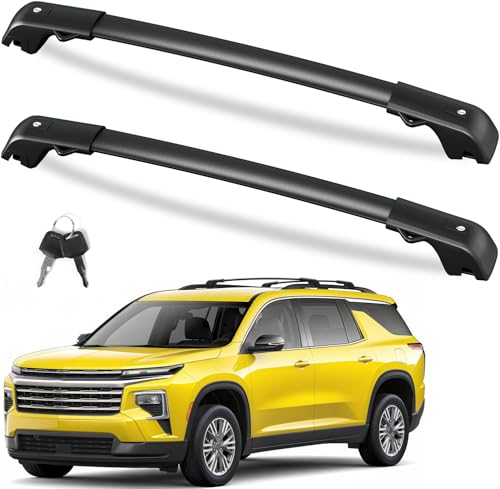
FengYu specifies raised-side-rail compatibility for 2022–2027 Traverse models and a 300-pound maximum load, with 39-inch bars. Its features distinguish it with a 2 mm aluminum bar, matte powder-coated finish, metal mechanism locks, and tie-down loops at the base feet. The product also claims a streamlined profile intended to reduce wind noise, but that is a maker claim rather than a measured comparison. This set fits buyers who value its loop placement and finish; it does not offer a higher stated capacity than the other 300-pound option.
Bottom line: Select this if raised-rail fit and base-foot tie-down loops match your cargo setup.
How to choose Chevy Traverse cross bars
Start with rail configuration, then compare the crossbar rating with the limits of the whole roof system. A crossbar rating is not permission to load the roof to that amount: the vehicle’s roof limit and the carrier’s limit may be lower. Use the lowest applicable rating, counting the carrier and cargo together. Next, match the bar span to your rail spacing and the accessory’s clamp range; an accessory that cannot grip the bar securely is the wrong fit even if the vehicle-year range matches. For a 2027 Traverse, favor a set whose fit includes 2027, rather than assuming a 2022–2026 fit carries over. Check the fit statement against the actual rail style before ordering.
Raised side rails and roof-mounted accessories
Raised rails sit above the roof with space beneath them, while flush or integrated rails sit close to the roof; the mounting hardware must match the rail type. A crossbar set that specifies raised rails is not automatically compatible with flush rails. Roof cargo carriers also have their own bar-spacing and bar-width limits, so verify those measurements in the accessory manual before mounting a box, kayak cradle, or bike carrier. For long loads, use compatible front and rear support points and secure the load against forward, rearward, and sideways movement. Keep cargo from extending beyond the vehicle in a way that blocks visibility or lights, and recheck attachments after the first short drive.
Crossbar capacity and safe loading
Use the lowest limit across the vehicle roof, crossbars, and mounted carrier; exceeding any one limit can overload that part. Dynamic roof-load limits apply while driving, and a parked vehicle may have a different static limit, so do not substitute one for the other. Include the weight of the rack and carrier when calculating the load if the vehicle’s roof limit counts the entire assembly. Keep heavy cargo low and centered between the bars to reduce shifting and wind leverage. Tighten fasteners evenly and confirm that clamps engage fully; loose bars can move under braking or crosswinds. A higher advertised crossbar rating does not increase the Traverse roof rating.
| Need | Selection rule |
|---|---|
| Known raised rails | Choose a set explicitly identified for raised side rails. |
| 2027 model year | Use only a fit statement that includes 2027. |
| Heavy rooftop load | Use the lowest roof, bar, and carrier limit; include rack weight where applicable. |
| Mounted carrier | Match its clamp range and bar spacing to the crossbars. |
Installation and upkeep for roof cross bars
Install cross bars on clean, dry rails so grit is less likely to scratch contact points, and tighten each mount evenly rather than fully tightening one side first. Follow the bar maker’s mounting orientation and torque values where provided; overtightening can damage clamps or rails, while loose hardware can let a load shift. Before each trip, check the locks, attachment points, and cargo straps. After the first few miles with a new load, stop safely and recheck for movement. Remove accumulated dirt and road salt from the bars and rail contact areas, and inspect for loose fasteners, cracked feet, or corrosion before reuse. Take the bars off when not needed if the vehicle or bar maker recommends removal for noise or wear.
Frequently Asked Questions
Do Traverse cross bars fit every roof-rail style?
No; raised rails and flush rails use different attachment geometry, so match the crossbar set to the rail style. A raised-rail fit statement does not establish compatibility with integrated rails.
How much weight can Traverse roof cross bars carry?
Use the lowest limit given for the vehicle roof, cross bars, and carrier. The crossbar rating alone does not establish the safe roof load, and rack or carrier weight may count toward the vehicle limit.
Can I use rooftop cross bars for a kayak?
Yes, if a kayak carrier fits the bar width and spacing and its combined load stays within the lowest system limit. Secure the kayak at approved support points and check its straps after the first short drive.
Should cross bars stay on the Traverse year-round?
Cross bars can remain installed if their maker and the vehicle guidance allow it, but removal when unused can reduce wind noise and exposure to road grime. Inspect mounts and locks before each trip, especially after seasonal storage.
How do I stop cargo from shifting on roof bars?
Use a carrier or tie-down system designed for the load, and secure cargo in multiple directions without exceeding any roof-system limit. Recheck straps after the first few miles because settling can loosen tension.