
Closed Cell Foam Sound Deadening: 4 Mats Compared

For closed cell foam sound deadening, Siless Liner 157, 4 mm is the closest match for most buyers seeking a 4 mm polyethylene foam roll with 36 square feet of coverage.
We earn a commission if you buy through links on this page. As an Amazon Associate I earn from qualifying purchases. Products are compared on manufacturer specifications, not hands-on testing.
- Best overall: Siless Liner 157, 4 mm – A 4 mm closed-cell polyethylene foam roll with 36 square feet of coverage.
- Best for added damping: Siless LinerPRO 2in1, 200 mil – Combines 157 mil closed-cell foam with a 50 mil b-mastic layer.
- Best for gray foam: Noico Red 150 mil, 36 sq ft – A self-adhesive 150 mil polyethylene foam roll with 36 square feet of coverage.
| Product | Best for | Foam thickness | Construction | Shop |
|---|---|---|---|---|
| Siless Liner 157, 4 mm | Standard foam coverage | 4 mm | Polyethylene foam | Check Price on Amazon |
| VOISEN 157 mil, 4 mm | Three-layer foam | 4 mm | Three-layer foam | Check Price on Amazon |
| Noico Red 150 mil, 36 sq ft | Gray foam roll | 4 mm | Polyethylene foam | Check Price on Amazon |
| Siless LinerPRO 2in1, 200 mil | Added vibration damping | 200 mil (5 mm) | Foam + b-mastic | Check Price on Amazon |
Closed cell foam sound deadening mats
Compare foam thickness, roll coverage and added damping layers before choosing material for a vehicle.
Siless Liner 157, 4 mm
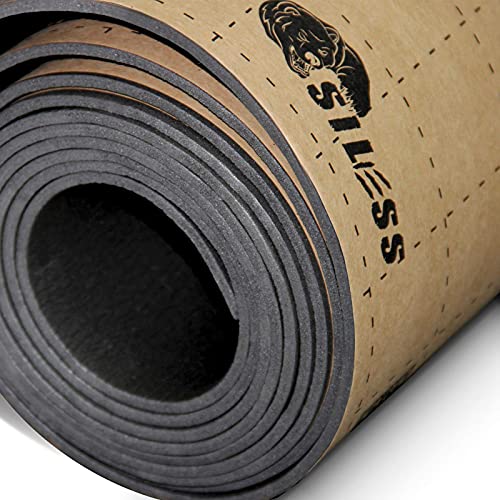
Siless Liner 157, 4 mm is a straightforward 4 mm closed-cell polyethylene foam mat with 36 square feet of coverage, making it a close fit for buyers seeking foam insulation without an added damping layer. Its adhesive backing and waterproof, oil-resistant construction suit vehicle insulation projects. The maker says the mat blocks 98% of radiant heat transfer. Choose it when foam thickness and coverage are the main priorities; buyers seeking vibration damping from a second material should consider a composite instead. A 4 mm foam layer is not interchangeable with a thicker, multi-layer damping product.
Bottom line: Pick this for a 4 mm foam layer across 36 square feet.
VOISEN 157 mil, 4 mm

VOISEN 157 mil, 4 mm distinguishes itself with a three-layer build: 4 mm high-density closed-cell foam, backing glue and release paper. The roll covers 36 square feet and measures 15.7 by 330.7 inches, useful when planning long strips across a vehicle interior. Its maker says it blocks 98% of radiant heat transfer and describes the material as waterproof. This is still a foam-focused insulation choice rather than the 5 mm foam-and-mastic composite. Check the roll dimensions against the panels you plan to cover so seams and cutoffs do not leave gaps.
Bottom line: Choose this when its three-layer construction and roll dimensions suit the panel layout.
Noico Red 150 mil, 36 sq ft

Noico Red 150 mil, 36 sq ft offers a 150 mil, approximately 4 mm closed-cell polyethylene foam layer with adhesive backing and 36 square feet of coverage. The maker identifies it as a lightweight alternative to rubber foam and says it is easy to cut and install. Its gray color gives it a visible distinction from the black foam option, while the core dimensions remain similar. Buyers who need a dedicated vibration-damping layer should note that this product is foam insulation, not the two-material composite. Cut pieces carefully around fasteners and trim rather than covering them.
Bottom line: Pick this for a gray, adhesive-backed foam roll in the 150 mil class.
Siless LinerPRO 2in1, 200 mil

Siless LinerPRO 2in1, 200 mil is the only foam option that adds a distinct vibration-damping layer: the maker describes 157 mil of closed-cell foam combined with 50 mil of b-mastic in a 200 mil, 5 mm composite. The 36-square-foot material targets buyers who want heat insulation and vibration damping in one construction rather than foam alone. The maker says it blocks 98% of radiant heat transfer. Its composite construction makes it a different choice from a single foam layer; choose it when that added damping layer is relevant, not simply because the total is thicker.
Bottom line: Choose this when you want foam paired with a b-mastic damping layer.
How to choose closed cell foam sound deadening
Choose by the job: closed-cell foam is primarily an insulation layer, while a butyl or mastic layer is used to damp panel vibration. The foam-only options here are around 4 mm thick and cover 36 square feet; the composite adds 50 mil of b-mastic beneath its foam. For a combined foam-and-damping layer, choose the composite; for foam insulation alone, compare the 4 mm rolls. Radiant-heat blocking claims describe maker-reported performance, not a guarantee for every installation. A mat’s coverage is the total sheet area, not necessarily the usable area after trimming around curves, wiring and seat mounts.
Foam thickness and coverage planning
A 36-square-foot roll supplies 5,184 square inches before cuts, overlaps or unusable scraps. Measure each panel’s length and width in inches, add the areas, then allow extra material for irregular shapes and seams. Most of the foam choices are 4 mm thick; 150 mil is about 3.8 mm, and 157 mil is about 4 mm. Do not treat a nominal 200 mil composite as 200 mil of foam: its construction combines foam and mastic. If you need to keep added material below 4 mm, select a foam roll in the 150–157 mil range rather than the thicker composite.
Use this quick guide to match construction to the main job.
| Need | Construction to consider | Key tradeoff |
|---|---|---|
| Foam insulation layer | About 4 mm closed-cell polyethylene | No added damping layer |
| Foam plus vibration damping | Foam and b-mastic composite | Thicker, multi-material build |
| Panel vibration damping only | Butyl and foil mat | Not closed-cell foam |
Where sound-deadening materials fit in a vehicle
Automotive sound control often uses different materials for different paths: a damping mat on a vibrating metal panel, then a foam or decoupling layer between surfaces. Closed-cell foam can help insulate and separate trim from a panel, but foam thickness alone does not establish how much vibration damping a product provides. Apply material only where it will not obstruct drains, wiring, seat hardware, airbag components or service access. Keep added layers away from moving parts and exhaust heat sources unless the product is intended for that location. For floors and doors, panel contours and clearance behind trim determine whether a thick composite will fit without pressure or interference.
Installation and safety checks
Clean, dry, oil-free metal helps adhesive-backed mats bond; dust, moisture and residual grease can weaken adhesion. Cut material with a sharp utility knife on a protected surface, and work in small sections so the backing does not collect debris before placement. Avoid covering drain holes, factory labels needed for service, electrical connectors or fasteners that must remain accessible. Material near exhaust components needs a heat rating appropriate to that location; a general radiant-heat claim does not establish a safe contact temperature. Confirm the vehicle’s trim clearance and the product’s placement limits before installing behind panels.
Frequently Asked Questions
Is closed-cell foam the same as vibration damping mat?
No. Closed-cell foam is commonly used for insulation and separation, while butyl or mastic mats target vibration in metal panels. A composite combines both types of layer.
How much area does a 36-square-foot roll cover?
A 36-square-foot roll covers 5,184 square inches before trimming and waste. Measure each surface and add area for curved panels and cutouts.
Does thicker sound deadening always block more noise?
No single thickness figure guarantees better sound control because foam and damping compounds work differently. Compare material construction and use the layer designed for the problem, such as foam for insulation or mastic for panel vibration.
Can sound-deadening foam go near an exhaust?
Only when the material is rated for the temperatures at that location. Radiant-heat blocking claims do not establish a safe contact-temperature limit, so keep material clear of hot exhaust surfaces unless the manufacturer specifies suitability.
Should vehicle drain holes be covered during installation?
No. Keep door and body drain paths open so water can escape, and avoid covering wiring, fasteners or service access. Plan cuts around openings before peeling adhesive backing.