
CO2 Tank With Siphon Tube: 4 Models Compared

Beverage Elements 20 lb Aluminum Cylinder is the closest match for most buyers seeking a 20-pound CO2 tank with a siphon tube, with an aluminum body and CGA 320 valve. Choose 10 lb Aluminum Cylinder for a smaller 10-pound cylinder, or 35 lb CO2 Cylinder when you need 35 pounds of capacity; VEVOR 20 lb Aluminum Cylinder is another 20-pound option, but weighs more.
We earn a commission if you buy through links on this page. As an Amazon Associate I earn from qualifying purchases. Products are compared on manufacturer specifications, not hands-on testing.
- Best overall: Beverage Elements 20 lb Aluminum Cylinder – Pairs a 20-pound capacity with an aluminum body, CGA 320 valve and siphon tube.
- Best for compact capacity: 10 lb Aluminum Cylinder – Its 10-pound capacity and 21-inch height are the smallest listed.
- Best for larger capacity: 35 lb CO2 Cylinder – Holds 35 pounds and includes a carry handle.
| Product | Best for | Capacity | Height | Weight | Shop |
|---|---|---|---|---|---|
| Beverage Elements 20 lb Aluminum Cylinder | 20-pound capacity | 20 lb | 28.2 in | 20 lb | Check Price on Amazon |
| VEVOR 20 lb Aluminum Cylinder | Beer dispensing | 20 lb | 27.95 in | 26.9 lb | Check Price on Amazon |
| 10 lb Aluminum Cylinder | Smaller capacity | 10 lb | 21 in | 16 lb | Check Price on Amazon |
| 35 lb CO2 Cylinder | Higher capacity | 35 lb | 40 in | 38.2 lb | Check Price on Amazon |
CO2 Tanks With Siphon Tubes
Compare capacity, cylinder size and stated construction to choose a tank for your equipment and available space.
Beverage Elements 20 lb Aluminum Cylinder

Beverage Elements 20 lb Aluminum Cylinder is the lighter listed 20-pound choice, weighing 20 pounds with an 8-inch diameter and 28.2-inch height. Its aluminum 6061-T6 cylinder has a CGA 320 valve, carry handle and valve protector, and the product name specifies a siphon tube. The maker gives a 1,800 PSI pressure rating and DOT-3AL and TC-3ALM designations. This fits buyers matching a 20-pound cylinder to a compatible regulator or dispensing setup. It ships empty, so arrange filling separately and confirm the equipment’s connection and clearance requirements before ordering.
Bottom line: Choose it when you want a 20-pound aluminum cylinder with a siphon tube and handle.
VEVOR 20 lb Aluminum Cylinder

VEVOR 20 lb Aluminum Cylinder is a 20-pound tank aimed at draft beer dispensing and soda makers, with a built-in purple copper siphon and CGA 320 valve. Its aluminum alloy body measures 27.95 inches tall and 7.99 inches wide, and weighs 26.9 pounds. The maker says its working pressure is up to 1,800 PSI and test pressure is 3,000 PSI; the tank ships empty. Choose it for the beverage uses when its dimensions suit your space. Its higher cylinder weight than the other 20-pound option matters if frequent handling is part of your setup.
Bottom line: Pick this for beverage dispensing when the built-in siphon and stated use match your setup.
10 lb Aluminum Cylinder
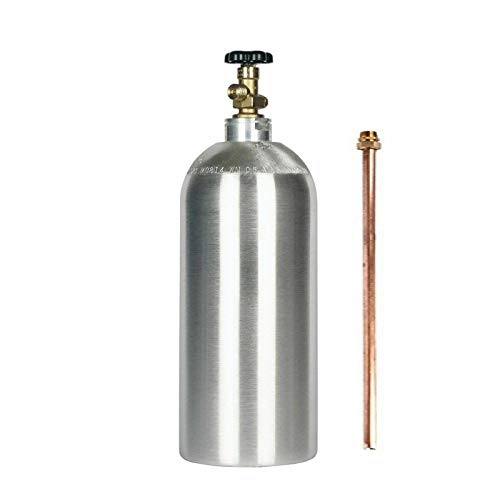
10 lb Aluminum Cylinder trades capacity for a shorter 21-inch cylinder, with a 7-inch diameter and 16-pound stated weight. It has an aluminum body, an installed CGA 320 valve and siphon tube, and holds 10 pounds. The maker says it is DOT stamped and NSF approved, and that it is certified or hydro-tested within 18 months. This is the option for buyers whose equipment needs less CO2 or whose space cannot accommodate a taller tank. Its 10-pound capacity is half that of the 20-pound cylinders, so it may require more frequent refills for the same demand.
Bottom line: Choose it when a 21-inch cylinder and 10-pound capacity better fit the application.
35 lb CO2 Cylinder

35 lb CO2 Cylinder has the greatest capacity here at 35 pounds and stands 40 inches tall, so it suits setups with room for a larger cylinder. The alloy cylinder comes with a CGA 320 valve, siphon tube and carry handle; its weight is 38.2 pounds. The maker says the tank is DOT-approved certified or hydro-tested within 12 months of shipment and identifies industrial, hydroponic and welding applications. It ships empty. Its 40-inch height and greater weight make it less practical where floor space, overhead clearance or moving the tank is a concern.
Bottom line: Pick it when your application needs 35 pounds of capacity and accommodates a 40-inch tank.
How to Choose a CO2 Tank With a Siphon Tube
Choose capacity first, then verify the connection, orientation and physical clearance required by your equipment. A siphon tube draws liquid CO2 from the bottom of a cylinder when the tank is used upright; standard gas-draw cylinders instead deliver vapor from the top. That liquid-draw design is used in applications such as beverage carbonation and certain industrial processes, but it is not interchangeable with every regulator or gas system. All four options here identify a CGA 320 valve, while capacities range from 10 to 35 pounds. If your equipment requires vapor rather than liquid CO2, do not assume a siphon-tube cylinder is suitable; confirm the required draw type and connection before ordering.
CO2 Tank Capacity and Size Comparison
Match tank capacity to consumption and available space: a larger cylinder holds more CO2 but also takes up more room and weighs more. The figures below show the capacity, height and weight for each choice.
| Capacity | Height | Weight |
|---|---|---|
| 10 lb | 21 in | 16 lb |
| 20 lb | 28.2 in | 20 lb |
| 20 lb | 27.95 in | 26.9 lb |
| 35 lb | 40 in | 38.2 lb |
For a shelf or enclosure with less than 22 inches of vertical clearance, the 21-inch cylinder is the only option here that may fit by height, though valve and handling clearance still matter. Allow room to secure the cylinder upright and reach its valve without forcing a hose bend.
Valve Compatibility and Safe CO2 Handling
A CGA 320 valve identifies the cylinder-side connection, but a matching connection alone does not establish that the tank suits your equipment; confirm regulator compatibility and whether the system needs liquid or vapor draw. Compressed CO2 cylinders must be secured upright during storage and use, kept away from heat, and handled with a regulator designed for the gas and pressure. Do not expose a cylinder to temperatures above 125°F, a common maximum storage temperature for compressed gas cylinders. CO2 can displace oxygen in enclosed spaces, so use and store tanks where ventilation is adequate. Arrange filling through a qualified gas supplier, since these cylinders ship empty.
When a Siphon Tube Is the Wrong Choice
A siphon tube is for liquid withdrawal, not a universal upgrade for every CO2 setup. Beverage carbonation and some process equipment call for liquid CO2, while many draft systems use vapor-draw cylinders; the exact equipment requirement decides which type is appropriate. A liquid line can deliver liquid where a vapor regulator expects gas, creating an unsafe or damaging mismatch. Check the equipment manual for the required withdrawal type before selecting a cylinder. Also compare the cylinder height and mass with your mounting location: the 35-pound model stands 40 inches tall and weighs 38.2 pounds, while the 10-pound model stands 21 inches tall and weighs 16 pounds.
Frequently Asked Questions
What does a siphon tube do in a CO2 tank?
A siphon tube reaches the liquid at the bottom of an upright cylinder so the tank can supply liquid CO2. That differs from a vapor-draw cylinder, which takes gas from the space above the liquid.
Can I use a siphon tube tank for draft beer?
Only if the dispensing equipment is designed for liquid CO2 from a siphon-tube cylinder. Many draft systems use vapor draw, so verify the required withdrawal type and regulator compatibility first.
How much clearance does a 20-pound CO2 tank need?
The two 20-pound options here stand 27.95 and 28.2 inches tall. Allow additional room above the valve for connection and handling, and compare the tank’s width with its storage space.
Are CO2 tanks shipped filled with gas?
These cylinders ship empty, so filling must be arranged separately with a qualified gas supplier. Confirm that the supplier can fill the tank for its intended gas use.
How should I store a siphon-tube CO2 cylinder?
Secure the cylinder upright in a ventilated area, away from heat and physical damage. Compressed gas cylinders should not be exposed to temperatures above 125°F.