
Delta Shopmaster Table Saw: Models Compared by Fit

Delta 36-6023 10-Inch Table Saw is the Delta Shopmaster table saw match for most shoppers, with a 10-inch blade and 32.5-inch rip capacity for wider stock. Choose another option if you need a portable saw or a specific insert or fence cursor; those products have different roles, and the insert is for other Delta models.
We earn a commission if you buy through links on this page. As an Amazon Associate I earn from qualifying purchases. Products are compared on manufacturer specifications, not hands-on testing.
- Best overall: Delta 36-6023 10-Inch Table Saw – It is the matching Delta 10-inch table saw and has a 32.5-inch rip capacity.
- Best for portability: SKIL TS6307-00 10-Inch Jobsite Table Saw – Its integrated folding stand is designed for convenient transport and storage.
- Best for cleaner cuts: POWERTEC Zero-Clearance Insert 3-Pack – Its zero-clearance insert is designed to reduce tear-out around the blade.
| Product | Best for | Blade or component | Capacity or fit | Weight | Shop |
|---|---|---|---|---|---|
| Delta 36-6023 10-Inch Table Saw | Wide stock | 10-inch blade | 32.5-inch rip capacity | 77 lb | Check Price on Amazon |
| POWERTEC Zero-Clearance Insert 3-Pack | Compatible Delta saws | Throat plate | 36-725, 36-725T2, 36-5152, 36-5000, 36-5000T2 | — | Check Price on Amazon |
| AUTOVIC Delta Unifence Cursor | Unifence replacement | Fence cursor | Delta Unifence | — | Check Price on Amazon |
| SKIL TS6307-00 10-Inch Jobsite Table Saw | Portable setup | 10-inch blade | 4×4 at 90° | 51.15 lb | Check Price on Amazon |
Delta Shopmaster Table Saw and Related Products
Compare the saw itself with related tools and accessories by their intended function and fit.
Delta 36-6023 10-Inch Table Saw
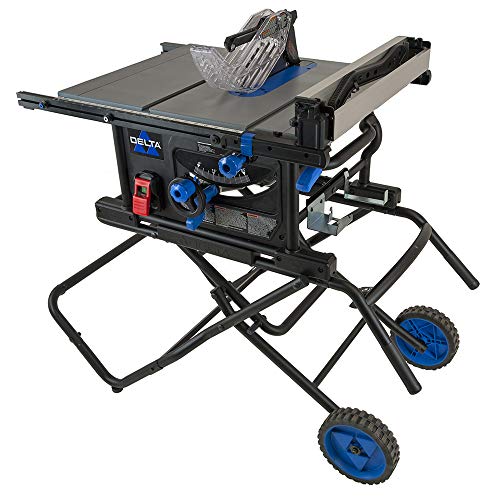
As the only Delta Shopmaster table saw in this group, the 36-6023 pairs a 10-inch blade with a 32.5-inch rip capacity. Its 15-amp motor is described for treated lumber and hardwoods, and the rack-and-pinion fence rails adjust the fence. The saw also supports a 13/16-inch by 8-inch stacked dado setup. At 77 pounds, it is heavier than the portable alternative here, so it suits a workshop more than frequent carrying. The maker specifies a five-year warranty.
Bottom line: Choose it for a Delta Shopmaster saw with room to rip wider stock.
POWERTEC Zero-Clearance Insert 3-Pack

This accessory is a throat plate, not a saw, and its fit is limited to five Delta models: 36-725, 36-725T2, 36-5152, 36-5000 and 36-5000T2. The three-pack uses MDF and is designed to match the opening around a blade for reduced tear-out and to keep small offcuts from falling into the gap. That design may help when clean edges matter, but the specified fit list does not include the 36-6023; confirm the exact saw model and insert dimensions before buying. A zero-clearance plate also needs a blade-width-matched opening.
Bottom line: Choose it only for one of its five compatible Delta saw models.
AUTOVIC Delta Unifence Cursor

Unlike a table saw or throat plate, this part replaces the cursor used with a Delta Unifence. It is aluminum, uses side-mounted screws and includes a replaceable lens; one lens has pre-marked guide lines, while another can be marked to suit the user. That makes it relevant to owners repairing or updating a Unifence, not to buyers seeking a complete saw. The fit is specified for Delta Unifence, so it should not be treated as a universal fence cursor. Check that the saw has the Unifence system before choosing it.
Bottom line: Choose it for a Delta Unifence cursor replacement.
SKIL TS6307-00 10-Inch Jobsite Table Saw
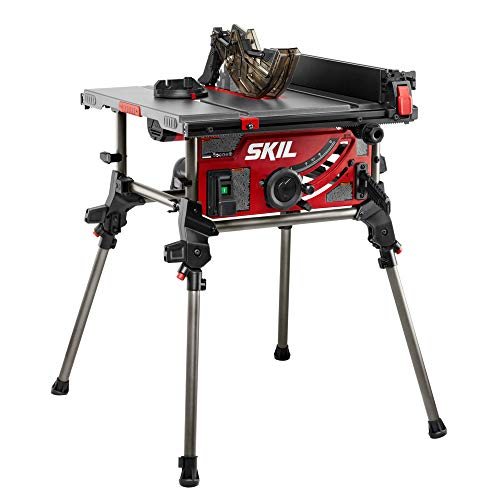
This SKIL is the portable-oriented alternative to the Delta saw: it has an integrated folding stand and weighs 51.15 pounds. Its 10-inch blade cuts up to 4×4 material at 90 degrees, while rack-and-pinion fence rails and blade alignment adjustment support setup accuracy. The saw also has a 2-to-47-degree bevel range, with positive stops at 0 and 45 degrees. It is not a Delta Shopmaster, and its 4×4 capacity is a different measure from the Delta’s rip capacity, so compare the cut you need rather than treating the figures as interchangeable.
Bottom line: Choose it when folding storage and jobsite portability matter more than Delta branding.
How to choose a Delta Shopmaster table saw
Start by matching the cut capacity to the widest panel or board you expect to rip: the Delta 36-6023 offers a 32.5-inch rip capacity, while a 4×4 crosscut rating describes a different operation. A table saw’s rip fence guides material parallel to the blade; a miter gauge guides crosscuts across the table. For wider sheets, plan for stable outfeed support and keep the workpiece flat against the table and fence. A rack-and-pinion fence moves on geared rails, but accurate cuts still depend on checking that the fence is parallel to the blade. If portability is the priority, compare a folding-stand jobsite saw rather than assuming every 10-inch saw handles the same stock.
Table saw capacity and blade setup
Blade diameter alone does not determine which cuts a table saw can make: rip capacity is the distance from the blade to the fence, while depth of cut depends on blade exposure and saw design. A dado stack is a separate setup for wider grooves; the Delta’s maximum is 13/16 inch by 8 inches. Use only a dado configuration approved for the saw and arbor, and keep the throat plate appropriate to the blade or stack. Never adjust the blade or change accessories with the saw energized. Use the blade guard and riving knife for through-cuts when the setup permits, and use push sticks to keep hands away from the blade. Support long or wide stock so it cannot tip or bind.
When a table saw accessory fits
A throat plate sits around the blade opening, while a fence cursor helps indicate fence position; neither accessory is a substitute for the saw itself. Zero-clearance plates reduce the gap beside a blade and can limit tear-out, but the opening must match the blade and the plate must sit flush with the table. The POWERTEC plate names five Delta models, not the 36-6023, so verify exact fit rather than relying on brand alone. A cursor marked for Delta Unifence applies only to that fence system. Before replacing a plate or cursor, identify the saw model and accessory interface; a part that looks similar may not align or sit safely.
Table saw safety before the first cut
Keep the blade guard and riving knife in place for through-cuts whenever the operation allows; the riving knife helps keep the kerf from closing on the blade. Stand out of the direct kickback path and use a push stick when the stock brings your hands close to the blade. Wait for the blade to stop completely before reaching near the cutting area or clearing scraps. Use eye and hearing protection, and connect dust collection when available because cutting wood creates airborne dust. For a new setup, check blade alignment, fence parallelism, and that the workpiece is supported at both entry and exit. Do not use a fence and miter gauge together to trap stock during a crosscut.
Frequently Asked Questions
What does rip capacity mean on a table saw?
Rip capacity is the maximum width of material that can be cut between the blade and fence. A 32.5-inch capacity can accommodate wider stock than a smaller fence-to-blade span, but it does not describe crosscut capacity.
Can a 10-inch table saw cut a 4×4?
A 10-inch blade diameter alone does not guarantee a 4×4 cut in one pass. The SKIL model here specifies 4×4 capacity at 90 degrees; check the capacity for the exact saw and make multiple controlled passes only when appropriate.
When should a table saw throat plate be changed?
Change a throat plate when it is damaged, no longer sits flush, or does not suit the blade or dado setup. A zero-clearance plate should have an opening sized for the blade, and the saw must be powered off during installation.
What is a zero-clearance table saw insert for?
A zero-clearance insert narrows the opening around the blade to help reduce tear-out and keep small offcuts from dropping into the opening. It must fit the saw and the blade setup, and it does not replace the blade guard or riving knife.
How should long boards be supported on a table saw?
Support long boards at the infeed and outfeed so they remain level through the cut. A helper or stable support stand can prevent sagging or tipping, which can cause a cut to bind or push the workpiece off line.