
Desk Wall Gap Filler: 3 Options Compared by Fit

For a long desk-to-wall opening, 72-Inch PVC Desk Gap Filler is the closest match because its 72-inch cover arrives in three 24-inch sections. Choose Fullhawl PVC Desk Gap Filler, 48.03-Inch for a single long PVC strip or OKQX Metal Desk Gap Board, 23.62-Inch for a shorter metal board with adhesive or screw mounting; measure the opening first to match its length and shape.
We earn a commission if you buy through links on this page. As an Amazon Associate I earn from qualifying purchases. Products are compared on manufacturer specifications, not hands-on testing.
- Best overall: 72-Inch PVC Desk Gap Filler – Its 72-inch total coverage comes in three flat-ended 24-inch pieces that can be placed in series.
- Best for one long strip: Fullhawl PVC Desk Gap Filler, 48.03-Inch – The PVC cover is supplied as one piece measuring 48.03 inches long.
- Best for a supported gap: OKQX Metal Desk Gap Board, 23.62-Inch – The 23.62-inch metal board has a 1.97-inch flange and fits gaps under 3.15 inches when supported as directed.
| Product | Best for | Length | Material | Mounting | Shop |
|---|---|---|---|---|---|
| 72-Inch PVC Desk Gap Filler | Long openings | 72 in total; 3 × 24 in | PVC plastic | Adhesive tape | Check Price on Amazon |
| Fullhawl PVC Desk Gap Filler, 48.03-Inch | Single-piece coverage | 48.03 in | PVC | Adhesive backing | Check Price on Amazon |
| OKQX Metal Desk Gap Board, 23.62-Inch | Small supported gaps | 23.62 in | Metal | Adhesive tape or screws | Check Price on Amazon |
Desk wall gap fillers
Compare the cover lengths, materials and mounting approaches to find a filler suited to the opening behind or beside your desk.
72-Inch PVC Desk Gap Filler

For the longest reach among these options, this PVC desk-to-wall cover spans 72 inches in three 24-inch pieces. Each piece has flat ends, so the sections can be placed in a series. Adhesive tape holds the filler in place, and the soft foam backing is intended to protect the wall from marks. The cover is aimed at desks and other furniture such as nightstands, dressers and cabinets. Its limitation is the three-piece construction: measure where the sections will meet if you need a continuous-looking edge.
Bottom line: Choose it when the opening needs up to 72 inches of coverage and section joints are acceptable.
Fullhawl PVC Desk Gap Filler, 48.03-Inch
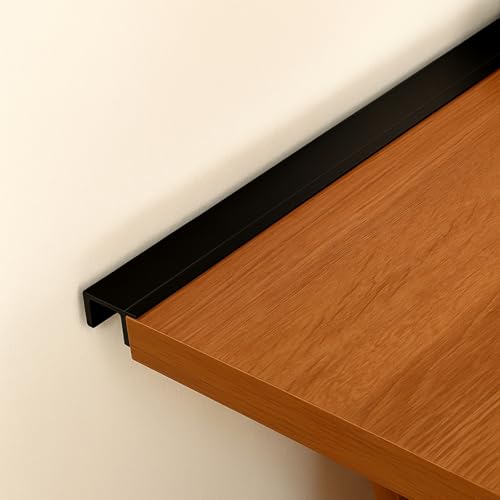
Unlike the 72-inch segmented cover, this PVC strip is supplied as one 48.03-inch piece for a single uninterrupted run. The product dimensions give it a 2.76-inch height and 2.95-inch width, while its smooth surface is intended to sit unobtrusively along the workspace. Adhesive backing and foam are included for installation, and the PVC surface is easy to clean. This option suits a medium-length opening, but it cannot span a run longer than its length without leaving part uncovered.
Bottom line: Pick it for a single-piece PVC cover when the measured run is no longer than 48.03 inches.
OKQX Metal Desk Gap Board, 23.62-Inch

This option is a short, rigid metal extension board rather than a flexible PVC cover. It measures 23.62 by 3.94 inches and has a 1.97-inch vertical flange; the maker says it fits gaps under 3.15 inches when part of the horizontal board rests on the neighboring desktop or counter for support. It includes acrylic adhesive tape and screw hardware, giving a no-drill or drilled mounting route. Because it is a short board that relies on support, it is not suited to covering a long opening by itself.
Bottom line: Choose it for a gap under 3.15 inches when the board can rest on the adjacent surface.
How to choose a desk wall gap filler
Measure the opening’s length and width before choosing a filler; length determines coverage, while width or depth determines how much of the opening the piece bridges. A flexible cover or strip is suited to following a furniture edge, while a rigid extension board needs a stable surface beneath its overhang. Compare mounting methods too: adhesive needs a clean, dry, smooth surface, whereas screw mounting requires a suitable surface and drilling. Leave enough contact area for a secure attachment, and avoid selecting a board that spans beyond its supported area. For an opening longer than a single strip, check whether multiple sections can align without leaving a catch point for small objects.
Measuring the gap behind a desk
Measure the gap at both ends and in the middle because walls and furniture edges may not run perfectly parallel. Use the largest width reading to judge whether a rigid board can bridge the opening, and measure the full length to see if a single piece will cover it. A narrow extension board must rest partly on the neighboring desktop or counter for support; the OKQX board specifies a maximum gap under 3.15 inches with that support condition. If the opening exceeds that limit, choose a different coverage design rather than assuming a longer board will be stable. Also check for wall trim, cables or brackets that could prevent a filler from sitting flush.
Desk gap cover types compared
Desk gap fillers generally work as adhesive-backed covers or as rigid bridging boards. A cover strip lies along the furniture edge to block a narrow fall-through space, while an extension board projects over a larger opening and depends on surface support. Measure both the run and the span before deciding; a long strip may cover a broad run but not bridge a wide gap. Use this quick comparison to match the mechanism to the opening.
| Type | Useful when | Check before fitting |
|---|---|---|
| Adhesive cover strip | A long, narrow edge needs a barrier | Run length and adhesive surface condition |
| Rigid extension board | A small gap needs a bridging surface | Maximum span and resting support |
Installing a desk wall gap filler safely
Adhesive attachment works best on a clean, dry, smooth, flat surface; dust, grease and textured finishes can reduce contact. Press the adhesive firmly along its intended contact area and avoid loading the filler until it is seated securely. For a screw-mounted board, use hardware appropriate to the surface and keep the board supported while fastening it. A gap cover is a barrier for small objects, not a load-bearing shelf: do not place heavy items on a narrow extension unless its design and support are suitable. Keep cords clear of the mounting area so they are not trapped or pinched against the wall.
Frequently Asked Questions
How do I measure a desk wall gap filler?
Measure the opening’s length and width in several places, then use the largest width reading for fit. Check the full run length against the filler length and account for trim or obstacles that may keep it from sitting flush.
Can a desk gap filler cover a wide opening?
A rigid board can bridge only the span allowed by its design and support. The OKQX board specifies gaps under 3.15 inches and requires part of its horizontal surface to rest on the adjacent top.
Will adhesive stick to a textured wall?
Adhesive generally bonds best to a clean, dry, smooth, flat surface. Textured or dusty finishes can reduce contact, so confirm the mounting surface is suitable before relying on adhesive to hold a filler.
Can I join desk gap filler sections together?
The 72-inch option is supplied as three 24-inch sections with flat ends that can be placed in series. Measure the full run and align the ends carefully to avoid leaving an open space between sections.