
Home Test for H Pylori: 3 Kits Compared by Test Type

For a home test for H pylori, H. Pylori Stool Antigen Self-Test is the clearest fit because it identifies itself as a stool antigen test and includes two tests with 10-to-15-minute results.
Home tests can support screening, but a positive result needs clinical follow-up; medication use can also affect stool test results.
We earn a commission if you buy through links on this page. As an Amazon Associate I earn from qualifying purchases. Products are compared on manufacturer specifications, not hands-on testing.
- Best overall: H. Pylori Stool Antigen Self-Test – It specifies a stool antigen sample type and includes two tests.
| Product | Best for | Test type | Shop |
|---|---|---|---|
| H. Pylori Stool Antigen Self-Test | Stool antigen | Stool antigen | Check Price on Amazon |
| EASYIN H. Pylori Test Kit | Quick home testing | Test type not identified | Check Price on Amazon |
| H. Pylori At-Home Self-Test, 2 Pack | Two home tests | Test type not identified | Check Price on Amazon |
Home Tests for H Pylori
Compare the sample type, number of tests, and stated result time before choosing a home screening kit.
H. Pylori Stool Antigen Self-Test
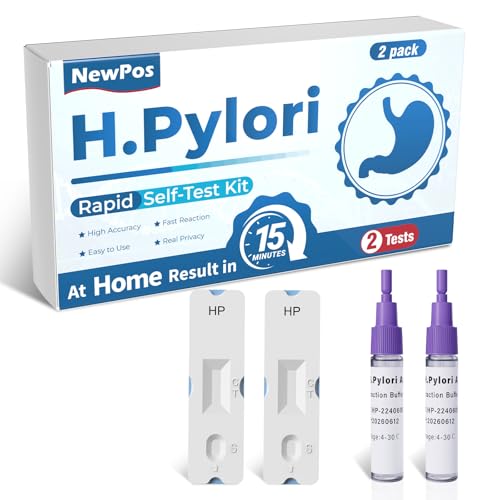
Unlike the blood antibody option, this kit identifies its sample as stool antigen, a test type used to look for active H. pylori infection. The package includes two tests, and the maker says results arrive in 10 to 15 minutes with 99.9% accuracy. That makes it the most clearly defined choice here for someone seeking a stool-based home test. Its limitation is that the product facts do not explain collection steps or medication restrictions, so confirm those with a clinician before relying on a result.
Bottom line: Choose this if you want a two-test stool antigen kit and will confirm any positive result with a clinician.
EASYIN H. Pylori Test Kit

This kit distinguishes itself with an explicit manufacturer accuracy claim, while the sample type is not identified in the product name or features. It contains two tests, and the maker says the test takes 10 to 15 minutes and has accuracy above 99.95%. The package includes an instruction manual, which may help buyers who want a guided process.
Bottom line: Choose this if a two-test kit and a short stated result window matter, after confirming its sample type.
H. Pylori At-Home Self-Test, 2 Pack
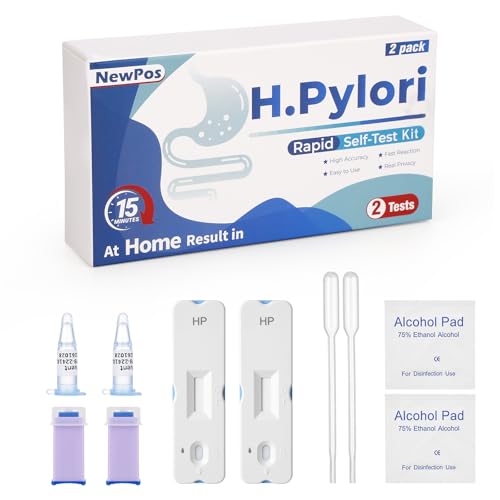
The maker says results come in 10 to 15 minutes and claims 99.9% accuracy. It may suit someone who wants two tests for separate occasions, provided the test method matches the reason for testing. A key limitation is that no sample type is identified here, so confirm whether it detects active infection before treating a result as an answer about current H. pylori.
Bottom line: Choose this for a two-test home kit only after confirming what its sample detects.
How to Choose a Home H Pylori Test
Choose a stool antigen test when the goal is to check for a current infection; an antibody blood test can reflect a past infection because antibodies may remain after treatment. The sample type matters more than a short result window or a high accuracy claim. A home result does not replace clinical assessment. A clinician can decide whether symptoms, prior treatment, and the test method call for a follow-up test or another evaluation.
Medication Timing Before Stool Antigen Testing
For the most reliable stool antigen result, proton pump inhibitors are commonly stopped for 2 weeks, while antibiotics and bismuth are commonly avoided for 4 weeks before testing. These medicines can suppress H. pylori and contribute to a false-negative result. Do not stop prescribed medicine without asking the clinician who manages it; they can help choose a safe testing window. After treatment for H. pylori, a test of cure is generally performed at least 4 weeks after antibiotics, with the same 2-week proton pump inhibitor pause commonly used. Those timing rules apply to stool antigen testing, not antibody tests.
What Stool and Blood Tests Can Tell You
Stool antigen tests and blood antibody tests answer different questions: stool antigen checks for evidence of active H. pylori, while antibody tests detect the immune response to exposure. That distinction matters after a past infection, since antibodies can persist and cannot by themselves show whether bacteria remain. Use a stool antigen or urea breath test for confirming eradication after treatment; antibody testing is not suitable for that purpose. A positive home screen should prompt a conversation with a healthcare professional about confirmation and treatment, rather than self-treatment. Antibiotics should not be started without medical guidance.
Reading a Home H Pylori Test Result
Read the result only at the time specified by the kit instructions; waiting longer can make a test line difficult to interpret. A negative result may be unreliable if you tested while using a proton pump inhibitor, antibiotics, or bismuth, or if symptoms continue despite a negative screen. Ask a clinician whether to repeat testing after the appropriate medication interval or use a different test. Seek urgent medical care for vomiting blood, black tarry stools, fainting, or severe persistent abdominal pain, rather than relying on a home test to assess those symptoms.
Frequently Asked Questions
Can a home H pylori test diagnose an active infection?
A stool antigen test can check for evidence of active H. pylori, while a blood antibody test can reflect past exposure. A positive home result should be discussed with a clinician for interpretation and next steps.
How long should I stop a PPI before a stool test?
Proton pump inhibitors are commonly paused for 2 weeks before a stool antigen test because they can affect results. Ask your clinician before changing a prescribed medicine.
How long after antibiotics should I test for H pylori?
Wait at least 4 weeks after completing antibiotics before a test of cure. Proton pump inhibitors are commonly paused for 2 weeks before that test, with clinician guidance.
Can I use an antibody test to confirm eradication?
No; antibodies can remain after H. pylori has cleared, so a blood antibody test cannot reliably confirm eradication. A stool antigen or urea breath test is generally used for a test of cure.
What should I do after a positive home result?
Contact a healthcare professional to discuss confirmation and treatment options. Do not start antibiotics on your own, since the appropriate regimen depends on clinical factors.