
Enamel Sink Repair Kits: 5 Options Compared by Use

For small chips and pits in a porcelain or enamel sink, Ankita Porcelain Sink Repair Kit is the most sink-focused choice because it is a two-part epoxy filler made for localized repairs. Choose a brush-on paint for surface scratches, or a broader tub-and-tile kit if you also need to repair other surfaces.
Enamel is a hard coating over metal, while porcelain sinks may also be ceramic; match the repair product to the sink material and the size of the damage.
We earn a commission if you buy through links on this page. As an Amazon Associate I earn from qualifying purchases. Products are compared on manufacturer specifications, not hands-on testing.
- Best overall: Ankita Porcelain Sink Repair Kit – Two-part epoxy filler targets small chips, pits and minor cracks in porcelain sinks.
- Best for brush-on touch-ups: DWIL Tub and Tile Touch-Up Paint – A built-in brush applies the 1.5 fl oz acrylic-resin paint to surface imperfections.
- Best for mixed repairs: White Fiberglass and Porcelain Repair Kit – The two-part kit mixes in a 1:1 ratio and is described for use on several bathroom surfaces.
| Product | Best for | Repair form | Package size | Cure or mix | Shop |
|---|---|---|---|---|---|
| Ankita Porcelain Sink Repair Kit | Small sink chips | Two-part epoxy | — | Mix and cure per instructions | Check Price on Amazon |
| DWIL Tub and Tile Touch-Up Paint | Fine surface marks | Brush-on acrylic resin | 1.5 fl oz | Quick drying; time not given | Check Price on Amazon |
| White Fiberglass and Porcelain Repair Kit | Multi-surface repairs | Two-part repair compound | — | Mix 1:1; hardens after 12 hours | Check Price on Amazon |
| White Tub Repair Kit | Thicker gap filling | High-viscosity paste | — | — | Check Price on Amazon |
| 50 g Porcelain and Fiberglass Repair Kit | Larger repair kit | Two-part repair agent | 50 g | — | Check Price on Amazon |
Enamel Sink Repair Kits
Match the repair form to the damage: filler suits small voids, while touch-up paint is intended for surface imperfections.
Ankita Porcelain Sink Repair Kit

For localized damage on a porcelain sink, this two-part epoxy is specifically positioned for chipped edges, small pits and minor surface cracks. The maker says it cures to a hard, water-resistant finish for bathroom use; allow full curing before exposing the repair to water. The kit also lists ceramic tile and enamel tubs as compatible surfaces.
Use it for a small repair rather than a long split or a leak. White shades can vary, so the maker recommends testing the cured color on a small area first.
Bottom line: Pick this for a small, localized chip or pit in a porcelain sink.
DWIL Tub and Tile Touch-Up Paint

Unlike a filler intended to build up a chipped edge, this 1.5 fl oz touch-up paint uses a built-in brush for scratches, spots and other surface paint imperfections. The maker says its acrylic-resin formula adheres to porcelain, enamel, tile and other surfaces, and is waterproof after application.
This format suits thin marks or small blemishes that can be covered with paint. It is not the better match for a deep chip or hole that needs material added back; select a filler for that kind of damage.
Bottom line: Choose this for a brush-on finish over light surface blemishes.
White Fiberglass and Porcelain Repair Kit

This kit is distinguished by its 1:1 mixing ratio and 12-hour hardening time, and it is intended for more than sink touch-ups. The maker lists fiberglass, acrylic, ceramic, enamel, cast iron, porcelain and cultured marble among its repair surfaces, including tubs, tiles and toilets.
That breadth may suit a household repair spanning several bathroom fixtures. Mixing is required, so it is less direct than a brush-on paint for a fine scratch; reserve it for damage that needs a mixed repair compound and allow the hardening period.
Bottom line: Pick this when the repair involves a mixed compound or multiple bathroom surfaces.
White Tub Repair Kit

This kit stands out for its high-viscosity paste, which the maker says stays in place on tile without running or sagging. Its uses include chips, cracks, holes, scratches and rust across porcelain, fiberglass, acrylic, enamel, cast iron, plastic and ceramic surfaces.
The broad surface range can help when a sink repair is part of a larger bathroom touch-up. Its format is a better fit for filling damage than for painting a very fine scratch, and the color is white, so check the match on a discreet spot before treating a prominent area.
Bottom line: Choose this for a sink repair that needs a thicker paste and broad surface compatibility.
50 g Porcelain and Fiberglass Repair Kit
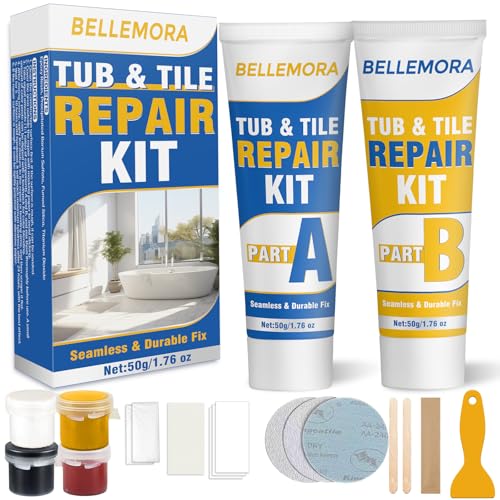
This kit is distinguished by its 50 g package and included repair accessories: two repair-agent parts, a scraper, six stickers and a mixing board. The maker describes it for chips, cracks, scratches, rust and holes on tubs, sinks, toilets and shower trays, and says the cured finish is waterproof.
Its accessory set may be useful when a repair needs mixing and smoothing rather than a quick paint touch-up. The package is white, but no sink-specific shade match is given, so compare the color discreetly before using it on a visible white basin.
Bottom line: Pick this if you want a 50 g mixed repair kit with smoothing accessories.
How to choose an enamel sink repair kit
Choose by damage depth: touch-up paint covers a surface mark, while a filler or epoxy is intended to rebuild a chip or pit. Porcelain enamel is a glass-like coating fused to metal; porcelain fixtures may also be ceramic, so check the sink material before choosing a compound. For isolated chips smaller than about 1/4 inch, a small-area repair is often practical; several chips, a crack that crosses the basin, or a leak calls for a plumber or fixture replacement instead. Compare whether the kit is brush-on or mixed, and whether its compatible surfaces include your sink material. White repair compounds can cure to a visibly different shade, especially beside aged or off-white enamel, so test a discreet spot before finishing a visible area.
Preparing the sink for a chip repair
A repair bonds best to a clean, dry surface, so remove soap film, mineral deposits and loose coating before applying any filler. Rinse away cleaner residue and let the sink dry completely; trapped water can compromise adhesion, particularly around a chipped edge. Keep the damaged area isolated from water during the product’s curing period, and use only the cure time supplied with the chosen compound. Do not enlarge a chip by scraping sound enamel. For a sharp edge, protect nearby surfaces and follow the kit’s own preparation directions, since some compounds need mixing and some are applied with a brush. A crack that reaches through the basin or allows water to escape is not merely a cosmetic chip.
Paint, paste and epoxy compared
Brush-on paint is suited to thin scratches and surface blemishes; paste and two-part compounds are more appropriate when the damaged area needs filling. These formats are not interchangeable: paint may not bridge a missing piece of enamel, and a thick filler can leave a raised patch if used on a fine scratch. Use the need-to-choice guide below to narrow the format, then check surface compatibility and curing instructions on the kit.
| Damage or need | Format to consider | Reason |
|---|---|---|
| Fine scratch or spot | Brush-on touch-up paint | Applies a thin coating |
| Small chip or pit | Filler or two-part epoxy | Adds material to a void |
| Long crack or leaking basin | Professional repair or replacement | May involve more than surface damage |
Common mistakes with sink repair kits
The most common mistake is choosing paint for a deep chip: a thin coating cannot reliably replace missing material. Another is exposing an uncured patch to water; keep the sink dry for the full cure period given for that particular product, since the timing differs among formulas. A white compound can also stand out against an older cream-toned basin, so make a small color test before filling a prominent area. Avoid treating an actively leaking crack as a cosmetic defect, and do not use a repair product on a surface unless the maker includes that material among its compatible uses. Keep mixed compounds and uncured coatings away from children, and ventilate the work area when the product label calls for it.
Frequently Asked Questions
Can a sink repair kit fix a deep chip?
A filler or two-part compound is a better fit than touch-up paint for a chip with missing material. For a chip larger than about 1/4 inch, check the product’s intended repair range and test the cured shade before committing to a visible area.
How long should a repaired sink stay dry?
Keep the repair dry for the full curing period given for that specific compound. Cure times vary by formula; one kit here says it hardens after 12 hours, but that timing should not be applied to other kits.
Can enamel repair paint cover a crack?
Paint can cover a fine surface line, but it does not rebuild a deep or spreading crack. If a crack passes through the basin or leaks, stop using the sink and consider professional repair or replacement.
Why does a white sink repair look different?
White repair compounds can contrast with an aged or warmer-toned sink. Test the cured product in a discreet spot first, because lighting and the basin’s existing shade affect how noticeable the patch looks.
How should I prepare a chipped enamel sink?
Remove soap film and loose material, rinse away cleaner residue, then let the repair area dry completely before application. Keep the basin dry throughout the product-specific cure period so water does not interfere with the repair.