
EV Charging Cable Garage Door Pass-Through Guards Compared

LZSTEC EV Cable Pass-Through, 21 mm is the strongest match for most EV charging cables because its channel accepts cords up to 0.83 inches (21 mm) in diameter. These guards create a route under a closed garage door; choose another model if your cable is narrower or you need a different material or profile.
We earn a commission if you buy through links on this page. As an Amazon Associate I earn from qualifying purchases. Products are compared on manufacturer specifications, not hands-on testing.
- Best overall: LZSTEC EV Cable Pass-Through, 21 mm – Its 21 mm channel fits cables up to 0.83 inches in diameter.
- Best for a reinforced PVC guard: KHAMAL EV Cable Guard, 0.83 in – Its reinforced PVC body has an open slot for inserting the cable.
- Best for a narrower cable: Vizava EV Cable Protector, 19 mm – Its 19 mm inner diameter suits cables that fit within that channel.
| Product | Best for | Maximum cable diameter | Material | Shop |
|---|---|---|---|---|
| LZSTEC EV Cable Pass-Through, 21 mm | Wider cables | 0.83 in (21 mm) | Soft rubber | Check Price on Amazon |
| KHAMAL EV Cable Guard, 0.83 in | Reinforced PVC | 0.83 in | Reinforced PVC | Check Price on Amazon |
| Layer3D EV Charging Cable Door Guard | Simple cable routing | — | — | Check Price on Amazon |
| Vizava EV Cable Protector, 19 mm | Narrower cables | 0.75 in (19 mm) | Rubber | Check Price on Amazon |
EV charging cable garage door pass-through guards
Compare channel size and construction first, then make sure the guard works with the door and floor where the cable will pass.
LZSTEC EV Cable Pass-Through, 21 mm
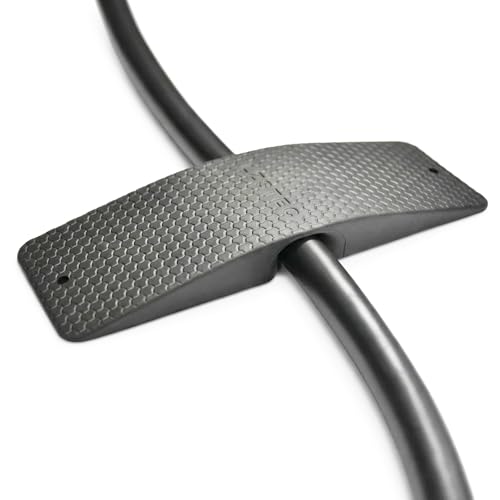
LZSTEC EV Cable Pass-Through, 21 mm has the widest channel among the guards with a measurable cable limit here: it accepts cables up to 0.83 inches (21 mm) in diameter. The soft-rubber protector measures 10.35 inches long and 5.28 inches wide, so it may suit a buyer who needs room for a thicker charging cable. The maker notes that a garage door without a bottom seal can leave 0.7 inch of clearance when this guard is used. That caveat matters if you need the door to close tightly against the floor.
Bottom line: Choose this if your cable is up to 21 mm wide and you can account for the door-floor gap.
KHAMAL EV Cable Guard, 0.83 in
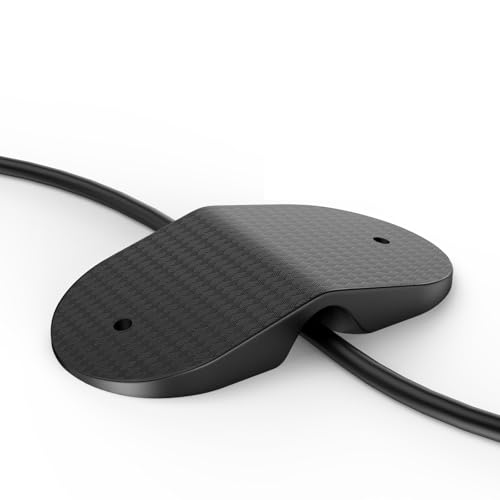
KHAMAL EV Cable Guard, 0.83 in differs with a reinforced PVC body and an open-slot design, which allows cable insertion without removing the connector. Its central groove measures 0.83 inch; the maker says the guard resists tire rolling, UV rays and temperature extremes. It also has an anti-slip base and ground-mount holes, features that may matter when selecting a placement on a hard or outdoor surface. The maker does not give a full outer size, so this option is harder to compare by footprint; confirm the space available around the door before choosing it.
Bottom line: Pick this for the open-slot construction and reinforced PVC body.
Layer3D EV Charging Cable Door Guard

Layer3D EV Charging Cable Door Guard is presented as a straightforward protector for routing an EV charging cable under a garage door. The specifications identify its black color and a weight of about 0.07 pound, but provide no channel size or material to compare against the other guards. That makes it a less certain fit when cable diameter is close to a guard’s limit. Measure the cable at its thickest point and make sure the guard’s opening can accommodate it before selecting this model.
Bottom line: Consider this when you want a basic pass-through and can verify the channel fits your cable.
Vizava EV Cable Protector, 19 mm

Vizava EV Cable Protector, 19 mm has a 19 mm inner diameter, smaller than the 21 mm channels offered by LZSTEC EV Cable Pass-Through, 21 mm and KHAMAL EV Cable Guard, 0.83 in. Its durable rubber construction is intended to retain its shape under garage-door loads and across high and low temperatures, according to the maker. The narrower opening is useful only if the charging cable fits without being squeezed; a tight channel can defeat the purpose of protecting the cable. Check the cable’s outside diameter before choosing this guard, especially if its jacket or strain relief is wider than the cable itself.
Bottom line: Choose this for a cable no wider than 19 mm and a rubber construction.
How to choose an EV charging cable pass-through
Start with cable diameter, then check the garage door’s bottom seal and the available floor space. A channel’s maximum diameter is a fit limit, not a target: the cable should sit without being forced or compressed. Measure the cable jacket at its widest point where it crosses the floor, and compare that measurement with the channel opening. Also consider the door’s closing path, since a guard must not prevent the door from seating or press sharply against the cable. A pass-through is not a substitute for a damaged cable; stop using a cable with a cut, split or exposed conductor and have it assessed.
Material and placement matter next. Rubber and PVC guards differ in construction, while open-slot designs can simplify inserting a cable already connected to the vehicle. Confirm that the intended placement keeps the cable clear of vehicle tires and the door’s moving hardware.
Match the channel to cable diameter
Choose a channel with enough room for the cable’s outside diameter, not just the connector or charging plug. The measured cable jacket must fit without bending sharply where it exits the guard. The known channel limits among these options are 19 mm and 21 mm; Layer3D EV Charging Cable Door Guard has no measurable channel size in its specifications, so fit cannot be inferred from its name.
Use the following comparison as a screening step, then measure your own cable. A cable can be wider at a molded section or strain relief than along its straight length. If it exceeds the guard opening, do not force it through or rely on a tight squeeze to hold it in place.
| Channel limit | Selection rule |
|---|---|
| 19 mm (0.75 in) | Use only when the cable measures no more than 19 mm at the pass-through point. |
| 21 mm (0.83 in) | Allows up to 2 mm more cable diameter than a 19 mm channel. |
| Unspecified | Verify the opening before using with a cable. |
Check the garage door seal and floor gap
A cable guard changes the contact between a garage door and the floor, so the bottom seal is part of the fit decision. A bottom seal helps close the floor gap; its shape and condition determine how well it meets an uneven surface. The maker of LZSTEC EV Cable Pass-Through, 21 mm says the guard may leave 0.7 inch of clearance when the door lacks a bottom seal. If closing against the floor matters, confirm the lift and closure with the guard and seal arrangement before regular use.
Keep the cord routed so the door does not crush it and the vehicle cannot roll over it. Avoid placing the guard where it blocks the door’s movement or creates a trip point in a walking path. If the door binds, reverses or no longer closes normally, stop and reassess the placement rather than forcing the door.
Use and inspect a pass-through safely
Route the charging cable through the channel without a sharp bend at either edge, and leave enough slack for the vehicle’s charging inlet without pulling on the connector. EV charging cables should not be used with damaged insulation or exposed wiring; disconnect power safely and replace or have damaged equipment serviced. Keep the connector and cable connections dry and protected as directed by the charger maker.
Inspect the cable jacket and guard periodically, especially after a door has closed over the setup or a vehicle has crossed the area. Look for cuts, flattening, cracking or movement that puts the cable in the door track. Do not treat a guard’s load-resistance claim as permission to drive over a charging cable; keep vehicle tires off the cord.
Frequently Asked Questions
How do I measure an EV charging cable for a guard?
Measure the outside diameter of the cable jacket where it will pass through the guard. Check more than one point if the cable has a thicker molded section near the floor, and choose an opening that does not require compression.
Can a garage door close over an EV charging cable?
A pass-through is intended to route a cable under a closed door, but the door must not crush or sharply pinch the cord. If the door binds, reverses or leaves an unacceptable floor gap, stop and adjust the setup.
Does a cable pass-through replace a garage door bottom seal?
No; a pass-through routes the cable while a bottom seal helps close the gap along the door’s lower edge. The maker of LZSTEC EV Cable Pass-Through, 21 mm says using its guard without a bottom seal may leave 0.7 inch of clearance.
Can I drive over an EV charging cable protector?
Do not drive over the charging cable, even if a guard maker describes the guard as load resistant. Keep the cord and connector out of tire paths to reduce crushing and damage risk.
What should I do if my EV charging cable is damaged?
Stop using a cable with a cut jacket, exposed conductor or obvious crushing. Disconnect it safely and arrange for replacement or qualified service rather than covering the damage with a pass-through guard.