
Exterior Exhaust Vent Cover: 5 Types Compared

For a 4-inch dryer duct, Houseluxe 4-Inch Magnetic Vent Cover is the named exterior exhaust vent cover option with a magnetic door and detachable lint screen. Choose a different style if you need a hooded outlet, metal construction or a gravity-louver faceplate rather than this square plastic cover.
Exterior exhaust vent covers finish the duct opening and use a door, damper or louvers to manage airflow and outdoor exposure; measure the duct before selecting one.
We earn a commission if you buy through links on this page. As an Amazon Associate I earn from qualifying purchases. Products are compared on manufacturer specifications, not hands-on testing.
- Best overall: Houseluxe 4-Inch Magnetic Vent Cover – Pairs a 4-inch duct opening with a magnetic door and detachable lint screen.
- Best for louvered closure: Deflecto 4-Inch Louvered Vent Cover – Uses multiple gravity louvers on a 6-by-6-inch faceplate.
- Best for metal hooded vent: 4-Inch Galvanized Steel Hooded Vent – Combines galvanized steel construction with a screen and spring-loaded damper.
| Product | Best for | Duct size | Material | Closure / screen | Shop |
|---|---|---|---|---|---|
| Houseluxe 4-Inch Magnetic Vent Cover | Screen access | 4 in | Poly plastic | Magnetic door; detachable lint screen | Check Price on Amazon |
| Deflecto 4-Inch Louvered Vent Cover | Louvered faceplate | 4 in | UV-resistant plastic | Gravity louvers; no screen named | Check Price on Amazon |
| 4-Inch Hooded Vent with Screen and Damper | Long duct connection | 4 in | — | Damper; screen | Check Price on Amazon |
| 4-Inch Galvanized Steel Hooded Vent | Steel construction | 4 in | Galvanized steel | Spring damper; openable screen | Check Price on Amazon |
| HG Power 4-Inch Metal Vent Cover | Compact metal cover | 4 in; 3.81-in opening | Metal | Non-return flap; removable mesh | Check Price on Amazon |
Exterior Exhaust Vent Covers
Match the duct diameter first, then compare the cover shape, closure and cleaning access.
Houseluxe 4-Inch Magnetic Vent Cover
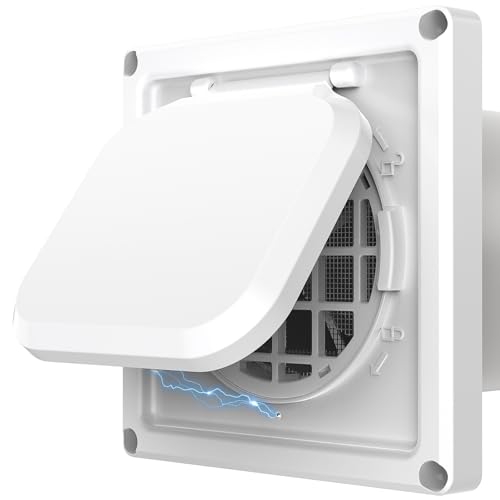
Unlike the hooded alternatives, Houseluxe 4-Inch Magnetic Vent Cover is a square, magnetic-door cover with a detachable lint screen. Its 6-by-6-inch face is designed for a standard 4-inch dryer duct, and the plastic construction makes it a lightweight option for a wall opening. The screen can be removed for cleaning, a useful feature where lint buildup is a maintenance concern. Choose it when an accessible screen matters more than a hooded outlet or metal body; it is not intended for 3-inch or 6-inch ducts.
Bottom line: Choose this if you want a magnetic door and a removable lint screen for a 4-inch duct.
Deflecto 4-Inch Louvered Vent Cover

Deflecto 4-Inch Louvered Vent Cover uses multiple gravity louvers instead of a magnetic door or hooded cap, giving it a flush 6-by-6-inch faceplate. It fits standard 4-inch dryer exhaust pipe and can also serve bathroom exhaust and other 4-inch exterior vent applications. The UV-resistant plastic is suited to outdoor placement, and the louvers close when airflow stops to limit backdrafts. This is a straightforward choice when a louvered face is preferred; it does not offer the detachable lint screen found on Houseluxe 4-Inch Magnetic Vent Cover or the metal body of 4-Inch Galvanized Steel Hooded Vent.
Bottom line: Pick this for a flush louvered faceplate on a 4-inch exhaust duct.
4-Inch Hooded Vent with Screen and Damper

4-Inch Hooded Vent with Screen and Damper stands apart with a hooded outlet and an 8¼-inch vent pipe section for wall-mounted connection. The product is sized for a 4-inch duct and includes a screen and damper; the angled hood is intended for outdoor exhaust. The longer pipe section may help where a cover needs to bridge a wall installation, but buyers should confirm that the available wall depth and duct connection suit that 8¼-inch length. Its dimensions are larger than a flat faceplate, so check the space around the exterior opening before choosing it.
Bottom line: Choose this when an 8¼-inch connection section and hooded outlet suit the wall opening.
4-Inch Galvanized Steel Hooded Vent
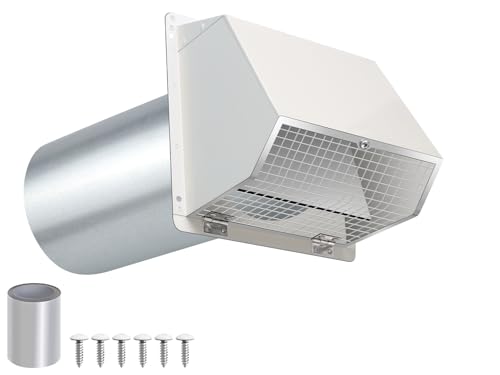
4-Inch Galvanized Steel Hooded Vent is the metal-bodied hooded alternative, using galvanized steel rather than the plastic construction of Deflecto 4-Inch Louvered Vent Cover. It has an 8¼-inch pipe section, an openable mesh screen for cleaning, and a spring-loaded backdraft damper. The screen can help keep animals and debris out, but any screen in a dryer exhaust path needs regular lint checks so airflow is not restricted. Choose this model for a hooded vent with a serviceable screen and metal construction; verify the duct diameter and wall depth before installation.
Bottom line: Pick this if a galvanized steel hood, openable screen and spring damper fit your setup.
HG Power 4-Inch Metal Vent Cover

HG Power 4-Inch Metal Vent Cover offers a metal cover with a 3.81-inch opening diameter, rubber ring, cushioned non-return flap and removable mesh. Unlike the hooded models, it is designed to insert into the pipe and screw to the wall, with a 6-by-6-inch body. Its compatibility is 4-inch dryer vent, but the 3.81-inch opening makes an actual duct measurement especially important before ordering. The removable mesh supports cleaning, though dryer lint should be removed regularly to maintain an open exhaust path.
Bottom line: Choose this when an insert-style metal cover and removable mesh match your measured opening.
How to choose an exterior exhaust vent cover
Start with the duct diameter: these covers target 4-inch ducts, but the opening and connection styles differ. A wrong diameter can prevent a sound fit, so measure the rigid pipe itself rather than guessing from the wall cutout. Next decide whether the outlet needs a hood, louvers or a simple flap, and consider whether a screen can be reached for cleaning.
For dryer exhaust, lint restriction is a safety concern because airflow must remain clear. Screens can collect lint and should be inspected and cleaned regularly; never treat a screen as a substitute for duct maintenance. A practical choice rule is to prefer a removable or openable screen when the vent is exposed to debris and you can reach it for routine cleaning. Match the faceplate and pipe section to the available wall space as well as the duct.
| Need | Cover style | Trade-off |
|---|---|---|
| Flush exterior finish | Louvered faceplate | Less projection than a hood |
| Hooded outlet | Hood with screen and damper | Needs clearance around the hood |
| Accessible lint screen | Removable or openable screen | Requires routine cleaning |
4-inch duct fit and wall clearance
A nominal 4-inch duct is not enough to confirm fit: the inside opening, pipe section and wall thickness all matter. These options include faceplates around 6 inches square, and two hooded designs have an 8¼-inch pipe section. A protruding hood or long sleeve needs room outside and through the wall; measure from the duct end to the exterior surface before picking a style.
Measure the duct diameter at an accessible straight section, and check whether the cover slides over the pipe or inserts into it. For a tight wall space, a flat faceplate may work better than a hood, while an insert-style unit requires its opening to align with the duct. Confirm the duct diameter and wall depth before ordering if either measurement is near the product’s size.
Louvers, flaps and hooded covers compared
Louvered covers use hinged slats that open under exhaust flow and fall closed afterward; flap or damper designs use a moving panel to limit reverse airflow. A hood adds a projecting outlet shape, while the faceplate mainly covers and mounts around the opening. These mechanisms are not interchangeable in appearance or installation: select the style based on the existing wall opening and the clearance around it.
Exterior covers also face rain, sun and temperature changes, so outdoor-rated material matters. Plastic models vary in UV resistance, while metal units vary by coating and construction. The product choice should not rest on material alone: a metal cover with mesh still needs lint maintenance, and a louvered cover still needs a compatible duct fit.
Screen cleaning and dryer vent safety
Lint screens on exterior dryer covers can trap fibers and debris, so inspect them often and clear buildup before it blocks airflow. Dryer exhaust ducts also need periodic cleaning; the National Fire Protection Association recommends cleaning clothes dryer vents at least annually, and more often when drying takes longer or the dryer shows reduced airflow.
Keep the exhaust path open and avoid adding a fine screen that is difficult to clean. Before installation, check that the damper moves freely and that the vent outlet is not obstructed by landscaping, snow or stored items. For a hooded screen or removable mesh, choose a location where routine access is practical, not merely where the cover fits.
Frequently Asked Questions
How do I measure a dryer vent duct?
Measure the duct’s inside diameter at a straight, accessible section; these covers are intended for nominal 4-inch ducting. Also measure wall depth if choosing a hood with an 8¼-inch pipe section.
Do dryer vent covers need a screen?
A screen can help keep animals and debris out, but lint can collect on it and restrict exhaust. Inspect and clean screens regularly, and keep the duct itself clear.
How often should an exterior dryer vent be cleaned?
Inspect the outlet regularly and clean the dryer exhaust duct at least annually; clean sooner if drying takes longer or airflow drops. Remove lint from any exterior screen so it does not become a blockage.
Are louvered vent covers better than flaps?
Neither style is universally better: louvers use several hinged slats, while a flap or damper uses a moving panel. Choose based on the existing opening, outdoor clearance and whether the mechanism opens freely under exhaust flow.
Can a bathroom vent cover fit a dryer duct?
A cover designed for a 4-inch duct may fit either application only when the measured diameter and connection style match. Dryer exhaust also needs a clear path with regular lint maintenance, especially when a screen is present.