
Fishing Rod Case 7ft: 4 Cases Compared by Fit

For most anglers carrying 7-foot rods with reels attached, the Booms Fishing PB4 is the most versatile fit because it extends from 76 to 96 inches and holds 2 to 3 rods and reels. Choose a rod-only case if you remove reels before storage, or a rigid tube if crush protection for a two-piece rod matters more than storing it assembled.
We earn a commission if you buy through links on this page. As an Amazon Associate I earn from qualifying purchases. Products are compared on manufacturer specifications, not hands-on testing.
- Best overall: Booms Fishing PB4 Expandable Rod-and-Reel Case – The 76-to-96-inch case has space for 2 to 3 rods and reels.
- Best for rod-only storage: Booms Fishing PB3 6.3–7ft Rod-Only Case – Its adjustable length tops out at 84 inches and it is designed for rods without reels.
- Best for multiple rods: Plano Airliner Telescoping Rod Case – The telescoping case extends to 88 inches and holds up to eight 7-foot rods.
- Best for crush protection: Cwanluu 50in Hard Shell Rod Case Set – The rigid 49.6-inch tube set is designed for 7-foot two-piece rods.
| Product | Best for | Length | Reel space | Capacity | Shop |
|---|---|---|---|---|---|
| Booms Fishing PB4 Expandable Rod-and-Reel Case | Rods with reels | 76–96 in. | Yes | 2–3 rods and reels | Check Price on Amazon |
| Booms Fishing PB3 6.3–7ft Rod-Only Case | Rods without reels | 75–84 in. | No | 2–3 rods | Check Price on Amazon |
| Plano Airliner Telescoping Rod Case | Multiple 7ft rods | 47–88 in. | — | Up to 8 rods | Check Price on Amazon |
| Cwanluu 50in Hard Shell Rod Case Set | Two-piece rods | 49.6 in. | — | 4 nested cases | Check Price on Amazon |
7ft Fishing Rod Cases Compared
Compare the usable length, reel clearance and rod capacity to match a case to how your rod travels.
Booms Fishing PB4 Expandable Rod-and-Reel Case

The PB4 stands out for anglers who want to keep reels attached: its 76-to-96-inch length range accommodates different rod lengths, and it holds 2 to 3 rods and reels. Nylon fabric, interior cushioning foam and rod-fixing straps add organization and padding for transport or storage. This is the strongest match when you want a long soft case rather than a rigid tube. The maker advises against using it for surf or ocean rods, so anglers carrying that style should choose another option.
Bottom line: Choose this if you want an adjustable soft case that carries rods with reels attached.
Booms Fishing PB3 6.3–7ft Rod-Only Case

The PB3 6.3–7ft case is the most direct match for a rod-only setup: it adjusts from 75 to 84 inches and is specifically designed for rods without attached reels. Its padded foam interior, waterproof nylon fabric, two-way zippers and adjustable shoulder strap suit anglers carrying disassembled or reel-free poles on trips. The limitation is essential: remove reels before packing, so this is a poor fit for anyone who wants to transport rods ready to fish.
Bottom line: Pick this when the rods will travel without reels and fit within 84 inches.
Plano Airliner Telescoping Rod Case
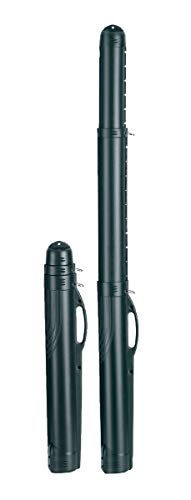
The Plano Airliner differs from the soft bags by using a telescoping polypropylene body with three tiers and a 4.5-inch diameter. It collapses to 47 inches for transport and extends to 88 inches, with capacity for up to eight 7-foot rods. A comfort-molded handle and locking device support carrying and securing the extended case. Its hard-sided form suits anglers prioritizing protection and multiple-rod storage, but the capacity is for rods, not reels; verify that your reel setup fits before choosing it.
Bottom line: Choose this for several 7-foot rods when a telescoping hard case suits your setup.
Cwanluu 50in Hard Shell Rod Case Set

The Cwanluu set takes a different approach: four nesting rigid cases, each intended for 7-foot two-piece rods rather than an assembled 7-foot rod. Its reinforced PC+ABS shell is described as crushproof and water-resistant, making it the choice for anglers who prioritize a rigid carrier for separated rod sections. The 49.6-inch case length is much shorter than the soft bags, so it is unsuitable for a one-piece 7-foot rod. Confirm your rod breaks down into sections that fit the case.
Bottom line: Choose this for a two-piece rod when a rigid case is the priority.
How to Choose a 7ft Fishing Rod Case
Start with the longest rod section you plan to carry, not just the rod’s fishing length. A one-piece 7-foot rod is 84 inches long, so a case must provide at least that much usable interior length; a two-piece rod can travel in a shorter case when separated. For rods with reels attached, also check the case’s reel clearance and diameter, since a length match alone does not guarantee the reel will fit. The practical choice is simple: if you carry reels on, favor a case explicitly made for rods and reels; if you remove them, a rod-only case can work. Consider carrying capacity only after confirming that each rod fits in the case.
Case Length and Two-Piece Rod Fit
A 7-foot rod measures 84 inches when assembled, while a two-piece rod separates into shorter sections for travel. A case near 50 inches can therefore suit a two-piece rod, but it cannot hold a one-piece 7-foot rod in a straight line. Measure the longest section with the rod broken down, including any projecting guides or handles, and compare it with the case’s usable interior length. Leave a little clearance rather than choosing a case exactly equal to the section length; closures and protective caps can take up room. When the case maker identifies a rod configuration, such as two-piece, use that as a fit requirement rather than assuming all rods labeled 7-foot pack the same way.
Soft Bags, Telescoping Cases and Hard Tubes
Soft bags typically offer flexible storage and easy carrying, while rigid cases protect against compression but may be bulkier or limited to separated rod sections. A telescoping tube can shorten for transport and extend for longer rods; the Plano Airliner, for example, spans 47 to 88 inches and holds up to eight 7-foot rods. Soft bags in this group range from 75 inches to 96 inches and differ on whether reels can remain attached. Use this decision rule: choose a case at least 84 inches long for a one-piece 7-foot rod, and consider a shorter hard case only when the rod breaks into sections that fit. Match case type to how the rod travels, not just its fishing length.
Pack Rods and Reels Without Damage
Remove loose tackle and secure rod sections before placing them in a case; unsecured rods can shift and strike one another during transport. Keep guides from bearing the case’s weight, and avoid forcing a reel into a rod-only sleeve. A padded bag provides cushioning but should not be treated as crushproof; rigid shells are the better category when heavy gear may press against the case. For a 7-foot rod with an attached reel, check the case’s maximum length and-reel space before packing. For a two-piece rod, place the sections so tips and guides are protected and do not press against the closure.
Frequently Asked Questions
Will an 84-inch case fit a 7-foot rod?
An 84-inch case matches the assembled length of a 7-foot rod, but fit depends on usable interior length and end clearance. Measure the rod and case interior rather than relying on outside dimensions.
Should I store a fishing rod with its reel attached?
Only when the case is designed with reel space. Rod-only sleeves require reel removal, while a case advertised for rods and reels is the clearer choice for attached reels.
How many rods can a 7-foot case hold?
Capacity differs by case design: the telescoping Airliner holds up to eight 7-foot rods, while the expandable soft cases in this group hold 2 to 3. Check whether the capacity assumes reels are removed.
Are hard fishing rod cases waterproof?
A rigid shell does not by itself establish waterproofing. Check for an explicit water-resistance claim and protect the rod separately if the case will be exposed to rain or splashing.