
Ford 302 Intake Manifolds Compared by Fit and Design

For a Ford 302, 7121/8124 Dual-Plane Intake is a standard dual-plane choice, with a 4.750-inch height and an operating range from idle to 5,500 RPM. Choose a different manifold if your engine is a 255, or if you need an exhaust-heated choke provision.
These are carbureted aluminum manifolds for Ford small-block Windsor engines. Before choosing, confirm the engine family, carburetor flange and available hood clearance.
We earn a commission if you buy through links on this page. As an Amazon Associate I earn from qualifying purchases. Products are compared on manufacturer specifications, not hands-on testing.
- Best overall: 7121/8124 Dual-Plane Intake – Its 4.750-inch height and idle-to-5,500-RPM range suit a standard-deck 302 setup.
- Best for air-gap design: 54026/7521 Air-Gap Dual-Plane – The dual-plane air-gap design has a 1,500-to-6,500-RPM operating range.
- Best for a 6,000-RPM range: Pateyney SBF Dual-Plane – It combines a 4.785-inch height with an idle-to-6,000-RPM range.
| Product | Best for | Intake design | Height | Operating range | Shop |
|---|---|---|---|---|---|
| 7121/8124 Dual-Plane Intake | Standard-deck 302 | Dual plane | 4.750 in | Idle–5,500 RPM | Check Price on Amazon |
| JGhyperX 8124/2121 Dual-Plane | Square-bore setup | Dual plane | 4.750 in | Idle–5,500 RPM | Check Price on Amazon |
| 54026/7521 Air-Gap Dual-Plane | Air-gap design | Dual-plane air gap | — | 1,500–6,500 RPM | Check Price on Amazon |
| Pateyney SBF Dual-Plane | 6,000-RPM range | Dual plane | 4.785 in | Idle–6,000 RPM | Check Price on Amazon |
| Weonefit 84026 Dual-Plane | Year-specific fit | Dual plane | 4.785 in | Idle–6,000 RPM | Check Price on Amazon |
Ford 302 Intake Manifolds
Compare engine exclusions, manifold height and operating range before matching a manifold to your 302 setup.
7121/8124 Dual-Plane Intake
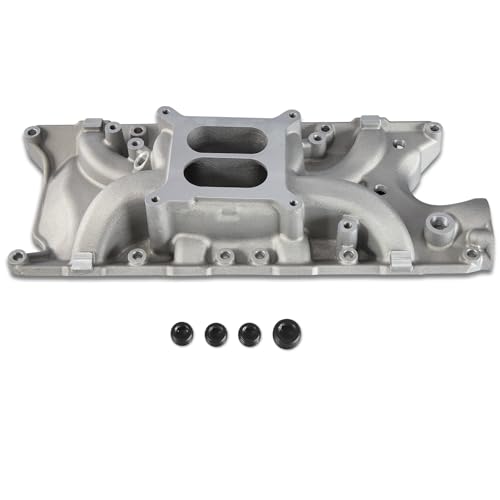
7121/8124 Dual-Plane Intake has a 4.750-inch height and is specified for standard-deck Ford small-block V8s, including the 302. Its aluminum dual-plane design uses a 4-barrel square-bore carburetor flange, making it a candidate for a carbureted street setup. The operating range is idle to 5,500 RPM. It does not fit the 255-cubic-inch V8 and has no exhaust-heated choke provision, so those two requirements rule it out. Confirm the carburetor pattern and engine family before selecting it.
Bottom line: Choose this for a standard-deck 302 using a square-bore four-barrel carburetor.
JGhyperX 8124/2121 Dual-Plane

JGhyperX 8124/2121 Dual-Plane specifies a complete aluminum dual-plane manifold for standard-deck 260, 289 and 302 Windsor engines. The 4.750-inch height and idle-to-5,500-RPM range align with a conventional street-oriented setup, and the carburetor mount is a 4-barrel square bore. This manifold has no EGR and no exhaust-heated choke provision; it also excludes the 255 V8. The package includes the manifold and some pictured parts, so verify that the pieces needed for your installation are included before beginning work.
Bottom line: Pick this if you need a square-bore, standard-deck manifold and do not need EGR.
54026/7521 Air-Gap Dual-Plane

54026/7521 Air-Gap Dual-Plane is the air-gap option in this group, with an operating range of 1,500 to 6,500 RPM rather than an idle-starting range. Its aluminum dual-plane design is specified for 260, 289 and 302 Windsor V8s. The higher stated range may suit a setup aimed at operation above idle, but the fields do not establish carburetor flange pattern or manifold height; verify those against the engine and available space. It expressly excludes 255, Boss 302 and 351W engines, so do not treat it as a universal small-block Ford fit.
Bottom line: Choose this when an air-gap design and its 1,500-RPM lower range match your build.
Pateyney SBF Dual-Plane

Pateyney SBF Dual-Plane pairs a 4.785-inch manifold height with an idle-to-6,000-RPM operating range, the highest idle-starting upper range among the standard dual-plane options here. It is an aluminum, complete-section manifold for a stock/OEM standard-deck small-block Ford, with one carburetor and no EGR. That combination may suit a carbureted 302 build seeking a broader stated range. Its engine fit is broader than a specific year-and-displacement breakdown, so verify the exact Windsor engine and carburetor arrangement before installation.
Bottom line: Pick this for a standard-deck carbureted setup targeting an idle-to-6,000-RPM range.
Weonefit 84026 Dual-Plane
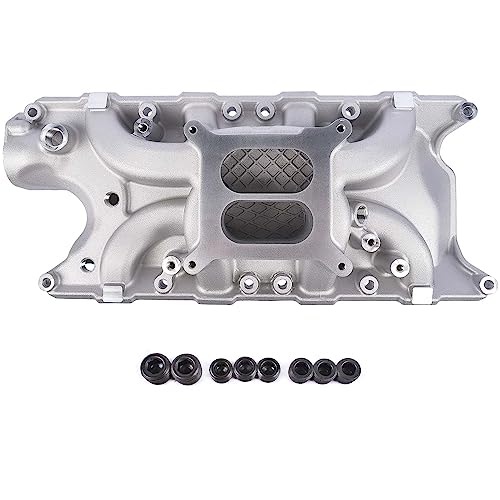
Weonefit 84026 Dual-Plane gives year ranges for the Windsor applications: 260 from 1962–1965, 289 from 1963–1969 and 302 from 1968–2001. It is an aluminum dual-plane manifold with a 4.785-inch height, one carburetor and an idle-to-6,000-RPM range. The specified stock/OEM standard-deck design helps narrow the fit, while the year ranges make this option useful when matching a particular engine application. It is sold individually, so confirm the original part number and engine year before choosing it.
Bottom line: Choose this when its 302 year range matches your engine application.
How to Choose a Ford 302 Intake Manifold
Start with engine family and carburetor fit, then compare height and operating range. The 302 is a 5.0-liter Ford Windsor small-block, but a similar displacement alone does not guarantee the same manifold fit: the Boss 302 and 351W are distinct applications. A square-bore four-barrel flange matters if you are reusing a carburetor; match the gasket and port layout rather than assuming all four-barrel patterns are interchangeable. Compare the heights of 4.750 and 4.785 inches with your existing manifold and hood clearance. If your engine is a 255, none of the options that expressly exclude it is appropriate. Verify the intended engine family and carburetor arrangement before installation.
Dual-Plane and Air-Gap Designs
A dual-plane manifold divides the intake runners into two groups, typically supporting a broad street operating range; an air-gap design separates much of the plenum from the engine valley to limit direct heat transfer. Those layouts describe different design choices, not a promise of a particular power gain. In this group, the air-gap option has a 1,500-to-6,500-RPM range, while the standard dual-plane choices begin at idle and top out at 5,500 or 6,000 RPM. Use the range as one selection factor, not a substitute for matching the camshaft, carburetor and intended engine speed. If routine low-speed driving is central, favor a range that begins at idle; for a high-RPM focus, assess whether the air-gap range fits the rest of the build.
Check Manifold Height and Installation Fit
Measure clearance before choosing between manifold heights: a 4.785-inch part is 0.035 inch taller than a 4.750-inch part, a small difference that can matter in a tight engine bay. The height is not a complete hood-clearance measurement because the carburetor, air cleaner and engine movement also affect clearance. Check the intake gasket port shape and coolant passage layout against the cylinder heads; mismatched ports can cause sealing or airflow problems. Clean mating surfaces and use the gasket maker’s specified torque sequence and values, since fastener sequence and torque depend on the engine and gasket. If you cannot confirm the gasket match or clearance, resolve that before removing the existing manifold.
Ford 302 Manifold Fit Checks
Use the engine’s actual identity, not a broad “small-block Ford” label, to screen fit. The 302 choices here cover Windsor applications, while specific exclusions include the 255 V8, Boss 302 and 351W for some models. Dates also differ by engine and product: one option gives 302 coverage from 1968–2001, while others name broad 1962–2001 Windsor compatibility. A year range alone does not identify the carburetor flange, choke provision or EGR requirements. Match those features to the existing setup, and treat the absence of an EGR provision as decisive if the vehicle requires one. Before installation, compare the manifold’s port openings and bolt pattern with the heads and verify the distributor and accessory clearances.
Frequently Asked Questions
Will a Ford 302 intake fit a 351 Windsor?
Do not assume that a 302 manifold fits a 351W; these are different engine applications, and one option expressly excludes the 351W. Match the manifold to the engine family and head ports before installation.
What does a dual-plane intake manifold do?
A dual-plane manifold divides the plenum and runners into two paths, a layout commonly chosen for street engines needing response across a broad range. The standard designs begin at idle, while the air-gap option here begins at 1,500 RPM.
How much intake manifold height clearance do I need?
The manifold height is only one part of the clearance stack; the carburetor and air cleaner add height above it. Measure from the manifold mounting surface to the hood with the complete carburetor and air-cleaner assembly in place.