
Pro-Growth Castor Collection: 4 Products Compared

The Difeel Castor Oil Pro-Growth Hair Oil Collection suits someone who wants an oil and a scalp treatment in one two-piece set. Choose a different format if you want a wash-day shampoo or conditioner, or a single larger bottle of hair oil.
Hair oils coat and soften strands; shampoos cleanse, while conditioners are meant to smooth hair after washing. Those roles matter more than growth language when choosing a routine.
We earn a commission if you buy through links on this page. As an Amazon Associate I earn from qualifying purchases. Products are compared on manufacturer specifications, not hands-on testing.
- Best overall: Difeel Castor Oil Pro-Growth 2-Piece Set – Pairs a castor hair oil with a separate hair-growth oil treatment.
- Best for cleansing: Hair Chemist Castor Pro-Growth Shampoo – A 33.8-ounce castor shampoo is the cleansing format in this group.
- Best for a single oil: Hair Chemist Castor Pro-Growth Conditioner – The 12-ounce bottle is a standalone castor hair oil.
| Product | Best for | Format | Size | Shop |
|---|---|---|---|---|
| Difeel Castor Oil Pro-Growth 2-Piece Set | Oil treatment pair | Hair oil + treatment | 8 oz + 2.5 oz* | Check Price on Amazon |
| Hair Chemist Castor Pro-Growth Shampoo | Castor oil shampoo | Shampoo | 33.8 fl oz | Check Price on Amazon |
| Hair Chemist Castor Pro-Growth Conditioner | Post-wash conditioning | Conditioner | 33.8 fl oz | Check Price on Amazon |
| Hair Chemist Pro-Growth Castor Hair Oil 12 oz | Single large oil | Hair oil | 12 fl oz | Check Price on Amazon |
Pro-growth castor hair products
Compare the oil set, wash-day products and standalone oil by format and container size.
Difeel Castor Oil Pro-Growth 2-Piece Set
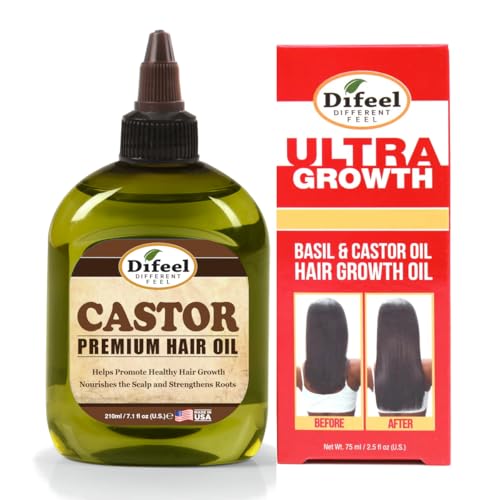
The Difeel set combines two leave-in formats rather than a shampoo-and-conditioner pair: an 8-ounce premium castor hair oil and a 2.5-ounce growth oil infused with basil and castor oil. The maker says the oils moisturize and nourish the scalp and hair. This pairing suits someone who wants a base oil plus a separate scalp-focused treatment. The size information conflicts with the component sizes, so confirm the exact package contents before ordering. As with any leave-in oil, use a small amount first to see how your hair handles the texture.
Bottom line: Pick this if you want a castor oil paired with a separate scalp treatment.
Hair Chemist Castor Pro-Growth Shampoo

Unlike the leave-in oils, Hair Chemist Castor Pro-Growth Shampoo is a rinse-out cleanser in a 33.8-fluid-ounce bottle. The maker says its castor-oil formula is sulfate-free and promotes hair growth while helping reduce breakage and dryness. That makes it the relevant option for someone seeking castor oil in a wash-day step, not an oil treatment. Shampoo can remove sebum and styling residue, but frequent washing may leave some hair types feeling dry; adjust wash frequency to scalp oiliness and styling-product buildup. It does not replace a conditioner when detangling or softness is the priority.
Bottom line: Choose this for a castor-oil shampoo rather than a leave-in treatment.
Hair Chemist Castor Pro-Growth Conditioner

Hair Chemist’s 33.8-fluid-ounce conditioner is the post-wash counterpart to a cleanser, while the Difeel set focuses on oils. The maker says the castor-oil conditioner hydrates and strengthens strands and is formulated to complement its shampoo. Choose this format when your routine needs slip and manageability after washing, especially if detangling is a concern. Conditioner is generally applied to hair lengths and rinsed; keep it off the scalp if your roots become weighed down easily. This is not a standalone scalp oil, so it is a less direct fit for someone specifically seeking a leave-in treatment.
Bottom line: Pick this when your main need is a large, post-wash conditioner.
Hair Chemist Pro-Growth Castor Hair Oil 12 oz

Hair Chemist’s 12-fluid-ounce bottle is a single castor hair oil, unlike the two-product Difeel set. The maker says the oil moisturizes the scalp, helps reduce breakage and supports fuller-looking hair. Its format suits someone who wants one oil rather than a shampoo or conditioner, and the larger bottle may make sense for regular use on hair lengths or scalp. Castor oil is thick compared with many lightweight hair oils, so start with a small amount to avoid a heavy or greasy feel. It is not a cleansing product, and it needs washing out if buildup becomes uncomfortable.
Bottom line: Choose this for one standalone castor oil in a 12-fluid-ounce bottle.
How to choose a castor oil hair product
Choose by the step your routine needs: oil for leave-in conditioning, shampoo for cleansing, or conditioner for post-wash detangling. Hair oils mainly coat the hair shaft and can reduce friction during grooming; they do not replace cleansing. Shampoo surfactants lift oil and residue so they can rinse away, while conditioner deposits lubricating ingredients that improve slip. For a simple choice, pick an oil if dryness and manageability are the concern, shampoo if sebum or product buildup is the concern, and conditioner if knots after washing are the concern. Hair-growth language is not a reliable way to distinguish products: no topical oil can guarantee faster growth or reverse hair loss.
How to use castor oil without buildup
Use a small amount first because castor oil is notably viscous and can leave a heavy coating, particularly on fine or low-density hair. Apply it sparingly to dry lengths or a small scalp area, then wash it out if the hair feels coated; avoid saturating the hair before you know how it responds. Patch-test a new cosmetic on a small area of skin and stop use if irritation develops. Keep oils away from the eyes, and do not apply them to broken or irritated skin. Oils can soften and lubricate hair, but they are not a substitute for treating persistent scalp symptoms with appropriate professional care.
Oil, shampoo and conditioner compared
These formats serve different routine steps, so choose the one that matches the job rather than treating them as interchangeable. A hair oil is usually a leave-in or pre-wash product; shampoo is rinsed away after cleansing; conditioner follows shampoo and is rinsed after coating the strands. Many routines use shampoo and conditioner together, while oil is optional and used in a smaller amount. A need-to-format guide makes the distinction clear.
| Routine need | Format | Typical use |
|---|---|---|
| Cleanse scalp and remove residue | Shampoo | Wet hair, lather, rinse |
| Improve slip after cleansing | Conditioner | Apply to lengths, then rinse |
| Coat and soften strands | Hair oil | Use sparingly as leave-in or pre-wash |
Hair texture, scalp oiliness and styling-product use can change how often each step is needed.
What growth claims can and cannot tell you
Growth claims on cosmetic hair products do not establish that a product will make hair grow faster. Castor oil can function as a lubricant and emollient, which may make strands feel softer and reduce friction during combing, but that is different from changing follicle activity. Breakage can make hair appear shorter even while it continues growing, so gentle detangling and reducing heat or tension matter too. If shedding is sudden, patchy or persistent, consult a dermatologist rather than relying on an oil or shampoo. Stop using any product that causes burning, rash or worsening irritation.
Frequently Asked Questions
Does castor oil make hair grow faster?
Castor oil has not been shown to reliably speed hair growth. It can coat and soften strands, which may help reduce friction-related breakage, but that is different from changing the rate of growth at the follicle.
How often should I use castor oil on hair?
Start with a small amount once a week and adjust based on whether hair feels coated or dry. Fine hair or an oily scalp may need less frequent use than dry lengths.
Should castor oil go on the scalp or hair ends?
Either area can be used, but a small test on the lengths is a lower-mess starting point. Avoid irritated or broken skin, keep oil out of the eyes, and stop if irritation develops.
Can I use castor oil and shampoo together?
Yes, oil can be applied before shampoo and washed out during cleansing. Thick oils may take more than one careful wash to remove, so begin with a small quantity.
Do I need conditioner after castor oil shampoo?
Conditioner can improve slip and reduce tangling after shampoo, particularly on the lengths. Apply it mainly from mid-length to ends if conditioner tends to weigh down your roots.