
Frying Machine for Chicken: 5 Types Compared

For chicken cooked under pressure, BEILOCKERY 16L Electric Pressure Fryer is the closest match because it combines a 16L capacity with electric heat and pressure controls. Choose an open fryer such as Electric Fryer with Two Baskets instead if you want two baskets and do not need pressure cooking.
A pressure fryer cooks in a sealed vessel, while an open deep fryer heats food in an uncovered oil tank. Confirm that the unit’s voltage or gas connection matches your kitchen before ordering.
We earn a commission if you buy through links on this page. As an Amazon Associate I earn from qualifying purchases. Products are compared on manufacturer specifications, not hands-on testing.
- Best overall: BEILOCKERY 16L Electric Pressure Fryer – Its 16L capacity, electric heat, temperature control, and pressure gauge suit buyers seeking a pressure fryer for chicken.
- Best for large batches: Yokoma 45L Natural Gas Pressure Fryer – The 45L natural gas model is the largest-capacity option listed.
- Best for open frying: Electric Fryer with Two Baskets – Two tanks and baskets allow separate batches without pressure cooking.
| Product | Best for | Capacity | Heat source | Power or voltage | Shop |
|---|---|---|---|---|---|
| BEILOCKERY 16L Electric Pressure Fryer | Electric pressure frying | 16L | Electric | 2,400W; 110V | Check Price on Amazon |
| Yokoma 45L Natural Gas Pressure Fryer | Large gas batches | 45L | Natural gas | — | Check Price on Amazon |
| Electric Fryer with Two Baskets | Open frying batches | 12L | Electric | 5,000W | Check Price on Amazon |
| Yokoma 22L Electric Pressure Fryer | Countertop pressure frying | 22L | Electric | 220V | Check Price on Amazon |
| INTBUYING 6L LPG Fryer | Small gas batches | 6L | LP gas | — | Check Price on Amazon |
Frying Machines for Chicken Compared
The main choice is whether you need a sealed pressure fryer or an open oil fryer, then whether the capacity and heat source fit your kitchen.
BEILOCKERY 16L Electric Pressure Fryer
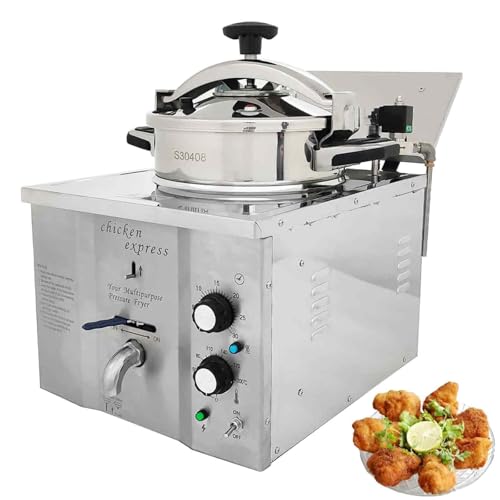
BEILOCKERY 16L Electric Pressure Fryer is an electric pressure fryer with a 16L capacity, distinguishing it from the open fryers and larger gas model. It uses a 2,400W ceramic heater and offers temperature control from 50–200°C (122–392°F). The maker says it operates at 8 PSI and includes a pressure gauge and safety relief valve. Stainless steel construction and an oil drain are also specified. This may suit kitchens seeking a compact pressure-frying setup; its 110V power requirement makes electrical compatibility a key limitation for buyers without a matching outlet.
Bottom line: Choose this if you want an electric pressure fryer and have a compatible 110V outlet.
Yokoma 45L Natural Gas Pressure Fryer

Yokoma 45L Natural Gas Pressure Fryer has the largest capacity here at 45L and uses natural gas, unlike the electric pressure models. The maker says it can fry 6–8 ducks at once and describes a digital temperature panel plus automatic exhaust, manual exhaust, and safety valves. Its stainless-steel body is listed at 350 pounds, so it is a substantial commercial-scale unit rather than a countertop choice. Consider it only when the kitchen is set up for natural gas and has room for a 40.94-inch-long, 20.47-inch-wide appliance.
Bottom line: Choose this for large batches when your kitchen supports a natural gas appliance.
Electric Fryer with Two Baskets

Electric Fryer with Two Baskets is the open-frying alternative: its two tanks and baskets allow separate batches without a sealed pressure vessel. The size variant is 12L and 5,000W, and the removable tanks, baskets, heaters, lids, handles, and residue partitions are intended to simplify cleaning. It can suit kitchens that want to fry chicken alongside other foods, such as fries or sausages. Unlike the pressure models, no pressure controls are described, and the 5,000W rating means buyers should verify that their electrical circuit can support the unit.
Bottom line: Choose this for two-basket open frying rather than pressure-fried chicken.
Yokoma 22L Electric Pressure Fryer

Yokoma 22L Electric Pressure Fryer pairs a 22L capacity with electric pressure cooking, placing it between the 16L electric fryer and the 45L gas model by capacity. Its numerical control panel includes timing and selectable temperature programs, according to the maker. The described safety features include a self-weight valve, automatic pressure relief valve, elastic crossbeam, and silicone sealing ring. At 220V, this unit differs from the 110V electric option and may require a compatible circuit. Its 26.8-inch width also matters when checking counter or work-area space.
Bottom line: Choose this if 22L capacity and a compatible 220V connection suit your setup.
INTBUYING 6L LPG Fryer

INTBUYING 6L LPG Fryer is the smallest-capacity choice at 6L and uses LP gas rather than electricity or natural gas. Its adjustable firepower is controlled through the gas inlet, and a gas regulator valve is included. The maker says the fryer needs to heat slowly, so it may not suit cooks prioritizing quick startup or larger batches. The product also cautions against use on flammable materials. This compact stainless-steel fryer can suit small open-frying tasks, but it is not described as a pressure fryer.
Bottom line: Choose this for small LP-gas batches when pressure cooking is not required.
How to Choose a Chicken Fryer
Choose pressure frying for a sealed cooking vessel, or an open deep fryer for ordinary basket frying. Pressure models in this group range from 16L to 45L, while the open fryers range from 6L to 12L by the size variants. Capacity alone does not determine batch size: basket dimensions, food size, and the maker’s fill limits also matter. For electrical models, compare voltage and wattage with the circuit available; the electric options include 110V, 220V, and 5,000W. For gas units, distinguish LP gas from natural gas rather than assuming they share a connection. If you cannot verify the required hookup, check it before ordering.
Use the table to narrow the type by heat source and cooking style.
| Need | Suitable type | Example capacity |
|---|---|---|
| Sealed pressure cooking | Electric or gas pressure fryer | 16L–45L |
| Open frying in separate batches | Electric fryer with two tanks | 12L variant |
| Small LP-gas open frying | Single-tank gas fryer | 6L |
Pressure Fryers and Open Fryers
Pressure fryers cook food in a sealed vessel, while open fryers expose baskets to hot oil in an uncovered tank. The pressure choices here include pressure gauges or pressure-relief features, but their described controls differ by model; compare the specific safety valves and operating controls rather than treating pressure fryers as interchangeable. Open fryers avoid pressure-vessel operation and can be simpler to separate into batches, as with a two-tank design. They still involve hot oil and can cause severe burns. Keep water away from hot oil, lower dry food gently, and avoid crowding a basket, which can cause oil to surge or temperature to drop. Never open a pressure vessel until its pressure has been released as directed by its maker.
Capacity, Space, and Kitchen Fit
Match the fryer’s capacity to the batch you need, then confirm its footprint and utility connection. A 45L model is suited to a different scale than a 6L tank, but the product’s vessel capacity does not guarantee a particular chicken batch size. The footprints span roughly 5.7–40.94 inches long and 15.4–20.47 inches wide where dimensions are supplied, so measure the counter, aisle, and any service clearance first. A useful rule is to leave at least 6 inches of open working space around a hot countertop appliance where the kitchen layout permits, and keep it away from combustible surfaces. Verify voltage and gas type before committing to an installation.
Safe Frying and Routine Care
Dry chicken thoroughly before it enters hot oil, because surface water flashes into steam and can splatter oil. Lower baskets slowly, keep hands and face clear of the tank, and never fill oil past the fryer maker’s maximum line; expansion and bubbling need room. Pressure fryers need extra caution: confirm the lid seal and relief parts are correctly fitted before heating, and do not force a lid open while pressure remains. After use, allow oil and metal parts to cool before draining or cleaning. Remove crumbs and food residue regularly, since debris can burn and affect later batches. Follow the unit’s cleaning method for electrical parts and never immerse a heater or controller unless the maker expressly permits it.
Frequently Asked Questions
What is the difference between pressure frying and deep frying?
Pressure frying cooks in a sealed vessel, while conventional deep frying uses an open oil tank. Pressure fryers require working pressure-release components, so never open one while it remains pressurized.
How much capacity do I need for chicken?
Choose capacity based on your intended batch and the basket dimensions, not the tank volume alone. The options here range from 6L to 45L, so a 6L tank is a small-batch choice compared with a 45L commercial-scale unit.
Can I use an LP gas fryer with natural gas?
Do not assume an LP fryer can run on natural gas; the fuel and regulator requirements differ. Use only the fuel type and configuration approved for the specific unit.
How can I reduce hot-oil splattering?
Pat chicken dry and lower it slowly in a basket, since water on food rapidly turns to steam in hot oil. Keep the basket from crowding and keep your face and hands away from the tank.
What electrical connection does a chicken fryer need?
Match the appliance’s voltage and wattage to a compatible kitchen circuit before use. The electric options include 110V, 220V, and 5,000W, so check the specific model’s electrical requirements.