
Fun Games for 11 Year Olds: 5 Picks by Play Style

For most 11-year-olds, Moose Games Flipslide is the strongest fit because its four modes offer quick solo challenges and multiplayer play.
Games for this age can range from individual skill challenges to group activities; match the rules and pace to who will be playing.
We earn a commission if you buy through links on this page. As an Amazon Associate I earn from qualifying purchases. Products are compared on manufacturer specifications, not hands-on testing.
- Best overall: Moose Games Flipslide – Four modes support solo play, multiplayer rounds, and different kinds of puzzle challenges.
- Best for strategy: HMmagnets Magnetic Chess Game – Its magnetic stones, adjustable string, and dice offer a strategic game for ages 8 and up.
- Best for memory play: Memory Blast Handheld Game – Lights-and-sounds sequences get more challenging and offer solo and multiplayer modes.
| Product | Best for | Age guidance | Play modes or players | Included components | Shop |
|---|---|---|---|---|---|
| Moose Games Flipslide | Puzzle challenges | Ages 8–13 | 4 modes | Game console, instructions, batteries | Check Price on Amazon |
| Memory Blast Handheld Game | Memory sequences | Ages 8–12 | Solo, multiplayer | Handheld game | Check Price on Amazon |
| HMmagnets Magnetic Chess Game | Magnetic strategy | Ages 8+ | — | 22 stones, string, dice, pouch | Check Price on Amazon |
| Would You Rather? Family Card Game | Conversation starter | — | — | Cards | Check Price on Amazon |
Fun Games for 11 Year Olds
Compare these options by age guidance, play style, and the components each game includes.
Moose Games Flipslide
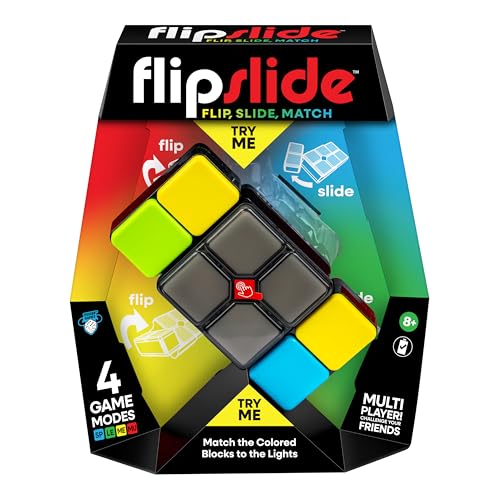
Four selectable modes make this handheld puzzle distinct from the card and group games here: Speed, Multiplayer, Level, and Memory. Players flip to find a color, then slide to match the lights, so the challenge centers on quick visual matching and dexterity. The maker says it is for ages 8 and up; the age range also covers 11-year-olds. Batteries are included, and its compact format suits travel or short play sessions. The limitation is its screen-based, individual puzzle format outside multiplayer mode, so choose another option for conversation or a larger-group activity.
Bottom line: Pick this for an 11-year-old who likes fast visual puzzles and multiple modes.
Memory Blast Handheld Game

Memory Blast centers on repeating light-and-sound sequences, giving it a different challenge from Flipslide’s color matching. Its maker describes rounds as increasingly difficult and says it supports solo and multiplayer play. The age span includes 11, and the 5.5-inch length and height make it a portable choice for travel or playdates. Choose it for a child who enjoys remembering and repeating patterns rather than answering questions or planning strategy.
Bottom line: Choose this for an 11-year-old who enjoys escalating memory challenges.
HMmagnets Magnetic Chess Game

The magnetic stones, string, and dice set this game apart from the handheld and card options. Its maker says it is for ages 8 and up and describes beginner-friendly rules; the adjustable string provides a way to change difficulty. The set includes 22 stones and a travel pouch, making it a fit for players who want a tabletop-style strategic challenge they can pack away. Choose it for an 11-year-old interested in logic and strategy rather than timed reactions.
Bottom line: Pick this for a child who wants a strategic tabletop challenge.
Would You Rather? Family Card Game

That makes it a natural option for family time, a playdate, or a relaxed group setting where talking is part of the fun. Compared with games that specify ages and modes, this is the less predictable fit for an 11-year-old; choose it when the group wants open-ended conversation.
Bottom line: Choose this when the main goal is lively conversation among family or friends.
How to choose fun games for 11-year-olds
Start with the kind of play the child enjoys: fast reactions, remembering patterns, strategy, or conversation. Age labels help screen choices, but they do not guarantee that every 11-year-old will find a game engaging; familiarity with the rules and patience for turns matter too. For a group, check the player count before settling on a game, since a two-player activity may not suit a party. For independent play or travel, a handheld format is easier to pick up than a game that needs a shared table. A useful rule: if the group has more than two people, prioritize a game whose rules explicitly allow that many players rather than assuming it works for a crowd.
Use this quick match between play style and need:
| Play style | What to look for |
|---|---|
| Quick solo challenge | Handheld game with a solo mode |
| Group activity | Stated player count and clear turns |
| Conversation | Prompt-based cards |
| Strategy | Rules that reward planning |
Age labels and challenge level
An age recommendation is a useful first filter, not a measure of a child’s ability. An 8+ recommendation covers a broad range, while a 12+ label signals that the maker intends the rules or content for older players; for an 11-year-old, use that boundary deliberately. Skill-based games can be challenging without lengthy rules, while conversation games depend more on the group’s comfort with the prompts. When choosing for mixed ages, favor a game with selectable modes or adjustable difficulty so players can take turns without one person dominating. Keep the group’s attention span in mind: timed rounds suit energetic play, while open-ended prompts give a group room to pause and talk.
Travel games and setup needs
For a car trip or waiting time, favor a compact game that can be played without a large surface or loose setup. Handheld electronics need their required power source; check that batteries are available before leaving, even when a set includes them. Card games and small strategy sets can be easier to share, but components need to stay together between sessions. A pouch or container reduces the risk of losing small pieces, and a game with a solo mode can work when travel companions want different activities. For road use, keep play in the hands of passengers rather than the driver, and avoid any game that distracts the person operating the vehicle.
Rules, turns, and group size
Player count changes how a game feels as much as its theme does. A game explicitly designed for two or more players is easier to plan around than one with no stated count; for a group of three or more, confirm that the rules support the full group. Timed guessing rounds create pressure and quick turns, while strategy games may ask players to wait as others make decisions. Before starting, explain the goal and how a turn ends, then play a practice round if the rules are unfamiliar. This keeps the first real round from becoming a rules debate and helps an 11-year-old decide whether the pace is enjoyable.
Frequently Asked Questions
Are games labeled 8+ suitable for an 11-year-old?
An 8+ age label includes an 11-year-old, though challenge and interest still vary by child. Check the game’s rules and play style to see whether it suits the child and group.
What makes a good travel game for kids?
A compact format and minimal setup are useful for travel, while a solo mode helps when companions are occupied. Keep games away from the driver so play does not distract from driving.
Should an 11-year-old play a game marked 12+?
A 12+ label is the maker’s age guidance, so it is a partial fit for an 11-year-old. Consider the group’s comfort with that recommendation and the game’s rules before choosing it.
How can I make a game easier for mixed ages?
Start with the simpler rules or an adjustable difficulty setting when a game offers one. Let players take turns and explain the goal before play so younger or less experienced participants can follow along.