
Glycerin for Snow Globes: 3 Options Compared

For most snow globe crafts, NOW Solutions Vegetable Glycerin, 16 fl oz is the practical pick because its 16-fluid-ounce bottle suits small batches without committing to a gallon. Choose US+ Vegetable Glycerin, 1 gal if you need substantially more glycerin for repeated or larger projects; glycerin is a viscous liquid added to the water to slow falling snow or glitter.
These are general-purpose glycerin products, so none is identified specifically for snow globes. Start with a small measured amount and adjust before sealing the globe.
We earn a commission if you buy through links on this page. As an Amazon Associate I earn from qualifying purchases. Products are compared on manufacturer specifications, not hands-on testing.
- Best overall: NOW Solutions Vegetable Glycerin, 16 fl oz – The 16-fluid-ounce bottle is a useful quantity for small snow globe batches.
- Best for larger batches: US+ Vegetable Glycerin, 1 gal – The 128-fluid-ounce bottle provides substantially more glycerin and is marked food grade and USP.
- Best for stated purity: A+Health Pure Glycerin, 16 fl oz – Its 99.5% anhydrous vegetable glycerin specification gives a clear purity figure in a 16-fluid-ounce size.
| Product | Best for | Bottle volume | Purity or grade | Shop |
|---|---|---|---|---|
| NOW Solutions Vegetable Glycerin, 16 fl oz | Small craft batches | 16 fl oz | — | Check Price on Amazon |
| US+ Vegetable Glycerin, 1 gal | Repeated projects | 128 fl oz | Food grade, USP, 100% pure | Check Price on Amazon |
| A+Health Pure Glycerin, 16 fl oz | Purity specification | 16 fl oz | 99.5% anhydrous, vegetable based | Check Price on Amazon |
Glycerin for Snow Globes
Compare bottle quantity and stated grade, then measure glycerin conservatively into the globe liquid.
NOW Solutions Vegetable Glycerin, 16 fl oz

For a small snow globe project, this 16-fluid-ounce bottle avoids starting with a gallon-sized supply. The product is vegetable glycerin, described as easily soluble in water, a helpful property for blending it into a globe’s liquid. Its uses focus on skin care rather than crafts, so it should be treated as a general-purpose glycerin choice, not a snow-globe formulation. Measure a little at a time and test the movement of the glitter before sealing; this size may be limiting if you plan many globes.
Bottom line: Pick this for a modest craft supply when a smaller bottle is more useful than a bulk quantity.
US+ Vegetable Glycerin, 1 gal

The gallon size is the clear distinction here: at 128 fluid ounces, it supplies eight times the volume of a 16-fluid-ounce bottle for repeated projects. The maker identifies it as 100% pure, food grade, and USP, and lists craft projects among its uses. That quantity can be cumbersome for a single globe or occasional craft, and the product is not described as a snow-globe-specific mixture. Keep the bottle closed between uses and pour only the amount needed for the batch.
Bottom line: Choose this when you expect to make many globes and want the larger stated quantity.
A+Health Pure Glycerin, 16 fl oz
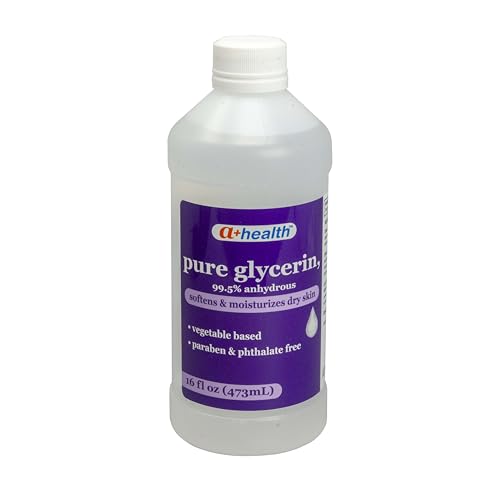
The 99.5% anhydrous composition sets this 16-fluid-ounce vegetable-based glycerin apart from the other small bottle. Its product uses include DIY crafts and bubble solution, making it broadly suited to craft projects, although snow globes are not singled out. The percentage is a useful point of comparison if you want a composition; it does not establish a special effect in a globe. Like other glycerin choices, it needs careful dosing because too much thickens the liquid and can hinder glitter movement.
Bottom line: Pick this if an anhydrous percentage matters alongside a manageable bottle size.
How much glycerin to add to a snow globe
Start with about 1 teaspoon of glycerin per cup of water, then adjust in small increments after watching the glitter settle. A common craft starting range is roughly 1 teaspoon to 1 tablespoon per cup; particle size and the effect you want change the result. Too little produces a quick fall, while too much can make glitter float sluggishly or clump. Use a test jar before sealing the finished globe, because a sealed container is harder to correct. Add glycerin to the liquid gradually and stir gently so the mixture is even before adding glitter.
Choose glycerin by project size and purity
For one or a few globes, a 16-fluid-ounce bottle is usually easier to handle than a gallon; reserve the larger container for repeated batches. The products here differ in bottle volume and stated grade, not in any snow-globe performance. Food grade or USP wording describes a grade claim, but does not replace sensible craft handling or prove compatibility with every globe material. Choose the product by how much you expect to use and whether a purity specification matters. If you are uncertain how the liquid interacts with a painted ornament or seal, check compatibility with that material before filling the globe.
This quick guide matches common craft needs to the main selection factor.
| Need | Selection rule |
|---|---|
| One or a few globes | Choose a 16-fluid-ounce bottle |
| Many batches | Choose the 128-fluid-ounce bottle |
| Specific purity figure | Compare stated grade or percentage |
Mix the globe liquid and glitter
Distilled water is a useful base because it contains fewer dissolved minerals than tap water, which can leave visible deposits over time. Add glycerin in measured increments, then test with the same glitter or artificial snow intended for the globe; heavier particles settle faster than light flakes. A narrow-neck vessel can trap air, so fill slowly and avoid leaving a large bubble unless the globe design requires one. Keep the liquid and small craft pieces away from children and pets during assembly, and secure the closure completely before handling the filled globe.
Common snow globe filling mistakes
The most common mistake is adding glycerin by eye and discovering a syrupy mixture only after the globe is closed. Measure by volume and adjust in small increments; changing the liquid viscosity affects settling speed and can make particles bunch together. Another mistake is filling to the very top before the ornament and closure are in place, leaving no room for displacement. Test the liquid in a separate clear container first, and make sure the globe’s seal is suitable for a water-based filling. If leaks or material compatibility are a concern, verify the closure and ornament materials before filling.
Frequently Asked Questions
Does glycerin make snow globe glitter fall more slowly?
Yes, glycerin thickens the water so glitter generally falls more slowly. Begin around 1 teaspoon per cup of water, then adjust based on the particle size and settling speed.
Can I use tap water in a homemade snow globe?
Distilled water is preferable because it has fewer dissolved minerals that can leave deposits. If using tap water, mineral content varies by location, so test the mixture before sealing the globe.
Why is the glitter clumping in my snow globe?
Excess glycerin can make the liquid too viscous and cause particles to move poorly or bunch together. Add water gradually to thin the mixture, testing the glitter after each small adjustment.
Should I use glycerin or clear glue for a snow globe?
Both can thicken the liquid, but they are different materials and may produce different settling speeds. Start with a small test batch and add either thickener incrementally rather than combining large amounts at once.
How do I prevent air bubbles when filling a snow globe?
Pour slowly and leave room for the ornament and closure to displace liquid. Bubbles can also be reduced by letting the filled container sit before sealing it.