
Rear Drag Spinning Reels: Models Compared by Size

For a compact reel with a named rear-drag system, choose Sahara Rear Drag 1000; its 1000 size and Fightin Drag II are the clearest fit for lighter setups. The keyword names a reel type rather than a particular model, so compare size and drag features; choose another option if you need a larger reel for heavier tackle.
We earn a commission if you buy through links on this page. As an Amazon Associate I earn from qualifying purchases. Products are compared on manufacturer specifications, not hands-on testing.
- Best overall: Sahara Rear Drag 1000 – The 1000-size reel explicitly names rear drag and adds Fightin Drag II.
- Best for 4000 size: Sienna RE 4000 – Its Sienna RE name and 4000 size distinguish it from the 1000-size choices.
- Best for baitfeeder use: KastKing Sharky Baitfeeder III 6000 – It combines front and rear drag with a live-liner feature.
| Product | Best for | Size | Gear ratio | Weight | Shop |
|---|---|---|---|---|---|
| Sahara Rear Drag 1000 | Light setups | 1000 | 5.2:1 | 0.2 lb | Check Price on Amazon |
| Sienna RE 4000 | Mid-size setups | 4000 | — | 0.3125 lb | Check Price on Amazon |
| Shimano SN1000RE | Compact Shimano | 1000 | — | 0.9 lb | Check Price on Amazon |
| KastKing Sharky Baitfeeder III 6000 | Live-liner fishing | 6000 | 5.5:1 | 1.03 lb | Check Price on Amazon |
Rear Drag Spinning Reels Compared
Compare reel size and drag features first, then match the reel to the line and tackle you plan to use.
Sahara Rear Drag 1000
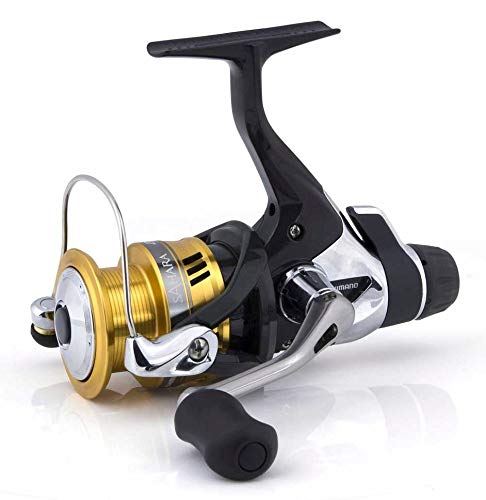
The Sahara stands out for naming both rear drag and Fightin Drag II, alongside a 1000 size and 5.2:1 gear ratio. Its compact size makes it the lightest-weight option among these listed reels, which suits anglers assembling a lighter spinning setup. The reel also has a Propulsion Line Management System. The limitation is its 1000 size: anglers planning to use heavier tackle or target larger fish may prefer a larger-size reel, after checking line capacity and rod compatibility for their setup.
Bottom line: Pick this for a compact 1000-size reel with a secondary drag feature.
Sienna RE 4000

The Sienna RE is the larger Shimano-named option here at size 4000, compared with the 1000-size models. Its feature is the Propulsion Line Management System, which gives buyers a line-management feature to weigh alongside reel size. Consider it for a setup that calls for a 4000-size reel rather than a small 1000. The limitation is that the maker does not include gear ratio or drag capacity, so anglers matching a reel to a target drag setting should confirm those values before ordering.
Bottom line: Choose this when a 4000 size is the key fit.
Shimano SN1000RE
The SN1000RE pairs a 1000 size with a named HAGANE gear feature, while the Sahara is the other 1000-size option and gives a gear ratio. It also includes Shimano’s Propulsion Line Management System. That combination may appeal to buyers who want the named gear feature in a compact-size reel. Its weight is 0.9 lb, which is greater than the Sahara’s weight; anglers prioritizing a lighter stated figure should compare carefully. No gear ratio is provided in the specifications.
Bottom line: Pick this for a 1000-size reel with a named HAGANE gear feature.
KastKing Sharky Baitfeeder III 6000
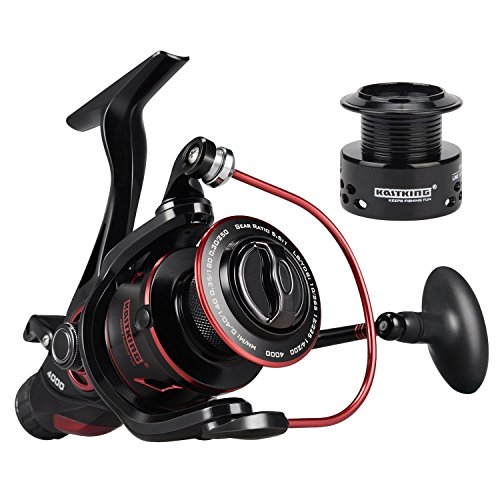
The Sharky Baitfeeder III is the only option here explicitly described as a baitfeeder, with both front and rear drag functions and a live-liner feature. Its size 6000, 5.5:1 gear ratio and 26.5 lb maximum drag give more concrete selection figures than the other larger reel. The maker says it is approved for freshwater and saltwater use, and lists 10+1 shielded stainless-steel ball bearings, a CNC aluminum spool and a graphite body. Its 1.03 lb weight and larger size may not suit a light setup.
Bottom line: Choose this when live-liner function and size 6000 matter.
How to choose a rear drag spinning reel
Start with reel size and intended line, not the drag label alone. Reel size numbers are not perfectly standardized across brands, so treat 1000, 4000 and 6000 as broad size classes and verify the reel’s line capacity against your target line. Rear-drag adjustment is positioned at the back of the reel body, making it accessible without reaching the spool. Front-drag designs generally allow larger drag washers and can provide higher maximum drag, so anglers targeting hard-pulling fish often compare front-drag models too. For lighter freshwater tackle, a 1000-size reel is a reasonable starting point; for larger line and heavier rigs, compare 4000 or 6000 options and the rod’s rated line range.
Rear drag and baitfeeder types
A standard rear-drag reel adjusts the spool’s resistance with a control at the reel’s rear; a baitfeeder adds a second, lighter line-release setting for a bait presentation. A live-liner setting lets line move with reduced resistance until the angler engages the main drag, but the main drag still controls the fight. Use the comparison below to distinguish the options by their function and size. A baitfeeder is not automatically a substitute for a standard rear-drag reel: choose it when the lighter secondary setting is useful, and choose a simpler reel when that feature is unnecessary. Verify the rod and reel line capacities match before fishing.
| Type or size | Typical use | Selection check |
|---|---|---|
| 1000 class | Light line and lighter tackle | Check spool capacity for the chosen line |
| 4000 class | Broader medium-size setups | Match reel capacity to the rod rating |
| Baitfeeder | Secondary low-resistance line release | Confirm the feature can be switched off for ordinary use |
Match reel size to rod and line
Choose a reel by the rod’s line and lure ratings, then check the reel’s spool capacity for the exact line diameter. A size number alone cannot confirm fit because brands use different sizing conventions and spool depths. For a lighter rod intended for small line, a 1000 class is usually more proportionate; when the rod is rated for heavier line, consider a 4000 or larger class only if its capacity and balance suit the setup. Keep the reel’s maximum drag below the weakest component’s safe working limit, including line, knots, leader and rod. Before buying, confirm line capacity and drag range for your target setup, since those determine practical fit better than the size label alone.
Frequently Asked Questions
Is rear drag or front drag better for spinning reels?
Front drag systems generally accommodate larger drag washers and are often chosen for higher drag loads. Rear drag controls are easier to reach at the back of the reel, so pick based on access preference and the reel’s drag capacity.
What size spinning reel is right for light fishing?
A 1000-size reel is a common starting class for light freshwater tackle. Check spool capacity and the rod’s line rating, because reel size numbers vary between brands.
What does a baitfeeder spinning reel do?
A baitfeeder provides a secondary low-resistance setting that lets line move before the main drag is engaged. It is useful when a bait needs to move freely; switch to the main drag before fighting the fish.
How much drag should a spinning reel have?
Set drag below the safe working strength of the weakest part of the rig, including the line, knot and leader. A reel’s maximum drag is a ceiling, not a recommended setting for every line.
Can I put braided line on a spinning reel?
Yes, if the spool and reel support braided line and the capacity matches your intended diameter. Many anglers use backing or a braid-ready spool surface to reduce braid slipping on a smooth arbor.