
Golf Gloves for Trigger Finger: 4 Options Compared

For a less restrictive fingertip feel, the Orlimar Allante Women’s Half-Finger Glove is the clearest match because its half-finger design leaves fingertips exposed. If you want added support between fingers, consider MONKEY GRIP Sun Cover Golf Glove; neither glove is presented as a treatment for trigger finger, so ask a health professional about symptoms that affect play.
We earn a commission if you buy through links on this page. As an Amazon Associate I earn from qualifying purchases. Products are compared on manufacturer specifications, not hands-on testing.
- Best overall: Orlimar Allante Women’s Half-Finger Glove – Its open fingertip construction leaves the fingertips exposed while the synthetic microfiber palm provides a gripping surface.
- Best for finger support: MONKEY GRIP Sun Cover Golf Glove – A 2 mm finger power pad is designed to add support between fingers.
- Best for damp conditions: FINGER TEN All-Weather Golf Gloves, 3-Pack – The all-weather grip is designed for damp hands or grips, and the gloves come in a three-pack.
| Product | Best for | Finger design | Hand and size | Pack count | Shop |
|---|---|---|---|---|---|
| Orlimar Allante Women’s Half-Finger Glove | Exposed fingertips | Half-finger | Right hand, M/L | 1 glove | Check Price on Amazon |
| FINGER TEN All-Weather Golf Gloves, 3-Pack | Damp-weather grip | Full-finger | Left hand, M/L | 3 gloves | Check Price on Amazon |
| FINGER TEN All-Weather Golf Gloves, 6-Pack | Practice rotation | Full-finger | Left hand, M/L | 6 gloves | Check Price on Amazon |
| MONKEY GRIP Sun Cover Golf Glove | Inter-finger support | Half-finger | Right hand, M | 1 glove | Check Price on Amazon |
Golf Gloves for Trigger Finger
These options differ in fingertip coverage, grip features and weather-focused construction.
Orlimar Allante Women’s Half-Finger Glove

For golfers who want their fingertips uncovered, this women’s half-finger glove has open fingertip construction rather than the coverage of a conventional golf glove. Orlimar says the breathable mesh back promotes airflow, while the synthetic microfiber palm provides a gripping surface. The medium/large glove is for the right hand, which is the lead hand for a left-handed golfer. Its exposed fingertips are the key tradeoff: golfers who want fingertip coverage or padding should choose a different style. The glove is not described as a treatment for trigger finger.
Bottom line: Choose it if exposed fingertips matter more than full-finger coverage.
FINGER TEN All-Weather Golf Gloves, 3-Pack

For golfers prioritizing weather-oriented grip over exposed fingertips, this three-pack is designed for damp hands and grips. The patterned microfiber material has ventilation openings between and on the backs of the fingers. The medium/large size is for the left hand, generally the lead hand for a right-handed golfer. The maker says the gloves support grip in changing conditions, including warm, humid play. Unlike half-finger designs, these provide finger coverage, so they may not suit someone who wants fingertips uncovered or wants a localized finger pad.
Bottom line: Pick it for a left-hand glove with an all-weather grip design.
FINGER TEN All-Weather Golf Gloves, 6-Pack

For golfers who want several gloves in rotation, this six-pack pairs a moisture-wicking mesh construction with a flexible design. The gray, medium/large gloves are for the left hand, usually the lead hand for a right-handed golfer. The maker says the all-weather grip is intended for rain, heat and humid conditions, and the mesh promotes airflow. This is a weather-focused option, not a half-finger glove: golfers seeking open fingertips or the 2 mm inter-finger pad in MONKEY GRIP Sun Cover Golf Glove should look elsewhere. The six-glove pack may be more than needed for occasional play.
Bottom line: Choose it if a six-glove rotation suits your practice routine.
MONKEY GRIP Sun Cover Golf Glove
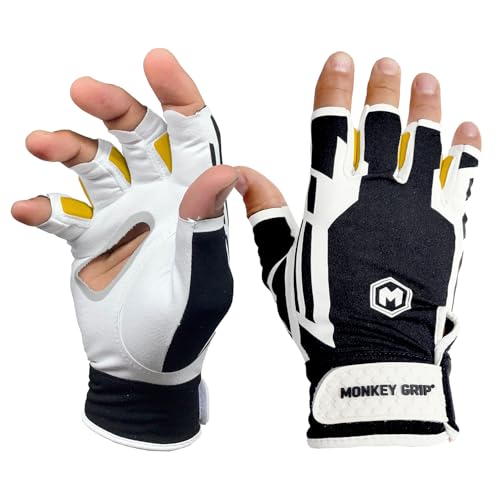
For golfers seeking a pad between fingers, this right-hand sun cover glove has a 2 mm finger power pad intended to add support and a nonslip synthetic grip. The half-finger design and palm ventilation opening distinguish it from the full-finger weather gloves. The maker says the glove is designed for UV protection; its medium size is for the right hand. The pad is not a medical device or a treatment for trigger finger, and the single-hand design may not match a golfer who needs a left-hand glove. Check hand orientation and fit before choosing.
Bottom line: Pick it if a right-hand half-finger glove with a finger pad fits your needs.
How to choose a golf glove for trigger finger
Start with the point of contact that bothers you: fingertip coverage, pressure between fingers, or grip security. Half-finger gloves leave fingertips exposed; a full-finger glove covers them, and a pad between fingers changes pressure at that spot. Glove fit matters because excess material can bunch at the fingers and interfere with holding the club. Compare the hand designation as well: right-hand gloves are commonly worn by left-handed golfers, and left-hand gloves by right-handed golfers. If a finger catches, locks, or becomes painful, a golf glove should not substitute for medical advice. A clinician can assess symptoms and help determine whether playing or changing grip is appropriate.
Finger coverage and grip styles
Finger coverage is the clearest difference among golf gloves for this need. Half-finger designs expose the fingertips, while full-finger styles retain fabric over them; a support pad adds material between fingers without making the whole glove fingerless. Golf gloves are commonly made for the lead hand, though some golfers wear a glove on each hand. A snug fit is useful for control, but the glove should not restrict bending or circulation. Try the grip with the glove on and check for seams or padding pressing on the affected area. Do not assume a feature marketed for grip or support will relieve a medical condition.
| Need | Style to consider |
|---|---|
| Uncovered fingertips | Half-finger |
| Finger coverage in wet play | All-weather full-finger |
| Added material between fingers | Finger-pad design |
Hand, size and fit checks
Check hand orientation before choosing a golf glove: a right-handed golfer usually wears a left-hand glove, while a left-handed golfer usually wears a right-hand glove. Size labels are not interchangeable across makers, so use the brand’s sizing chart and measure the hand it identifies. A glove should sit smoothly across the palm and fingers without loose folds; too-tight fabric can make a sensitive finger feel more constrained. If the glove has a pad, place it between the intended fingers and test a club grip gently. Stop if the fit increases pain or catching, and get clinical guidance rather than tightening the glove to compensate.
Playing golf with trigger finger symptoms
Trigger finger can cause a finger to catch or lock when bending, so comfort and safe control matter more than a claimed grip advantage. A glove does not correct the underlying cause; a clinician can assess persistent catching, locking, pain or limited motion. Before a round, test a few gentle swings and check whether the glove changes pressure on the affected finger. Avoid forcing the finger straight or continuing through pain. Golf club grip size and hand position also affect how tightly a golfer holds the club, so a golf professional can help assess technique while a health professional addresses symptoms. Choose a glove that allows a secure, comfortable hold, not one that requires extra squeezing.
Frequently Asked Questions
Can a golf glove help trigger finger symptoms?
A golf glove may change coverage or pressure, but it does not treat trigger finger. If a finger catches, locks, or hurts during play, consult a health professional before relying on a glove change.
Are half-finger golf gloves easier on fingertips?
Half-finger gloves leave fingertips exposed, which reduces fabric coverage at the tips. Check whether the exposed area feels comfortable and whether you can still hold the club securely.
Which hand should a golf glove cover?
Most golfers wear a glove on the lead hand: left hand for right-handed golfers and right hand for left-handed golfers. Check the glove’s hand designation because some options are made for only one hand.
How should a golf glove fit across fingers?
A golf glove should lie smoothly without loose folds or restricting finger movement. Check the maker’s size chart, then test the grip gently; stop if pressure or catching worsens.
When should I stop golfing with a catching finger?
Stop if the finger locks, pain increases, or you cannot control the club securely. Persistent catching or limited motion warrants assessment by a health professional.