
Best 3 Piece Golf Balls: 5 Models Compared

Legato LTX3085 is the clearest fit among these best 3 piece golf balls because its name identifies three-piece construction and a urethane cover. Choose another option if you prioritize a particular color, soft feel or distance-focused design instead; those options are golf balls, but their features do not identify them as three-piece.
We earn a commission if you buy through links on this page. As an Amazon Associate I earn from qualifying purchases. Products are compared on manufacturer specifications, not hands-on testing.
- Best overall: Legato LTX3085 – Its name identifies three-piece construction and a urethane cover, with alignment technology also included.
- Best for visibility: Vice Pro Ice Blue – The Ice Blue metallic finish is intended to make the ball more visible on the course.
- Best for soft feel: Callaway Supersoft 2025 – The maker describes a soft-feel core and greenside control focus.
| Product | Best for | Construction / cover | Alignment feature | Color | Shop |
|---|---|---|---|---|---|
| Legato LTX3085 | Urethane cover | 3-piece; urethane | Bold Track Technology | White | Check Price on Amazon |
| Vice Pro Ice Blue | Color visibility | — | Closed alignment line | Ice Blue | Check Price on Amazon |
| Callaway Supersoft 2025 | Soft-feel play | — | — | White | Check Price on Amazon |
| TaylorMade Distance+ 2025 | Tee distance | — | Plus Alignment Aid | White | Check Price on Amazon |
| TaylorMade Distance+ 2021 | Distance alignment | Two-layer; ionomer cover | Plus Alignment Aid | White | Check Price on Amazon |
Best 3 Piece Golf Balls Compared
Only one option explicitly identifies three-piece construction, while the others offer different golf-ball features and priorities.
Legato LTX3085
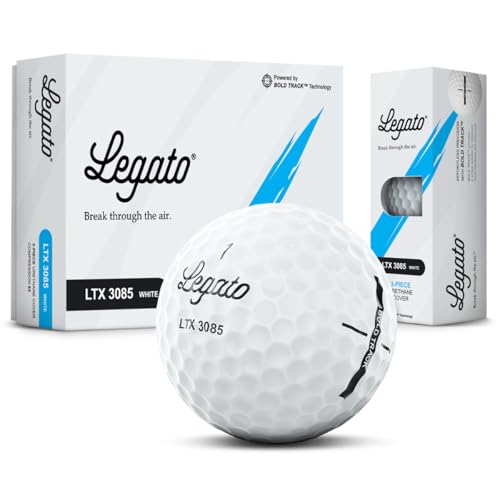
This is the only option here whose name explicitly identifies three-piece construction, making it the most direct match for shoppers seeking that build. It pairs a urethane cover with an 85-compression design and Bold Track Technology, which the maker says is intended to help with putting alignment. The maker also says its 350-dimple design supports stable flight and that the construction balances distance, lower long-shot spin and greenside control. Golfers who want a specifically identified three-piece ball with a urethane cover should start here; those who mainly want a named color or a soft-feel distance design may prefer another style.
Bottom line: Choose this if an explicitly identified three-piece urethane ball is your priority.
Vice Pro Ice Blue

The Ice Blue color and metallic appearance set this option apart from the white models, while its closed alignment line adds a visual aiming reference. The maker says the Pro model is designed for higher ball speed and driver distance, and the color is intended to improve visibility on the course. It suits golfers who want a distinctive colored ball and alignment aid, but not shoppers who require an explicitly identified construction.
Bottom line: Choose this for the Ice Blue finish and built-in aiming reference.
Callaway Supersoft 2025

Soft feel is the defining emphasis here: the maker describes a HyperElastic SoftFast Core and a hybrid cover designed to combine distance, durability and feel. The same product features point to greenside control and spin on approach and short-game shots, giving it a broader feel-and-control focus than a ball marketed only around tee distance. No construction layer count is identified in the features, so it cannot be confirmed as a three-piece choice. It may suit golfers prioritizing soft feel and short-game considerations, while buyers who require a three-piece build should select the explicitly identified option.
Bottom line: Choose this if soft feel matters more than confirming a three-piece build.
TaylorMade Distance+ 2025

A distance-first design and a Plus Alignment Aid distinguish this ball. The maker says its Extended Flight Dimple Pattern is designed to stay airborne longer and resist wind, and the ball is also designed for mid/high wedge spin. This is a related alternative for golfers focused on tee distance and a visible setup reference. It is a weaker match for someone choosing specifically by layer count or seeking a confirmed construction type.
Bottom line: Choose this for a distance-focused design and alignment aid.
TaylorMade Distance+ 2021

This model is specifically identified as a two-layer ball with an ionomer cover, unlike the option whose name identifies three-piece construction. Its REACT Speed Core and aerodynamic dimple pattern are presented by the maker as distance-oriented features, and the Plus Alignment Aid gives a visual reference for setup and putting. The two-layer construction makes it a poor fit when three pieces are a firm requirement. Golfers comparing construction can use this as a clear two-layer contrast; golfers who prioritize a confirmed three-piece build should pass it over.
Bottom line: Choose this only if a two-layer distance ball fits your priorities.
How to Choose a 3 Piece Golf Ball
Start by confirming the construction, then compare cover material and feel priorities. A typical three-piece ball has a core, a surrounding mantle layer and an outer cover; the materials and thicknesses can differ by model. Two-piece balls commonly pair a core with a cover, so a named distance feature alone does not establish a three-piece build. Urethane covers are commonly chosen for feel and greenside control, while ionomer covers are a common alternative on distance-focused balls. Treat maker performance language as a design aim, not a guarantee for every swing. If three pieces are essential, look for an explicit construction claim rather than assuming from the model family or marketing theme.
Use the comparison below to separate a confirmed construction from features that do not establish layer count.
| Buyer priority | What to verify | Choice direction |
|---|---|---|
| Three-piece construction | Core, mantle and cover or explicit three-piece claim | Favor a confirmed three-piece model |
| Short-game feel | Cover material and greenside design focus | Compare urethane-cover models |
| Tee distance | Distance-oriented design claims | Compare the maker’s focus |
What Three-Piece Construction Means
A three-piece golf ball generally combines a core, mantle and cover, with each layer contributing to the ball’s overall design. The word “three-piece” describes the layer count, not a universal feel, flight or spin result. Core composition, mantle design, cover material and dimple pattern can all vary, so two three-piece models need not play alike. A ball with a urethane cover is often selected by players seeking greenside control, but the cover alone does not prove the ball has three layers. Confirm both the construction and cover material when both matter to your choice. Do not infer a layer count from a distance claim, compression number or alignment graphic.
How Cover Material Affects the Choice
Cover material is a useful comparison point, but it does not replace checking construction. Urethane is commonly associated with a softer feel and greenside control, while ionomer is widely used in golf-ball designs focused on durability and distance. These are general tendencies, not a promise of results from every model or golfer. Match the cover to the shots and feel you value: players who often work on approach and short-game control may prioritize urethane, while players focused on tee distance may weigh other design features more heavily. Check the product’s named cover material and distinguish it from a maker’s performance claims. Construction count and cover type are separate specifications.
Alignment and Color on the Course
Alignment aids and ball color can help with visual setup, but neither indicates construction or guarantees more accurate putting. A printed line gives a reference to aim along; align it with the intended start line before addressing the ball, then use the same routine consistently. Colored or metallic finishes may be easier for some golfers to pick out against grass, but visibility depends on course conditions and personal vision. White remains a conventional choice, while a distinctive hue can make identification easier for a player. Select color and markings as practical preferences after confirming the ball’s construction, cover and other features that matter to your game.
Frequently Asked Questions
What are the layers in a three-piece golf ball?
A typical three-piece ball has a core, mantle layer and outer cover. Materials and layer design vary, so the three-piece label does not guarantee the same feel or flight across models.
Does a urethane cover mean a ball is three-piece?
No; cover material and layer count are separate characteristics. Check for an explicit construction statement as well as the cover material if both are important.
Are three-piece golf balls always better for short shots?
No; ball design and golfer delivery both affect short-game results. Urethane covers are commonly selected for greenside control, but that tendency is not a guarantee for every player.
How can I tell a two-piece ball from a three-piece ball?
Look for the construction or a clear layer description: a common three-piece design has a core, mantle and cover, while a common two-piece design has a core and cover. Do not use color, alignment markings or a distance claim to infer layer count.
Does ball color affect golf ball performance?
Color is primarily a visibility preference, not a construction specification. Choose a color you can track comfortably in the conditions where you play.