
Heat Lamps for Terrapins: 3 Options Compared

TFNN UVA/UVB Heat Lamp is the most versatile starting point for terrapins because it pairs 50W and 75W bulbs with UVA/UVB lighting and a cycle timer. Choose LUCKY HERP 150W Ceramic Heat Emitter instead if you need heat without visible light overnight; Gooseneck UVA/UVB Heat Lamp offers a longer timer range and a rotatable neck for aiming the basking spot.
A terrapin heat lamp warms a dry basking area, while UVB exposure supports normal calcium metabolism. A lamp alone does not provide a complete habitat or replace species-specific care.
We earn a commission if you buy through links on this page. As an Amazon Associate I earn from qualifying purchases. Products are compared on manufacturer specifications, not hands-on testing.
- Best overall: TFNN UVA/UVB Heat Lamp – Includes 50W and 75W bulbs, UVA/UVB lighting and 3-, 6- or 12-hour cycle settings.
- Best for night heat: LUCKY HERP 150W Ceramic Heat Emitter – The 150W ceramic emitter produces heat without visible light.
- Best for flexible aiming: Gooseneck UVA/UVB Heat Lamp – The 360-degree gooseneck and 1-to-24-hour timer allow flexible placement and scheduling.
| Product | Best for | Bulb type and wattage | Timer range | Light output | Shop |
|---|---|---|---|---|---|
| TFNN UVA/UVB Heat Lamp | Combined light and heat | 50W + 75W bulbs | 3, 6 or 12 hours | UVA/UVB | Check Price on Amazon |
| LUCKY HERP 150W Ceramic Heat Emitter | Heat without light | 150W ceramic emitter | — | No visible light | Check Price on Amazon |
| Gooseneck UVA/UVB Heat Lamp | Adjustable positioning | 50W + 75W bulbs | 1 to 24 hours | UVA/UVB | Check Price on Amazon |
Heat Lamps for Terrapins
Compare the included bulbs, timer controls and lighting behavior before choosing a lamp for a dry basking area.
TFNN UVA/UVB Heat Lamp

TFNN UVA/UVB Heat Lamp combines UVA/UVB lighting and heat in a clamp-style lamp with two included bulbs, 50W and 75W. The maker says its timer cycles through 3-, 6- or 12-hour settings and offers three brightness levels. This is a fit for a setup where one fixture is intended to provide both basking heat and UV lighting. Its timer options are limited to three preset durations, so keepers who need a more precise daily schedule may prefer Gooseneck UVA/UVB Heat Lamp. Position any UVB source so its rays reach the basking area directly rather than passing through glass.
Bottom line: Choose this if you want a paired UVA/UVB and heat fixture with preset timer cycles.
LUCKY HERP 150W Ceramic Heat Emitter
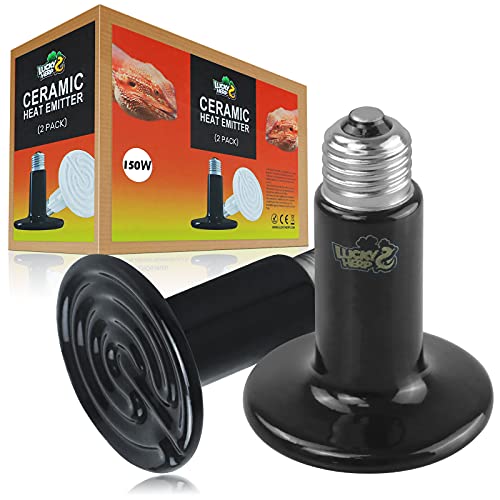
LUCKY HERP 150W Ceramic Heat Emitter differs from the other choices by producing heat without visible light, making it useful when nighttime warmth is needed without adding a lit bulb. Each emitter is 150W, and the pack contains two. The maker says it reaches rated temperature in about four minutes. Use a ceramic-rated socket and a suitable thermostat or temperature controller; high-wattage heat sources can overheat an enclosure if poorly placed.
Bottom line: Choose this for supplemental warmth when visible light at night is unwanted.
Gooseneck UVA/UVB Heat Lamp

Gooseneck UVA/UVB Heat Lamp stands out for its 360-degree gooseneck and a daily timer adjustable from 1 to 24 hours. It includes 50W and 75W heat bulbs and has four brightness settings. Those controls suit keepers who need to direct a basking spot or set a schedule beyond a few preset timer intervals.
Bottom line: Choose this when aiming flexibility and a wider timer range matter most.
How to Choose a Terrapin Heat Lamp
Choose a heat lamp by separating the needs for a warm basking spot, visible light and UVB exposure. Aquatic turtles need a dry area where they can climb fully out of the water, and the lamp should warm that area without heating the entire tank uniformly. Many commonly kept aquatic turtles bask around 85–95°F, but the target varies by species and life stage; use a thermometer at the basking surface and confirm the range for your terrapin. A ceramic emitter adds heat without visible light, while a lamp sold with UVA/UVB bulbs may combine light and warmth. UVB must reach the animal directly: ordinary glass blocks most UVB. With under 4 inches of clearance above the basking platform, prioritize a lamp designed for close mounting and verify its safe distance before use.
Heat Bulbs, UVB and Nighttime Use
Heat and UVB are separate functions, even when a fixture combines them. A ceramic emitter produces heat without visible light, so it can supply nighttime warmth without keeping the enclosure lit; it does not replace a UVB source. UVB bulbs should illuminate the dry basking zone, not shine through a glass lid or pane, because glass filters out most useful UVB. Use a separate thermometer to check both the basking surface and water, since a lamp’s wattage alone does not establish the temperature at the animal. Follow the bulb maker’s distance guidance, and avoid placing a hot lamp where splashes can reach it. A timer can make a consistent day-night schedule easier, but timer settings do not measure heat or UVB exposure.
Safe Lamp Placement Over a Turtle Tank
Place the heat source over a stable, fully dry basking platform and leave a cooler area the terrapin can move to. A basking lamp should not heat every part of the habitat to the same temperature; a gradient lets the animal choose its position. Mount the fixture securely, keep the bulb and socket away from water and splashes, and use a guard if the animal can reach the hot surface. Check the basking spot with a thermometer after adjusting lamp height or bulb wattage, because distance and airflow change surface temperature. For a small tank, confirm the lamp’s clearance and heat output before use; a 150W source can be excessive if mounted too close. Never rely on brightness settings alone to establish a safe temperature.
Terrapin Heat Lamp Setup Mistakes
A common mistake is treating a heat bulb as a UVB bulb, or assuming any UVA/UVB label tells you the UVB level at the basking spot. Check the bulb’s UVB specifications and distance guidance, and replace UVB bulbs on the schedule their maker gives because output can decline before a bulb stops glowing. Another mistake is placing the lamp over water rather than the dry platform; the terrapin needs to climb out completely to bask. Do not cover the entire tank with glass between the UVB source and the animal. Measure temperatures where the terrapin actually rests, not beside the tank or at the lamp itself, and recheck after seasonal room-temperature changes.
Frequently Asked Questions
Can a terrapin use a heat lamp overnight?
A ceramic heat emitter can provide heat without visible light overnight, unlike a light-emitting basking bulb. Use a thermostat and thermometer to prevent overheating, and preserve a normal dark period.
How warm should a terrapin basking spot be?
Many commonly kept aquatic turtles bask at about 85–95°F, but the correct target depends on species and age. Measure the platform surface with a thermometer and confirm the target for your terrapin.
How far should a heat lamp sit above a terrapin?
There is no single safe distance because bulb output, fixture design and platform height change the heat and UVB reaching the animal. Follow the bulb’s distance guidance and measure the basking surface after positioning the lamp.
Can a heat lamp shine through a glass tank lid?
A heat lamp can warm through glass, but ordinary glass blocks most useful UVB. Keep the UVB path unobstructed and protect the fixture from water splashes.