
Heel Savers for Shoes: 4 Repair Options Compared

For most worn shoe heels, GOETOR Rubber Heel Plates, 15 Pairs is the practical pick because its kit includes 15 pairs of rubber plates and 100 nails. Choose Rubber Heel and Toe Plates, 10 Pieces instead if you want a glue-on pad for a smooth surface, or Unikstep Rubber Heel Plates, 6 Pairs for a smaller kit that includes both tape and nails.
Heel savers are replacement patches that cover worn heel areas; match a patch’s shape to the damage and its attachment method to the shoe.
We earn a commission if you buy through links on this page. As an Amazon Associate I earn from qualifying purchases. Products are compared on manufacturer specifications, not hands-on testing.
- Best overall: GOETOR Rubber Heel Plates, 15 Pairs – Includes 15 pairs of rubber plates and 100 installation nails.
- Best for mixed attachment: Unikstep Rubber Heel Plates, 6 Pairs – Includes adhesive tape as well as nails for installing its rubber plates.
- Best for glue-on repair: Rubber Heel and Toe Plates, 10 Pieces – Designed for smooth surfaces and installed with shoe glue.
| Product | Best for | Quantity | Attachment | Plate size | Shop |
|---|---|---|---|---|---|
| GOETOR Rubber Heel Plates, 15 Pairs | Multiple repairs | 15 pairs | Nails; 100 included | 2.12 × 0.79 × 0.2 in | Check Price on Amazon |
| Unikstep Rubber Heel Plates, 6 Pairs | Mixed attachment | 6 pairs | Tape and nails included | — | Check Price on Amazon |
| Rubber Heel and Toe Plates, 10 Pieces | Glue-on repairs | 10 pieces | Shoe glue required | Approx. 1.97 × 0.79 × 0.12 in | Check Price on Amazon |
| KIWI Heel Saver | Simple application | — | — | — | Check Price on Amazon |
Heel Savers for Shoes
Compare these heel repair patches by how they attach, what comes in each kit and the size information available.
GOETOR Rubber Heel Plates, 15 Pairs

For repairing several pairs of shoes, this kit has the largest plate count here: 30 black rubber plates, or 15 pairs, plus 100 nails. Each plate measures 2.12 × 0.79 × 0.2 inches. The firm rubber plates are intended to cover worn inner or outer heel edges, so they suit repairs where a nail-on patch can be fitted to the heel. Their fixed size and shape are the limitation: check that a plate covers the damaged area without extending beyond the heel before installation.
Bottom line: Choose this kit when you need multiple nail-on repairs and its plate shape fits the heel.
Unikstep Rubber Heel Plates, 6 Pairs
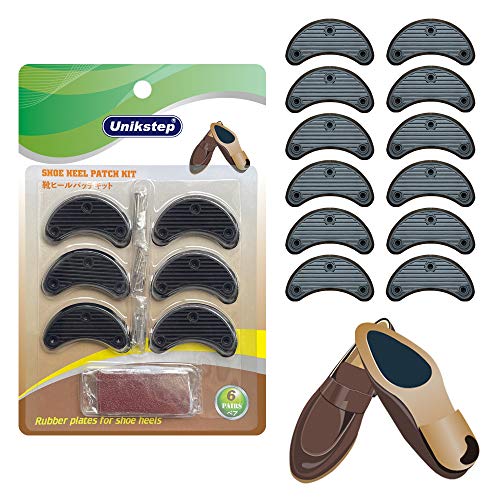
Unlike the other kits, this one includes both double-sided tape and nails, along with sandpaper, giving you more than one supplied attachment option. The package contains six pairs of rubber plates, 12 tape pieces, three sandpapers and 36 nails. Its features identify single-sided heel wear and mention leather shoes, thick-heel shoes and sneakers, making it a fit for buyers looking to patch an unevenly worn heel.
Bottom line: Pick this kit if you want tape and nails in one package for a single-sided worn heel.
Rubber Heel and Toe Plates, 10 Pieces

This is the glue-on option: its 10 black polyurethane-and-rubber pads are designed for smooth surfaces, and shoe glue is not included. Each pad is approximately 1.97 × 0.79 × 0.12 inches. The instructions call for cleaning and drying the surface, roughening it with a file, trimming excess and pressing the pad in place. That makes the kit suitable for someone prepared to supply glue and do surface prep. It is less convenient if you need an all-in-one kit or a nail-fastened repair.
Bottom line: Choose these pads if you can prepare a smooth surface and provide shoe glue.
KIWI Heel Saver

KIWI’s option is distinguished by its easy application and noiseless design, rather than a repair-kit count or installation method. The maker says the Heel Saver extends shoe-heel life and will not mark wood floors. Those features may suit someone prioritizing floor-friendly wear and a straightforward application. The measurements are too small to use as practical fit dimensions, and the specifications do not establish its attachment method or package quantity; check that it is compatible with the heel and repair you have in mind.
Bottom line: Pick this if floor-friendly, quiet wear matters more than a specified plate count.
How to choose heel savers for shoes
Choose a heel saver by matching the patch to the damage and the attachment method to the shoe. A heel worn on one edge needs coverage across that worn area; a pad that is too small can leave the exposed edge vulnerable to further wear. Nail-on plates suit repairs where nails can be used, while glue-on pads require a compatible adhesive and careful surface preparation. Some kits include tape, nails or sanding supplies, but those extras do not guarantee that a plate fits a particular heel. Measure the damaged area and compare it with the patch dimensions when available. If you have less than 2 inches of usable heel width, do not assume a 2.12-inch-wide patch will fit; check the actual heel shape and intended placement first.
Heel plate attachment methods compared
Attachment method determines what preparation and supplies a shoe heel repair needs. Nail-on plates use small nails to secure a rubber patch, while glue-on patches depend on clean, dry, roughened surfaces and shoe adhesive. Adhesive tape can make positioning easier, but it is not the same as a permanent mechanical fastener. A patch that overhangs the heel can catch or wear unevenly, so trim only where the product allows and keep the patch aligned with the heel edge.
| Repair method | Best fit | Preparation |
|---|---|---|
| Nails | Heel that accepts fasteners | Align patch; secure with included nails |
| Shoe glue | Smooth surface suited to adhesive | Clean, dry, roughen and press |
| Double-sided tape | Positioning or tape-based attachment | Check patch alignment and shoe compatibility |
How to size and position a heel saver
Measure the worn zone and the heel’s width and depth before choosing a plate. Heel shapes differ between shoes, and a patch intended for a broad, flat heel may not sit flush on a narrow or curved one. Place the patch over the damage before fastening to confirm that it covers the worn edge without protruding past the heel. A patch that sticks out can catch against the ground, while one that misses the worn section cannot protect it. If a kit gives a plate measurement, compare both dimensions with the shoe rather than relying on labels such as “fits any size.”
Preparing and maintaining a shoe heel repair
Surface preparation matters most for glue-on heel pads: the product instructions call for cleaning, drying, roughening and pressing the surface. Dirt, moisture or a glossy finish can interfere with adhesion, so let the shoe dry fully before applying adhesive. For nail-on plates, keep fasteners positioned within the patch and avoid driving them where they could emerge through the shoe interior. Inspect repaired heels periodically; once a patch loosens, cracks or wears through, replace it rather than relying on a damaged layer. A heel saver covers wear but does not restore a badly damaged heel structure.
Frequently Asked Questions
Can heel savers repair a heel worn on one side?
Yes, a patch can cover a single-sided worn area if its shape and width cover the damage. Position it over the worn edge before attaching it, and avoid a patch that protrudes beyond the heel.
Should I use nails or shoe glue for heel plates?
Use nails when the heel can accept fasteners and the plate is designed for them; use shoe glue for a compatible smooth surface. Glue-on repairs need a clean, dry, roughened surface, while nail placement must avoid the shoe interior.
How do I know what size heel saver to buy?
Measure the damaged area and heel width, then compare those measurements with the plate. For example, a plate about 2.12 inches wide may overhang a narrower or curved heel, so check the shape as well as the numbers.
Can I use a heel saver on sneakers?
Some rubber heel plates are described for sneakers, but the patch still needs to match the heel’s material and shape. Check the heel surface and attachment compatibility before applying nails, tape or glue.
When should I replace a shoe heel patch?
Replace a patch when it loosens, cracks or wears through, since a damaged patch may no longer cover the heel properly. Inspect the repair periodically, especially if the shoe is worn frequently.