
Hornady G3-1500 Digital Scale: 5 Models Compared

The Hornady G3-1500 digital scale is the direct match here, with 0.1-grain accuracy and a portable, battery-operated design. Choose another model if you want a kit with a powder scoop or funnel pan, or if you need an AC-powered scale.
Reloading scales measure components in grains, a unit used in published ammunition load data.
We earn a commission if you buy through links on this page. As an Amazon Associate I earn from qualifying purchases. Products are compared on manufacturer specifications, not hands-on testing.
- Best overall: Hornady G3-1500 Electronic Scale – The exact Hornady match combines 0.1-grain accuracy with battery operation and a 1,500-grain capacity.
- Best for included accessories: RCBS Pocket Digital Scale 1500 – The RCBS includes a powder pan, check weight and batteries.
- Best for a bundled kit: Lyman Pocket Touch 1500 Scale Kit – The Lyman kit includes a funnel pan, powder scoop, calibration weight and batteries.
| Product | Best for | Resolution or accuracy | Power | Shop |
|---|---|---|---|---|
| Hornady G3-1500 Electronic Scale | Hornady match | 0.1 grain accuracy | Battery operated | Check Price on Amazon |
| RCBS Pocket Digital Scale 1500 | Included accessories | 0.1-grain readings | Battery operated; batteries included | Check Price on Amazon |
| Lyman Micro-Touch 1500 | AC power setup | — | 110 V | Check Price on Amazon |
| NEOWEIGH Reloading Scale | Dual-unit readings | 0.1 grain; 0.01 g | — | Check Price on Amazon |
| Lyman Pocket Touch 1500 Scale Kit | Bundled powder kit | — | Two AAA batteries included | Check Price on Amazon |
Hornady G3-1500 digital scale and alternatives
Compare the closest reloading scale matches by capacity, measurement resolution and power setup.
Hornady G3-1500 Electronic Scale

The Hornady G3-1500 is the only model here that matches the requested product name. It measures up to 1,500 grains and offers 0.1-grain accuracy, with a constant readout up to 500 grains. The battery-operated format is suited to a portable bench setup, and the scale can weigh charges, bullets or cases directly or accommodate powder trickling into its pan. Its key limitation is the 500-grain constant-readout range; buyers weighing above that amount should account for that distinction rather than relying only on the maximum capacity.
Bottom line: Choose this model if you want the named Hornady scale and value portability.
RCBS Pocket Digital Scale 1500

The RCBS Pocket Digital Scale stands out for what comes in the package: a powder pan, check weight and batteries. Its 1,500-grain capacity and 0.1-grain readings make it a direct functional alternative for weighing powder charges and components, while its compact format suits bench or range use. The check weight is useful for checking scale response, but the facts do not establish an accuracy tolerance or a constant-readout range. Choose it when ready-to-use accessories matter more than matching the Hornady model specifically.
Bottom line: Pick this option if a check weight and included batteries are priorities.
Lyman Micro-Touch 1500
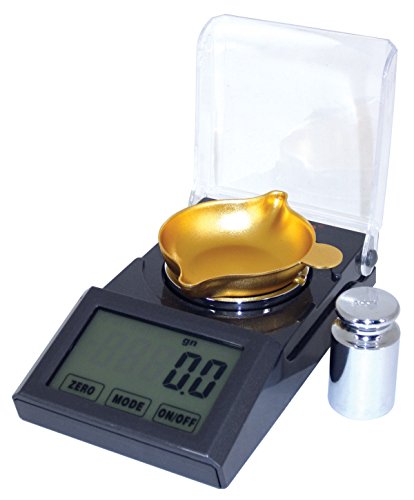
The Lyman Micro-Touch 1500 is the only AC-powered option among these alternatives, using 110 V rather than a battery-powered setup. Its capacity is 1,500 grains, and its housing is plastic. That makes it a possible fit for a fixed reloading bench where an outlet is available and swapping batteries is undesirable. The tradeoff is that its maker does not give a resolution or accuracy figure, so it is harder to compare measurement fineness directly with the Hornady and RCBS options. Check the outlet and cord arrangement for your bench before choosing an AC unit.
Bottom line: Choose this if you prefer an AC-powered scale and have a suitable outlet.
NEOWEIGH Reloading Scale

The NEOWEIGH differentiates itself with selectable grain and gram units, a metal pan, and a 0.1-grain (0.01-gram) resolution. Its 1,500-grain maximum and included powder scoop make it a practical alternative for someone who wants dual-unit readings and accessories in one package. The scale also has tare and automatic power-saving functions.
Bottom line: Pick this when switching between grain and gram readings is useful.
Lyman Pocket Touch 1500 Scale Kit
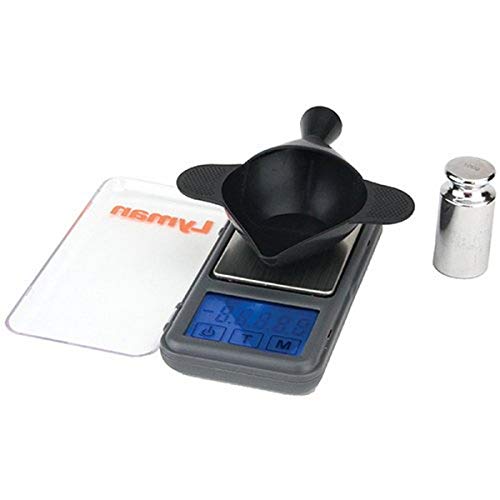
The Lyman Pocket Touch 1500 is packaged as a kit, with a funnel pan, powder scoop, calibration weight and two AAA batteries. Its touch-screen controls handle power, tare, calibration and switching between grams and grains; a lighted display is intended to remain visible in different lighting. This bundle suits reloaders who want several handling accessories alongside a portable scale. The facts give capacity but not resolution, so buyers who need a measurement increment should compare that requirement before selecting this model.
Bottom line: Choose this kit if the funnel pan and scoop are useful additions.
How to choose a reloading scale
Start with resolution, capacity and power, not the number in a model name. A grain is 1/7,000 of a pound, and published load data commonly specifies powder charges in grains, so a scale intended for reloading should offer grain readings. The options here top out at 1,500 grains, but resolution varies: some state 0.1-grain increments or accuracy, while others provide no figure in the specifications. Do not treat maximum capacity as a measure of precision. If you weigh components above 500 grains, distinguish the Hornady’s 1,500-grain capacity from its constant readout up to 500 grains. For portability, battery models avoid dependence on a nearby outlet; an AC unit suits a bench with compatible power.
Grain capacity and measurement resolution
Capacity answers how much a scale can weigh, while resolution describes the size of the displayed increments; these are different specifications. For example, 1,500 grains is a capacity, whereas 0.1 grain is a measurement increment or stated accuracy depending on the maker’s wording. This comparison includes both types of figures, so treat an unprovided resolution as unknown rather than assuming every 1,500-grain scale reads alike. A useful decision rule is to choose a model with a 0.1-grain figure if that increment is a requirement for your workflow. Verify that the displayed unit is grains before recording a charge, especially on scales that also switch to grams. Never substitute a scale reading for published load data.
Using a digital powder scale safely
Use published load data for the specific cartridge and components; a scale only measures mass and cannot determine a safe charge by itself. Keep powder containers identified and separated, and avoid open flames or smoking near exposed powder. Before weighing, place the scale on a stable, level surface away from drafts and vibration; airflow and bench movement can disturb sensitive readings. Tare the pan before adding powder, and use an appropriate check weight or calibration function when the device provides one. Keep the pan and work area free of residues from other powders. If a display is unstable or a check weight does not read as expected, stop rather than relying on an uncertain measurement.
Common reloading scale selection mistakes
The most common comparison error is assuming that capacity and precision mean the same thing. A 1,500-grain limit does not tell you whether the display resolves tenths of a grain, and a resolution does not establish capacity. Another mistake is overlooking the power setup: battery operation is convenient away from an outlet, while a 110 V scale needs compatible AC power at the bench. Accessories matter too; a check weight helps verify response, while a pan or scoop supports handling, but neither replaces calibration and careful weighing. Before buying, match the scale’s resolution to your needs and check whether the included power arrangement suits where you plan to use it.
Frequently Asked Questions
What does 0.1 grain mean on a reloading scale?
A 0.1-grain increment is one tenth of a grain, or 1/70,000 of a pound. It describes display resolution when specified as a reading increment, but it should not be confused with a separate accuracy claim.
Is a 1,500-grain scale enough for reloading?
A 1,500-grain capacity is enough for weighing typical powder charges as well as many bullets and cases. Capacity alone does not tell you the scale’s resolution or accuracy, so compare those figures separately.
Why do reloading scales use grains?
Grains are the conventional unit used in published ammunition load data, and one pound contains 7,000 grains. Confirm the scale is displaying grains before recording a measurement if it can switch units.
How often should a reloading scale be checked?
Check the scale’s response before relying on a measurement, especially after moving it or changing its setup. A compatible check weight or calibration function can help identify a reading that is off; stop weighing if results are unstable.
Can I use a powder scale reading to choose a charge?
No. A scale measures mass but cannot determine whether a charge is safe for a particular cartridge and components. Use published load data, and do not exceed its specified limits.