
Vinyl Repair for Boat Seats: 4 Options Compared

For vinyl repair on boat seats, ARCSSAI White Leather & Vinyl Kit is the closest match if you need a white, cream, or ivory filler for scratches, cracks, tears, or worn areas. Choose a clear patch such as TEAR-AID Type B Clear Vinyl Patch instead for a hole or tear where a surface patch is suitable; check that the seat material is vinyl or vinyl-coated before applying it.
We earn a commission if you buy through links on this page. As an Amazon Associate I earn from qualifying purchases. Products are compared on manufacturer specifications, not hands-on testing.
- Best overall: ARCSSAI White Leather & Vinyl Kit – A filler kit specifically describes use on boat seats and supports white, cream, and ivory color matching.
- Best for clear patches: TEAR-AID Type B Clear Vinyl Patch – The transparent Type B patch is made for vinyl and vinyl-coated materials.
- Best for broad color matching: COCONIX Leather & Vinyl Repair Kit – Its mixing guide supports a wide spectrum of colors, including white, tan, and blue.
| Product | Best for | Repair format | Color options | Fits boat seats | Shop |
|---|---|---|---|---|---|
| ARCSSAI White Leather & Vinyl Kit | Light-color filling | Filler compound | White, cream, ivory | Yes | Check Price on Amazon |
| TEAR-AID Type B Clear Vinyl Patch | Clear tear patching | Clear patch | Transparent | Vinyl / vinyl-coated | Check Price on Amazon |
| COCONIX Leather & Vinyl Repair Kit | Mixed-color repairs | Repair kit | Multi-color | Marine upholstery | Check Price on Amazon |
| White & Cream Leather and Vinyl Kit | Light shades | Pigment repair kit | White, cream, gray | Boat seats | Check Price on Amazon |
Vinyl Repair for Boat Seats
Choose a repair compound for blending filled damage or a clear patch for covering a tear in compatible vinyl.
ARCSSAI White Leather & Vinyl Kit

For light-colored seat damage, this filler kit focuses on matching white, cream, and ivory rather than relying on a clear overlay. The maker says it fills scratches, cracks, tears, holes, peeling, and worn areas on boat seats, cushions, bolsters, and armrests, with a color-mixing guide for gradual adjustment. It suits small damaged areas where blending matters. The color range is its limitation: buyers repairing a dark or saturated seat should consider a multi-color kit, and a close match may require careful mixing and checking after drying.
Bottom line: Choose this when the damaged seat is white, cream, or ivory and you want a filled, blended repair.
TEAR-AID Type B Clear Vinyl Patch
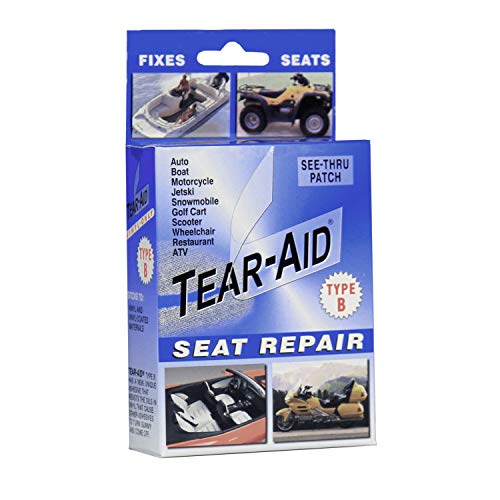
Unlike the color-mixing compounds, this is a transparent patch for covering holes and tears in vinyl or vinyl-coated material. Its elastomer is abrasion resistant and resists puncture and tearing; the maker says Type B includes an inhibitor to counter vinyl oils that can weaken many adhesives. It can suit a tear where a visible patch is acceptable and the material is confirmed vinyl. It does not fill and color-blend cracks or worn surfaces, and its specified material compatibility rules it out for leather or fabrics.
Bottom line: Pick this for a tear or hole in confirmed vinyl when a clear surface patch suits the repair.
COCONIX Leather & Vinyl Repair Kit

For seats that are not white or ivory, this kit stands out with a broad palette and a color-mixing guide, including shades such as brown, black, burgundy, cream, tan, and blue. The maker says the flexible formula addresses cracks, scratches, burns, tears, holes, and peeling on boat seats as well as furniture and other items. That makes it a flexible option for mixed-color marine upholstery. The color range requires matching and blending rather than a transparent patch, so it is less suited to buyers who want a quick cover with no color work.
Bottom line: Choose this for a colored seat when you want a compound kit with a wide mixable palette.
White & Cream Leather and Vinyl Kit

This kit distinguishes itself with five pigments and tools aimed at white, cream, beige, ivory, and light gray upholstery. The maker says its compound can address scratches, tears, cracks, holes, peeling, and burns on boat or car seats and furniture, with flexible, wear-resistant repairs. It may fit a light-gray seat better than a kit centered on white, cream, and ivory. The light-shade emphasis is also its constraint: buyers repairing dark upholstery should choose a kit with a broader palette, and matching still depends on blending the pigments to the seat.
Bottom line: Pick this for light gray or cream upholstery when its pigment range matches the seat.
Choosing a boat seat repair format
Match the repair format to the damage: filler compounds are meant to fill and blend damaged areas, while patches cover a tear with a separate layer. A filler is the more natural direction for shallow scratches, cracks, and worn spots; a patch is more direct for a hole or split that can be covered. Vinyl upholstery commonly has a protective topcoat, so loose flakes and dirt can keep either repair from adhering cleanly. Clean and dry the repair area, and test color or adhesion on a hidden area first. For a patch, check that the material is vinyl or vinyl-coated, since Type B patches are not intended for leather or fabric.
Matching color on marine upholstery
Color matching works best when the repair compound starts close to the seat shade: white, cream, ivory, beige, and light gray are distinct tones, not interchangeable labels. Mix small amounts and compare a dried sample under the light where the boat is normally used; wet compound can look different from the cured color. Sun exposure and marine grime can also fade or darken seat surfaces unevenly, so an older seat may not match a hidden area exactly. For dark or saturated colors, choose a palette that includes the target shade rather than trying to lighten a narrow white-focused kit. Expect a blended repair to remain more visible on textured or heavily faded vinyl.
Preparing vinyl before a repair
Preparation affects whether a repair compound or patch bonds: remove surface dirt, sunscreen residue, and oily contamination, then let the vinyl dry fully. Avoid stretching a torn edge while cleaning, because tension can enlarge the split. Smooth, stable edges are easier to cover than curled or crumbling vinyl; extensive peeling or damage through the seat material may need professional upholstery work rather than a small kit. For adhesive patches, use a flat area around the tear so the patch can lie flush without wrinkles. Keep repair compounds and adhesives away from skin and eyes, and ventilate the work area while applying them.
Common boat seat repair mistakes
The most common mismatch is choosing a clear patch when the goal is an invisible color blend, or using a filler where a covered opening needs a backing or patch. Another mistake is applying a patch to an unconfirmed material: vinyl-coated material and leather can look similar but do not have the same compatibility. On exposed seats, UV and abrasion can wear repairs over time, so avoid placing a repair under tension or on a high-flex seam when a less stressed location is possible. For tears near stitching, check the seat construction before repair; a surface fix may not restore the seam’s strength or support.
Frequently Asked Questions
Can a vinyl repair kit fix a split boat seat?
A small split may be addressed with a filler or patch, depending on whether the repair needs blending or coverage. Check that the split is in vinyl and not a seam failure or damaged backing before choosing a surface repair.
How do I match white vinyl boat upholstery?
Start with a white-focused kit that also supports cream or ivory adjustment. Mix gradually and compare a dried sample in the boat’s usual lighting, since surrounding vinyl may have faded.
Can a clear vinyl patch go over leather?
No: the Type B patch is specified for vinyl and vinyl-coated material only. Confirm the seat covering before applying it, because leather compatibility is not indicated.
Should I use filler or a patch for a hole?
Use a patch when you need a separate covering layer over a hole, and use filler for smaller surface damage that needs blending. A larger opening or damaged backing may need upholstery repair beyond a surface kit.
How should I prepare vinyl before repairing it?
Clean away dirt and oily residue, then let the area dry completely before applying a repair. Keep the damaged edge relaxed rather than pulling it taut, which can extend a tear.