
SleepRight Dental Guards: 3 Models Compared by Fit

SleepRight Ultra-Comfort Dental Guard suits most adults seeking a no-boil SleepRight dental guard because its self-adjusting design adapts to the bite without heating. Choose SleepRight ProRx Custom Fit Dental Guard instead if you want a guard molded with a fitting tray, or SleepRight Dura-Comfort Dental Guard if durable bite pads are your priority.
Dental guards form a barrier between upper and lower teeth, but they do not necessarily stop clenching or grinding; ask a dentist about persistent jaw pain, tooth damage, or a guard that does not fit securely.
We earn a commission if you buy through links on this page. As an Amazon Associate I earn from qualifying purchases. Products are compared on manufacturer specifications, not hands-on testing.
- Best overall: SleepRight Ultra-Comfort Dental Guard – Its self-adjusting design adapts to the bite without boiling or microwaving.
- Best for bite-pad durability: SleepRight Dura-Comfort Dental Guard – Its high-tensile bite pads flex to the bite angle, and the maker claims 6× longer life than a leading competitor.
- Best for a molded fit: SleepRight ProRx Custom Fit Dental Guard – A fitting tray and 150°F water let you mold and remold the guard.
| Product | Best for | Fit method | Shop |
|---|---|---|---|
| SleepRight Ultra-Comfort Dental Guard | No-boil fitting | Self-adjusting | Check Price on Amazon |
| SleepRight Dura-Comfort Dental Guard | Flexible bite pads | No-boil insert | Check Price on Amazon |
| SleepRight ProRx Custom Fit Dental Guard | Tray-molded fit | Moldable with tray | Check Price on Amazon |
SleepRight Dental Guards
The main choice is between a no-boil self-adjusting fit and a guard molded with a tray and warm water.
SleepRight Ultra-Comfort Dental Guard

SleepRight Ultra-Comfort Dental Guard is the no-boil option in this SleepRight group, using a self-adjusting design that adapts to the bite without boiling or microwaving. The single beige guard is made without BPA, latex, or phthalates, according to the maker. It suits adults who want to avoid a fitting process that involves hot water. The maker claims it lasts four times longer than a leading competitor; that comparison is a manufacturer claim, not a guaranteed wear period. Its main limitation is that the fit is not shaped with a fitting tray.
Bottom line: Pick this if you want a no-boil, self-adjusting fit.
SleepRight Dura-Comfort Dental Guard
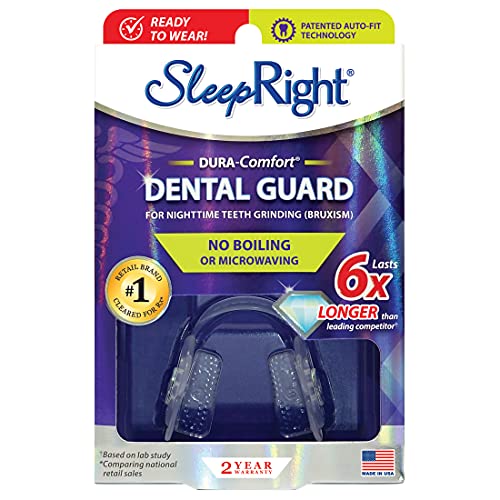
SleepRight Dura-Comfort Dental Guard stands apart for its high-tensile bite pads, which the maker says flex to the natural bite angle. The white, single-count guard requires no boiling or microwaving, making it a fit for adults who want a ready-to-insert design with emphasis on pad durability. The maker claims it lasts six times longer than a leading competitor based on a lab comparison; that claim does not establish how long any individual guard will last. Unlike the tray-molded option, this model is not custom-shaped using heated fitting material.
Bottom line: Choose this if flexible bite pads are your priority.
SleepRight ProRx Custom Fit Dental Guard
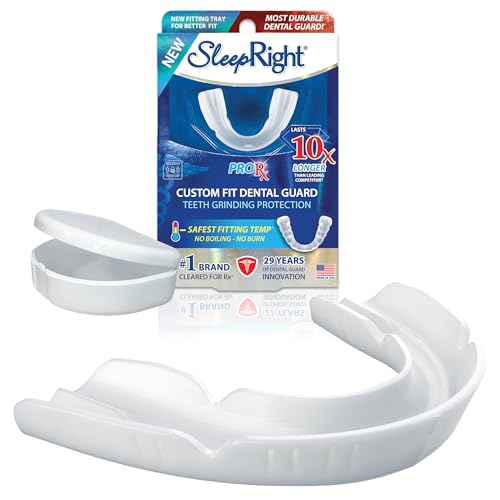
SleepRight ProRx Custom Fit Dental Guard is the only SleepRight model here that uses a fitting tray and heat to mold the guard. Its low-temperature fitting material softens at 150°F, and the maker says it can be molded and remolded for a secure fit. That makes it the better match for adults who want more shaping than a no-boil insert provides. The single white guard takes more preparation than the ready-to-use models, and careful temperature control matters: use a thermometer rather than guessing with hot water. The maker claims up to 10× the life of a leading competitor.
Bottom line: Choose this if you want to mold and remold a tray-fitted guard.
How to choose a SleepRight dental guard
Choose by the fitting method you can use consistently: self-adjusting models need no hot-water shaping, while ProRx requires a fitting tray and 150°F water. A ready-to-insert guard is simpler, but a tray-molded guard offers a chance to shape and remold the fit. Guards act as a physical barrier between upper and lower teeth; they do not necessarily stop the grinding motion itself. If you have crowns, braces, loose teeth, or ongoing jaw pain, ask a dentist before using an over-the-counter guard. A guard that shifts, causes soreness, or changes your bite is a reason to stop wearing it and seek dental advice.
Use this decision rule: if you cannot measure water temperature near 150°F and follow a fitting sequence, choose a no-boil design rather than improvising a mold.
No-boil and tray-molded guards compared
No-boil guards prioritize convenience, while tray-molded guards require heat and a fitting step. A guard needs to stay in place without rocking or pressing painfully; a poor fit can be uncomfortable and may leave teeth exposed. The SleepRight self-adjusting designs bypass hot water, while ProRx uses a fitting tray and low-temperature material. This table compares process, not protection level; the products’ materials and fit differ, and the maker’s comparative durability claims do not establish an individual replacement schedule.
Use the fit method that you can complete safely and that feels stable without painful pressure.
| Fit need | Approach | Tradeoff |
|---|---|---|
| Avoid hot water | No-boil insert | Less shaping control |
| Shape the guard at home | Tray-molded at 150°F | Requires temperature control and fitting |
| Flexible bite pads | High-tensile pad design | Does not use a moldable tray |
Fitting and wearing a night guard safely
Fit a guard according to its specific method; do not substitute boiling water for a 150°F moldable material. Heated water can burn skin, so handle the vessel carefully and keep softened material away from children. A properly seated guard should remain stable when you move your jaw gently, without sharp edges or pressure that causes pain. Stop using a guard that cracks, develops rough edges, or begins to fit differently, and ask a dentist to assess persistent discomfort. Dental guards are not a replacement for evaluating new tooth damage or recurring jaw symptoms.
After each use, rinse the guard with cool water and clean it gently with a soft toothbrush and mild soap; avoid hot water that could deform plastic. Let it dry before storing it in its case. Inspect the bite surfaces regularly for holes or thinning, because visible wear can compromise the barrier.
Frequently Asked Questions
Do SleepRight guards stop teeth grinding?
A dental guard creates a barrier between upper and lower teeth, but that does not mean it stops clenching or grinding. Ask a dentist about persistent jaw pain, tooth damage, or new bite changes.
How hot should water be for SleepRight ProRx?
SleepRight ProRx fitting material softens at 150°F. Use a thermometer and handle warm water carefully to avoid burns; do not use boiling water.
How should I clean a night guard each day?
Rinse the guard with cool water and gently brush it with mild soap after wearing it. Let it dry before storage, and avoid hot water that could deform the material.
When should an adult replace a dental guard?
Replace a guard if it cracks, develops holes, or no longer fits securely. A dentist can assess repeated wear or discomfort, since individual wear rates differ.
Can I wear a night guard with braces or crowns?
Ask a dentist before wearing an over-the-counter guard with braces, crowns, or loose teeth. A dental professional can check that the guard does not interfere with the appliance or restoration.