
Men’s Leather 3/4 Coat: Fit and Style Compared

For a genuine leather 3/4 coat, fjackets Lambskin 3/4 Leather Coat is the closest match: it combines lambskin leather, a button front and a polyester lining in a mid-length cut. Choose Victory Outfitters 3/4 Leather Coat instead if adjustable warmth from a removable hood and zip-out liner matters more; the other options are not equivalent 3/4-length leather coats.
We earn a commission if you buy through links on this page. As an Amazon Associate I earn from qualifying purchases. Products are compared on manufacturer specifications, not hands-on testing.
- Best overall: fjackets Lambskin 3/4 Leather Coat – Genuine lambskin, 3/4 length, button front and full polyester lining.
- Best for adjustable warmth: Victory Outfitters 3/4 Leather Coat – Removable hood and zip-out liner let you change the insulation.
| Product | Best for | Material | Lining | Closure | Shop |
|---|---|---|---|---|---|
| fjackets Lambskin 3/4 Leather Coat | Lambskin preference | 100% lambskin | Polyester, shoulder to hem | Button front | Check Price on Amazon |
| Victory Outfitters 3/4 Leather Coat | Adjustable warmth | Genuine leather | Quilted lining, zip-out liner | Zip and snap | Check Price on Amazon |
| SOMTHRON Long Polyester Overcoat | Nonleather alternative | 95% polyester, 5% spandex | — | Three-button front | Check Price on Amazon |
Men’s Leather 3/4 Coats Compared
Compare the leather construction, lining and closures to find the coat that fits your priorities.
fjackets Lambskin 3/4 Leather Coat

fjackets Lambskin 3/4 Leather Coat is the direct match for a men’s 3/4 leather coat, with a mid-length cut, wide notch lapels and a natural distressed rub-off lambskin finish. The maker says the finish ages with wear; lambskin is generally softer and less abrasion-resistant than cowhide, so it suits buyers prioritizing a supple feel over ruggedness. The coat has polyester lining from shoulder to hem and interior and exterior hand pockets for carrying small items. Review the size chart before choosing a size, especially if you plan to layer a suit underneath.
Bottom line: Choose this if a lined lambskin coat with a button front is your priority.
Victory Outfitters 3/4 Leather Coat

Victory Outfitters 3/4 Leather Coat stands apart with a removable hood and a zip-out liner, letting the wearer adjust the coat for changing conditions. Its 3/4-length genuine leather shell also has a quilted interior, adjustable tied belt, and a closure combining a zipper and snaps. That combination suits someone who wants more ways to modify coverage than a fixed button-front design offers. The maker recommends professional leather dry cleaning, so this coat is a less convenient choice for anyone who wants to wash outerwear at home. Check that the removable pieces and belt match how you plan to wear it.
Bottom line: Pick this if removable warmth layers and a hood matter more than a simple coat design.
SOMTHRON Long Polyester Overcoat
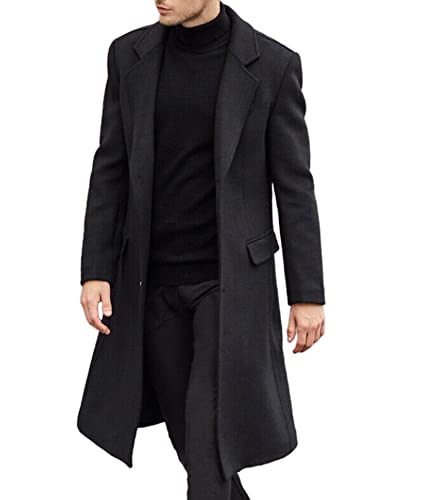
SOMTHRON Long Polyester Overcoat is a long overcoat rather than a leather coat, and its shell is 95% polyester and 5% spandex. A notched lapel, three-button single-breasted front and two pockets give it a dress-coat look for work or formal outfits. The maker describes it as slim fit and suitable for layering with shirts, suits, trousers or jeans. Choose it only if you are open to a nonleather alternative; shoppers specifically seeking leather should focus on the genuine leather options.
Bottom line: Choose this only if a long polyester dress coat works instead of leather.
How to Choose a Men’s Leather 3/4 Coat
Start with leather type and the way you plan to wear the coat. Lambskin is typically softer and lighter-feeling than cowhide, while cowhide generally resists abrasion better; neither is automatically the right choice for every wardrobe. A 3/4 coat usually falls around the knee, but exact hem position varies with height and pattern, so compare garment measurements rather than relying on the label. For regular suit wear, allow room across the shoulders and chest for a jacket underneath. A coat that binds when buttoned can restrict movement and strain seams.
Use the intended layers as a fit test: if you expect to wear a suit, measure over that suit and compare chest, shoulder and sleeve measurements with the maker’s chart. Leather is not a substitute for insulated technical outerwear in prolonged severe cold, and seams and closures can admit wind.
Leather Coat Linings and Warmth Features
Fixed linings simplify daily wear, while removable layers adapt to a broader range of temperatures. A full polyester lining can help the coat slide over a shirt or suit, but lining alone does not establish a warmth rating. Quilted liners add loft, and a zip-out layer or removable hood can be taken off when conditions are milder. For warmth, coverage at the neck, cuffs and hem matters alongside the shell; open gaps let cold air enter.
Use this need-to-feature guide to choose the construction that matches your routine.
| Need | Feature to prioritize | Tradeoff |
|---|---|---|
| Softer leather feel | Lambskin | Less abrasion resistance than cowhide |
| Adaptable warmth | Removable liner or hood | More pieces and closures to manage |
| Suit layering | Full lining and shoulder room | Fit needs checking over the suit |
Getting the Fit Right in a 3/4 Coat
A 3/4 coat should cover the seat and commonly reaches toward the knee; body height and coat pattern shift that endpoint. For a useful fit check, leave enough room to button the coat over your thickest planned layer without pulling at the chest or back. Sleeve ends should meet the wrist with arms relaxed, rather than riding high when you reach forward. A size label alone cannot establish those measurements, especially across brands.
Measure chest at its fullest point and compare with the maker’s chart, then check sleeve and back length if those numbers are provided. If a chart distinguishes body measurements from finished garment measurements, use the latter to judge layering ease. Avoid sizing up blindly: an oversized shoulder can make sleeves and lapels sit poorly.
Leather Coat Care and Storage
Keep leather dry when possible and let a damp coat air-dry at room temperature, away from radiators and direct heat that can dry or stiffen the hide. Hang a long coat on a broad, sturdy hanger so the shoulder line carries its weight; thin wire hangers can distort shoulders. Store it with space around it rather than compressing it in a sealed plastic bag, which can trap moisture.
Cleaning needs depend on the leather finish and construction. For a removable liner, follow its separate care label, and do not assume the leather shell can be machine-washed. Professional leather cleaning is the safer route for stains or embedded soil; test any conditioner on a hidden area because finishes can darken or change unevenly.
Frequently Asked Questions
How long should a 3/4 leather coat be?
A 3/4 leather coat typically reaches around the knee, though the hem shifts with the wearer’s height and the pattern. Compare back length measurements with your own coat or body measurements before deciding.
Is lambskin suitable for everyday wear?
Lambskin works for regular wear when a softer feel is the priority, but it generally marks and abrades more readily than cowhide. Avoid rough work or repeated friction if you want to preserve a smooth finish.
Can I wear a leather coat over a suit?
Yes, if the shoulders and chest leave room for the suit without pulling when the coat is buttoned. Measure over the suit and compare the coat’s garment measurements, particularly across the shoulders and sleeves.
How should a leather coat be stored in summer?
Hang a leather coat on a broad hanger in a cool, dry, ventilated closet with space around it. Keep it away from direct sunlight and heat, which can fade or dry the leather.
Can leather coats get wet in the rain?
Light rain can spot or stiffen some leather finishes, so wipe droplets gently and air-dry the coat at room temperature. Avoid a hair dryer or radiator, and seek leather-care help if the hide becomes saturated.