
Liquid Glass Car Polish: Products Compared by Purpose

For a paint-safe, nonabrasive finish, choose Liquid Glass Ultimate Auto Polish/Finish; the other products target glass cleaning, polishing, or maintenance rather than the same paint-polish use. Choose a glass-specific option instead if your main task is removing wiper marks or water spots from windows.
Car polish protects or refines exterior paint, while glass polish is formulated for hard glass and can use abrasives such as cerium oxide. Match the product to the surface before applying it.
We earn a commission if you buy through links on this page. As an Amazon Associate I earn from qualifying purchases. Products are compared on manufacturer specifications, not hands-on testing.
- Best overall: Liquid Glass Ultimate Auto Polish/Finish – A 16-ounce polish/finish with no abrasives or wax and a clear-coat-safe claim.
- Best for fine glass marks: 3D Glass Polish 16 oz – Cerium-oxide-based formula aimed at wiper marks, fine scratches, swirls, and water spots.
- Best for coating prep: Invisible Glass Stripper 4 oz – A 4-ounce cerium oxide glass polish intended to strip contaminants and old coatings.
| Product | Best for | Surface or task | Size | Formula or feature | Shop |
|---|---|---|---|---|---|
| Liquid Glass Ultimate Auto Polish/Finish | Paint polish finish | Auto polish/finish | 16 fl oz | No abrasives or wax | Check Price on Amazon |
| 3D Glass Polish 16 oz | Fine glass marks | Automotive glass polish | 16 fl oz | Cerium oxide | Check Price on Amazon |
| Bianca Glass Polishing Liquid D1 150 ml | Glass cleaning kit | Automotive glass compound | 150 ml | Cutting/rubbing compound | Check Price on Amazon |
| Invisible Glass Stripper 4 oz | Glass coating prep | Automotive glass polish | 4 fl oz | Cerium oxide | Check Price on Amazon |
| Liquid Glass Detail Spray 16 oz | Finish maintenance | Nonporous surfaces | 16 fl oz | Detail spray | Check Price on Amazon |
Liquid Glass Car Polish and Related Glass Products
Choose by whether you are finishing paint, polishing glass, or cleaning glass before a coating.
Liquid Glass Ultimate Auto Polish/Finish

For a nonabrasive paint polish/finish, this is the direct match: the maker says it produces a clear, hard, smooth, mirror-like finish and is clear-coat safe. The 16-fluid-ounce bottle contains no abrasives and no wax, which distinguishes it from the glass-polishing compounds here. It suits a buyer looking for the Liquid Glass polish named in the search, rather than a windshield-specific treatment. Because the formula contains no abrasives, choose a glass compound instead when the goal is to abrade fine marks or remove bonded mineral deposits from glass.
Bottom line: Pick this for a nonabrasive, no-wax polish/finish for automotive paint.
3D Glass Polish 16 oz
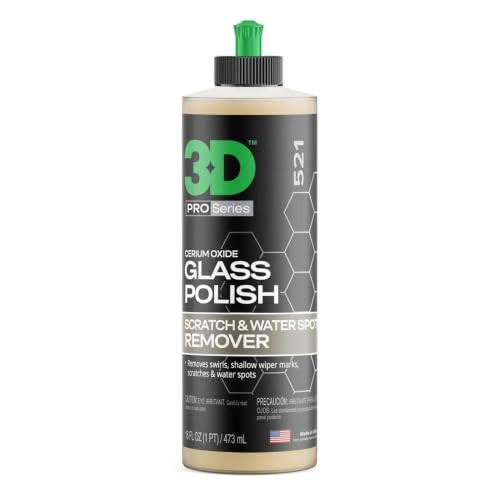
Unlike the paint finish, this 16-ounce option is specifically a cerium-oxide-based polish for automotive glass. The maker says it targets wiper marks, etched water spots, fine scratches, and swirl marks, and is intended to restore clarity on windows and windshields. It suits someone addressing visible glass defects rather than applying a paint polish. Its purpose is narrower than a general car finish, and glass polishing is not a substitute for paint polishing; keep it on glass and assess whether marks are truly superficial before choosing an abrasive treatment.
Bottom line: Choose this for light defects on automotive glass, not paint.
Bianca Glass Polishing Liquid D1 150 ml
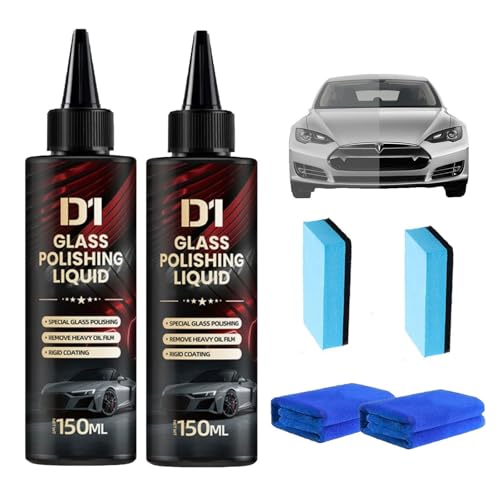
This set pairs a 150 ml glass-polishing liquid with a sponge, rather than offering the 16-ounce paint finish. The maker describes a dual-action cutting and rubbing compound intended for oil film, wiper marks, and light scratches, and also claims anti-fog and hydrophobic effects. That combination may suit someone who wants a glass-focused treatment with an included applicator. The feature set bundles defect removal with protective claims, so it is less narrowly focused on stripping old coatings than the dedicated glass-prep product; use the sponge only as directed for glass.
Bottom line: Pick this when an included sponge and combined glass-treatment claims suit the task.
Invisible Glass Stripper 4 oz

Unlike the larger glass polish aimed at fine marks, this 4-ounce cerium oxide product focuses on bonded water spots, road film, and old coatings on automotive glass. The maker says it prepares bare glass for rain repellent or ceramic glass coatings by removing contaminants such as waxes, oils, and silicones. It suits a glass-preparation step before applying another treatment, not a paint finish. Its smaller container is the most compact option here, so it is a focused choice for prepping glass rather than treating multiple surfaces.
Bottom line: Choose this to strip contaminants from glass before a new coating.
Liquid Glass Detail Spray 16 oz

This is a maintenance spray, not the Liquid Glass polish/finish itself: the maker says it enhances that finish, reduces streaking and dust cling, and removes road grime from nonporous surfaces. Its surface range includes paint, brightwork, glass, plastic, and finish wood. The 16-ounce size suits routine touch-ups across those surfaces when the goal is cleaning or maintaining a finish. It is not the right substitute for a dedicated glass compound when bonded water spots or fine glass scratches are the issue.
Bottom line: Pick this for nonporous-surface upkeep after a finish, not defect removal.
How to choose a car polish for paint or glass
Choose by surface first: paint polish and glass polish are not interchangeable. Cerium oxide is a common glass-polishing abrasive for mineral deposits and light defects, while paint finishes may instead be nonabrasive or use different polishing abrasives. A simple rule is to use a glass-specific formula only on glass, and a paint-specific formula on painted panels. The Liquid Glass polish here is explicitly described as containing no abrasives or wax; the glass compounds have glass-focused purposes. Do not assume that a product claiming to clean multiple surfaces can safely correct defects on each one. Confirm the target surface on the container, and keep abrasive compounds away from paint, trim, and rubber.
When to polish automotive glass
Glass polish is for bonded contamination and light surface marks that ordinary cleaning may not remove; it is not a repair for deep chips or cracks. Start with a clean, cool pane and work a small area so residue and clarity are easy to inspect. Wiper marks can be deposits or wear, so cleaning first helps avoid unnecessary abrasion. A practical decision rule: if a mark catches a fingernail or remains sharply visible after cleaning, do not expect a polishing liquid to restore the glass; have the damage assessed instead. For windshield work, protect surrounding paint and follow the product’s application directions, because abrasive residue can be difficult to remove from trim.
Glass polish versus coating-prep cleaner
A glass polish may address defects, while a glass stripper is selected to remove old repellents, oils, and mineral deposits before a new coating. Those tasks overlap, but they are not identical: polishing uses an abrasive action, while preparation focuses on a clean bonding surface. The Invisible Glass option is presented as cerium oxide glass polish and coating prep; the 3D option emphasizes fine marks and clarity. The Bianca product combines compound and coating claims. Use the table to match the dominant job rather than treating these formulas as equivalent.
The intended task is the clearest separator among these glass products.
| Need | Product type |
|---|---|
| Fine marks or wiper haze | Glass polish |
| Old coating or bonded film removal | Glass stripper/prep |
| Paint finish without abrasives | Nonabrasive auto polish/finish |
| Routine surface touch-up | Detail spray |
Safe application and common mistakes
Keep polish on the surface it is made for, and never polish dirty glass or paint: trapped grit can create additional scratches. Work in shade on a cool surface, use a clean applicator, and test an inconspicuous area before a full application. Avoid using glass compounds on plastic lenses or coated surfaces unless their makers specifically allow it. Abrasive glass polishing also creates residue, so protect nearby paint and rinse or wipe carefully according to the product directions. Do not treat deeper windshield damage as a cosmetic polishing job; chips and cracks can affect structural integrity and visibility, and merit professional assessment.
Frequently Asked Questions
Can glass polish remove deep windshield scratches?
Glass polish is intended for light marks and deposits, not deep scratches, chips, or cracks. If a mark catches a fingernail or affects the driver’s view, seek a professional assessment rather than repeated abrasion.
Is cerium oxide safe on car paint?
Cerium oxide glass polish is made for glass, not painted panels. Mask nearby paint and trim, since abrasive residue or accidental rubbing can mar those surfaces.
Should I polish glass before applying rain repellent?
A clean, residue-free pane helps a rain-repellent coating bond. A glass-prep product can remove old oils or coatings; follow with a clean, dry surface before applying the new treatment.
How often should automotive glass be polished?
Polish glass only when cleaning no longer removes bonded deposits or light marks; routine polishing is unnecessary. Frequent abrasive work can remove material, so avoid repeating it merely as maintenance.