
Wet Strength Tissue Paper: 4 Options Compared by Size

For wet-media art, Bamboo Pulp Rice Paper, 8.6 x 13.4 in is the closest match because its bamboo pulp sheets are explicitly described as thin, translucent and suited to wet media. Choose Yeaqee Wet Strength Tissue, 27 x 19 in instead when larger 27 x 19-inch sheets matter more, or Carnival Papers Wet Strength Tissue, A4 for standard A4-sized projects.
Wet strength tissue is lightweight paper made to resist tearing better than ordinary tissue when damp; it is not waterproof, so avoid treating it as a load-bearing material.
We earn a commission if you buy through links on this page. As an Amazon Associate I earn from qualifying purchases. Products are compared on manufacturer specifications, not hands-on testing.
- Best overall: Bamboo Pulp Rice Paper, 8.6 x 13.4 in – Bamboo pulp sheets are described as translucent and suitable for wet media.
- Best for large sheets: Yeaqee Wet Strength Tissue, 27 x 19 in – Each sheet measures about 27 x 19 inches.
- Best for A4 projects: Carnival Papers Wet Strength Tissue, A4 – True A4 sheets measure 8.3 x 11.7 inches.
| Product | Best for | Sheet size | Sheet count | Material or weight | Shop |
|---|---|---|---|---|---|
| Bamboo Pulp Rice Paper, 8.6 x 13.4 in | Translucent wet media | 8.6 x 13.4 in | 100 sheets | Bamboo pulp | Check Price on Amazon |
| Yeaqee Wet Strength Tissue, 27 x 19 in | Large craft sheets | 27 x 19 in | 100 sheets | Paper; weight not given | Check Price on Amazon |
| CXIIPOL Wet Strength Tissue, 16.54 in | Square art sheets | 16.54 x 16.54 in | 50 sheets | 40 gsm | Check Price on Amazon |
| Carnival Papers Wet Strength Tissue, A4 | Standard A4 crafts | 8.3 x 11.7 in | 60 sheets | Acid-free; weight not given | Check Price on Amazon |
Wet Strength Tissue Paper Options
Compare the formats and stated uses to match a sheet to your project.
Bamboo Pulp Rice Paper, 8.6 x 13.4 in
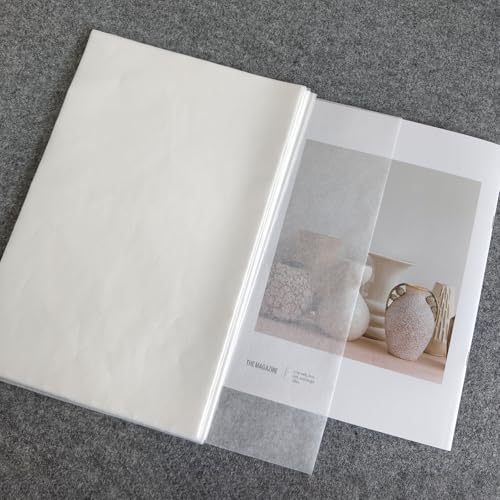
Bamboo Pulp Rice Paper, 8.6 x 13.4 in stands out for its bamboo pulp construction and translucent finish, rather than the larger sheet formats offered by other options. Each of the 100 white sheets measures 8.6 x 13.4 inches, with one smooth side and one rough side. The maker describes it as suitable for gel printing, wet collage and mixed media, and notes its use for tracing and stamp printing. Its modest sheet size suits small layered works or detail-focused projects. The limitation is area: large collages or broad print pulls may require piecing sheets together or choosing a larger format.
Bottom line: Choose it for small wet-media projects where translucency and surface texture matter.
Yeaqee Wet Strength Tissue, 27 x 19 in

Yeaqee Wet Strength Tissue, 27 x 19 in offers the largest sheet format here: about 27 x 19 inches, with 100 white sheets. The maker says the paper resists tearing when wet and dries to a hard finish, making it suited to lanterns and model aircraft as well as collage, wrapping and packing. The broad format gives room to cut custom pieces for projects that do not fit A4 or smaller art sheets. The tradeoff is less emphasis on fine art surface qualities; buyers choosing it for printing should consider whether its unspecified weight and texture suit their process.
Bottom line: Pick it when a large sheet and custom cutting are more useful than a specified paper weight.
CXIIPOL Wet Strength Tissue, 16.54 in

CXIIPOL Wet Strength Tissue, 16.54 in is the square-format option, with 50 white sheets measuring 16.54 x 16.54 inches. Its weight is 40 gsm, giving buyers a concrete basis for comparing it with the other formats. The maker describes it as tear-resistant when wet and says it dries to a hard finish; suggested uses include gel plate printing, cyanotype, collage, lanterns and model aircraft. The square shape works well when a project calls for equal sides or broad layered pieces. It is a smaller pack than the 100-sheet options, so high-volume work may need more sheets.
Bottom line: Pick it for square layouts and projects where a known 40 gsm weight is useful.
Carnival Papers Wet Strength Tissue, A4

Carnival Papers Wet Strength Tissue, A4 provides a true A4 format in a 60-sheet pack, making it distinct from the other wet strength options in its standard size and acid-free attribute. Each white sheet measures 8.3 x 11.7 inches. The maker says the tissue is designed to stay stronger than ordinary tissue when damp and names paint, printing ink, glue and gel medium among its uses. That format suits smaller prints, classroom projects and storage in standard A4 folders.
Bottom line: Choose it for acid-free wet-media work that fits a standard A4 sheet.
How to choose wet strength tissue paper
Start with the wet process and finished project size: heavier application of paint or glue generally calls for more durable paper than a tracing layer. Compare sheet area before count; a 27 x 19-inch sheet covers far more than an A4 sheet at 8.3 x 11.7 inches. For repeated damp handling, choose paper explicitly identified as wet strength rather than assuming all thin craft papers behave alike. GSM measures grams per square meter, so higher GSM generally means more paper mass, but fiber, sizing and finish also affect handling. A product stating 40 gsm gives a more direct weight comparison than one without a weight figure. For large one-piece work, choose a sheet at least as wide as the planned panel; otherwise plan seams or trimming.
Sheet sizes and project fit
Standard A4 measures 8.27 x 11.69 inches, commonly rounded to 8.3 x 11.7 inches, and fits many folders and small-format projects. Larger sheets reduce seams in big collages or model coverings, while square sheets can simplify layouts with equal dimensions. Cutting also creates waste, so match the sheet to the largest required piece rather than relying on the advertised count alone. A useful decision rule is to choose a sheet whose shortest dimension exceeds the project’s widest single-piece section; if it does not, select a larger format or account for joining edges. Keep paper flat and dry before use because damp storage can warp or weaken paper fibers.
What wet strength means for art and crafts
Wet strength tissue is intended to resist tearing better than ordinary tissue while damp, not to remain intact indefinitely under water. Paint, gel medium and adhesive add moisture and weight, so use gentle brush strokes and support thin sheets on a backing when layering. Paper strength comes from fiber bonding and sometimes wet strength additives; the exact treatment differs by maker, so do not assume every product has the same chemistry or water resistance. For lanterns or model aircraft, allow the paper and adhesive to dry fully before handling or applying tension. Paper is combustible: keep finished paper lanterns away from open flames and hot bulbs, and use cool-running lighting only when the construction permits it.
Wet strength tissue paper types at a glance
Use the sheet size and intended use to narrow the format before deciding on surface or fiber. The table separates the available choices by how each can fit a project, rather than treating related craft paper as equivalent to wet strength tissue.
| Option | Project fit | Key distinction |
|---|---|---|
| Smaller art sheets | Detail layers and compact prints | Translucency or A4 format |
| Large rectangular sheets | Broad panels and custom cuts | 27 x 19 in format |
| Square sheets | Equal-sided layouts | 16.54-in sides; 40 gsm |
| Mulberry craft paper | Natural-fiber crafts | Related paper; wet strength not established |
Frequently Asked Questions
Can wet strength tissue paper get completely wet?
Wet strength tissue is designed to resist tearing better than ordinary tissue when damp, not to withstand soaking without damage. Apply moisture gradually and support the sheet, especially under paint or glue.
What size is a standard A4 paper sheet?
A4 measures 8.27 x 11.69 inches, often rounded to 8.3 x 11.7 inches. Choose a larger sheet if the project needs a single piece wider than either A4 dimension.
What does 40 gsm mean for tissue paper?
A 40 gsm sheet has a mass of 40 grams per square meter. GSM helps compare paper weight, but fiber type and finish also affect wet handling and flexibility.
Can I use tissue paper to make a paper lantern?
Wet strength tissue can be used in lantern crafts, and one option here is described for that purpose. Paper is combustible, so keep lanterns away from open flames and hot bulbs.
How should wet strength tissue paper be stored?
Store paper flat in a dry place to limit curling and moisture damage. Keep unused sheets away from damp rooms and allow glued or painted pieces to dry fully before stacking.