
Liquified RV Toilet Treatment: 5 Options Compared

Liquified Black Tank Treatment, 32 oz is the closest match for a standard black-tank treatment because it is an enzyme-based liquid made to break down waste and toilet paper. Choose Liquified Toilet Treatment Drop-Ins, 20 count instead if you want single-use treatments; the other options are for gray tanks, sensor cleaning or the toilet bowl rather than routine black-tank treatment.
We earn a commission if you buy through links on this page. As an Amazon Associate I earn from qualifying purchases. Products are compared on manufacturer specifications, not hands-on testing.
- Best overall: Liquified Black Tank Treatment, 32 oz – A 32-ounce enzyme liquid for black tanks that targets waste, toilet paper, odors and sensor buildup.
- Best for single-use dosing: Liquified Toilet Treatment Drop-Ins, 20 count – Twenty 1-ounce drop-ins offer a pod format for black-tank waste and odor care.
- Best for gray tanks: Liquified Gray Tank Treatment, 32 oz – Its enzyme formula targets grease, soap scum, food debris and bathroom residue.
| Product | Best for | Use | Format | Size | Shop |
|---|---|---|---|---|---|
| Liquified Black Tank Treatment, 32 oz | Routine black-tank care | Black tank | Liquid | 32 fl oz | Check Price on Amazon |
| Liquified Toilet Treatment Drop-Ins, 20 count | Single-use treatments | Black tank | 20 pods | 20 × 1 oz | Check Price on Amazon |
| Liquified Gray Tank Treatment, 32 oz | Gray-tank buildup | Gray tank | Liquid | 32 fl oz | Check Price on Amazon |
| Liquified RV Sensor Treatment, 16 oz | Sensor deep cleaning | Black and gray tanks | Liquid soak | 16 fl oz | Check Price on Amazon |
| Liquified RV Toilet Bowl Cleaner, 24 oz | Bowl stain cleaning | Toilet bowl | Liquid cleaner | 24 fl oz | Check Price on Amazon |
Liquified RV Toilet Treatment Options
Match the treatment to the tank or surface you need to maintain before choosing a format.
Liquified Black Tank Treatment, 32 oz

Liquified Black Tank Treatment, 32 oz is the direct fit for routine black-tank treatment: the 32-ounce orange-scented liquid is an enzyme-based formula aimed at solid waste, toilet paper, odor-causing bacteria and sensor buildup. The maker says it is biodegradable, formaldehyde-free and safe for septic systems. Choose it if you want a bottle rather than premeasured pods. The formula is intended for tank maintenance, not cleaning the toilet bowl; buyers looking for a dedicated bowl cleaner should choose a different type.
Bottom line: Choose this for liquid black-tank treatment rather than bowl cleaning.
Liquified Toilet Treatment Drop-Ins, 20 count
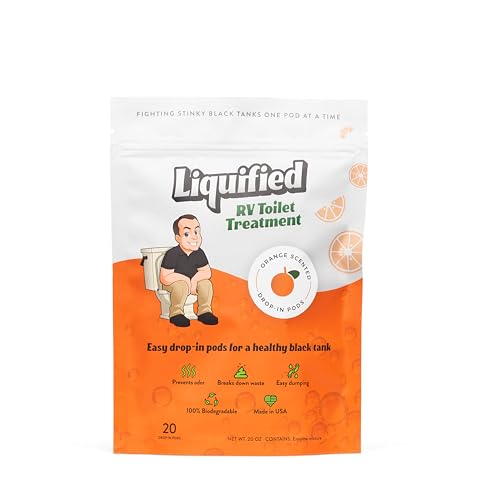
Liquified Toilet Treatment Drop-Ins, 20 count differs from the bottle treatments by packaging the black-tank formula in 20 single-use 1-ounce pods. The maker says the enzyme-based treatment breaks down solid waste and toilet paper, fights odor and helps clear sensor buildup; the product name specifies an orange scent, while its maker mentions lavender. The pod format suits buyers who prefer individual portions over pouring from a bottle. It is still a black-tank treatment, not a gray-tank degreaser or a toilet bowl cleaner.
Bottom line: Pick this if premeasured drop-ins suit your routine better than a bottle.
Liquified Gray Tank Treatment, 32 oz

Liquified Gray Tank Treatment, 32 oz is the gray-tank counterpart, formulated for buildup from kitchen and bathroom drains rather than black-tank waste. Its enzyme formula targets grease, soap scum, food particles and organic matter; the maker also says it helps restore sensor accuracy and is formaldehyde-free and septic-safe. The 32-ounce bottle has a lemon scent. Choose it for sink or shower tank residue, but not as the primary treatment for a toilet’s black tank.
Bottom line: Choose this for kitchen or bathroom gray-tank buildup, not black-tank treatment.
Liquified RV Sensor Treatment, 16 oz
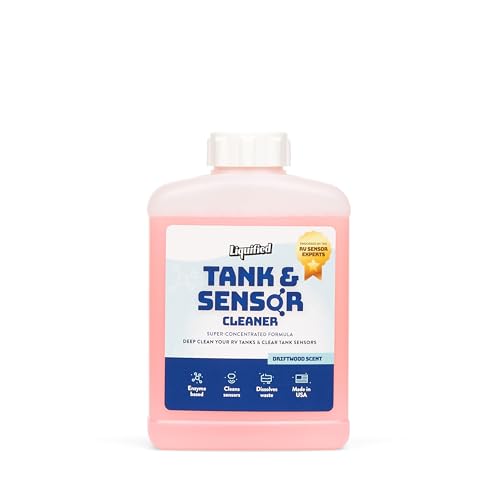
Liquified RV Sensor Treatment, 16 oz serves a different job from routine toilet treatment: it is a concentrated sensor-cleaning soak for black and gray tanks. The maker’s directions call for filling the tank with water, adding the full 16-ounce bottle, soaking for 24 to 72 hours, then draining and rinsing. The formula also targets waste residue and odor, with a driftwood scent. This is the focused choice when sensor buildup is the concern; its one-bottle deep-clean method is not a substitute for ongoing treatment.
Bottom line: Pick this for an occasional sensor-focused soak in either tank.
Liquified RV Toilet Bowl Cleaner, 24 oz
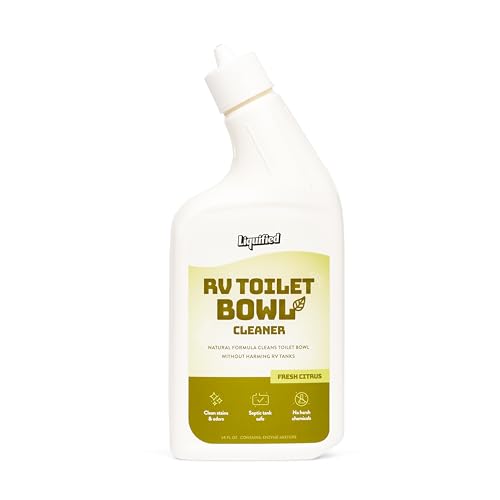
Liquified RV Toilet Bowl Cleaner, 24 oz is a toilet bowl cleaner, not a holding-tank digester. The 24-ounce citrus-scented product is described as a natural formula without harsh chemicals and is intended to clean bowl stains; the maker also says it is septic-tank safe. It suits buyers whose immediate task is cleaning the bowl surface. For breaking down contents in the black tank, choose a tank treatment instead, since a bowl cleaner and a tank digester serve different purposes.
Bottom line: Choose this for toilet bowl stains, not waste breakdown in the tank.
How to choose an RV toilet treatment
Choose by the material and tank you need to address: black-tank treatments target toilet waste and paper, while gray-tank formulas address sink and shower residue. A sensor soak is a separate maintenance task, and bowl cleaner is for the toilet surface. RV holding tanks rely on water to carry waste toward the outlet, so avoid treating a concentrated chemical as a substitute for adequate flushing water. A practical rule is to match the label’s tank type to your intended use before pouring; do not assume a black-tank product is formulated for grease or a bowl cleaner will digest tank contents. Liquified Black Tank Treatment, 32 oz and Liquified Toilet Treatment Drop-Ins, 20 count are the black-tank options here, but differ in bottle versus pod format.
Black tanks, gray tanks and sensor care
Black tanks collect toilet waste, while gray tanks collect wastewater from sinks and showers; kitchen gray tanks can accumulate grease and food particles, and bathroom lines can carry soap residue and hair. Tank sensors commonly rely on probes contacting the liquid, so residue on a probe can interfere with a level reading. A maintenance treatment and a sensor soak are not interchangeable: routine formulas are used for ongoing tank care, while Liquified RV Sensor Treatment, 16 oz calls for a 24-to-72-hour soak followed by draining and rinsing. Use the product intended for the tank in question, and reserve a deep clean for sensor buildup rather than applying it as though it were a regular dose.
Liquid bottles versus treatment drop-ins
Liquid and drop-in formats differ mainly in handling: bottles let you pour a treatment, while individually packaged pods provide discrete 1-ounce portions. Neither format removes the need to use the correct tank and follow the product’s own directions. Use this quick match to narrow the product type:
| Need | Product type | Choice |
|---|---|---|
| Black-tank waste care | Liquid bottle | Liquified Black Tank Treatment, 32 oz |
| Black-tank single portions | Drop-ins | Liquified Toilet Treatment Drop-Ins, 20 count |
| Kitchen or bathroom tank residue | Gray-tank liquid | Liquified Gray Tank Treatment, 32 oz |
| Sensor residue | Deep-clean soak | Liquified RV Sensor Treatment, 16 oz |
Choose a format you can dose consistently, and keep bowl cleaning separate from tank treatment.
Dumping and maintenance mistakes to avoid
Keep the black-tank outlet closed during normal use so liquid stays in the tank to help carry solids; leaving the valve open can let liquid drain away while solids remain. When dumping, empty the black tank before the gray tank when both are being discharged, so gray water can help rinse residue from the sewer hose. Use sufficient water with toilet waste rather than trying to compensate with extra treatment. Sensor-focused cleaning also needs time: Liquified RV Sensor Treatment, 16 oz calls for a 24-to-72-hour soak, followed by draining and rinsing. These practices address different issues—water supports waste movement, correct dumping limits residue, and a soak targets sensor buildup.
Frequently Asked Questions
Can gray tank treatment go in a black tank?
Use a product marked for the black tank rather than assuming a gray-tank formula is interchangeable. Gray-tank treatments target residue such as grease and soap scum, while black-tank treatments are intended for toilet waste and paper.
How long should an RV sensor cleaner soak?
The sensor treatment here calls for 24 to 72 hours, followed by draining and rinsing. The soak method is intended for a full tank with the full bottle, so allow time before a planned dump.
Should the black tank valve stay open at camp?
Keep the black-tank valve closed during normal use so liquid remains with the solids. Leaving it open can drain liquid away and allow solids to collect; dump the tank when appropriate rather than using the open valve as ongoing drainage.
Do RV toilet treatments replace flushing water?
No; treatment does not replace water needed to carry waste through the tank. Use enough water with toilet waste, because chemical treatment alone cannot prevent poorly hydrated solids from accumulating.
Is toilet bowl cleaner the same as tank treatment?
No; bowl cleaner is intended for the toilet surface, while tank treatment is intended for waste and residue inside a holding tank. Match the product to the task and tank rather than using one category as a substitute for the other.