
Loctite Extend Rust Converter: Compare 4 Sizes

For a single iron or steel project, Loctite Extend Rust Neutralizer, 8 oz (single) is the clearest fit: its 8-ounce formula converts rust, is paintable, and sets in 20 minutes per coat. Choose Loctite Extend Rust Neutralizer, 10.25 fl oz, 6-pack or Loctite Extend Rust Treatment, quart bottle, 10-pack for larger quantities, or Loctite Extend Rust Neutralizer, 8 oz (alternate) if you want an 8-ounce Loctite option with fewer stated features.
Rust converters react with existing rust to form a coating; they are not general-purpose paint for clean metal. Confirm the intended surface and application instructions before buying.
We earn a commission if you buy through links on this page. As an Amazon Associate I earn from qualifying purchases. Products are compared on manufacturer specifications, not hands-on testing.
- Best overall: Loctite Extend Rust Neutralizer, 8 oz (single) – An 8-ounce iron-and-steel formula with a 20-minute set time per coat and paint compatibility.
- Best for multipacks: Loctite Extend Rust Neutralizer, 10.25 fl oz, 6-pack – A six-pack of 10.25-fluid-ounce containers.
- Best for metal parts: Loctite Extend Rust Treatment, quart bottle, 10-pack – A quart-bottle treatment formulated for use with body filler and fiberglass.
| Product | Best for | Package size | Pack count | Stated use | Shop |
|---|---|---|---|---|---|
| Loctite Extend Rust Neutralizer, 8 oz (single) | Iron and steel | 8 fl oz | 1 | Iron and steel | Check Price on Amazon |
| Loctite Extend Rust Neutralizer, 10.25 fl oz, 6-pack | Multi-project supply | 10.25 fl oz | 6 | Rust neutralizer | Check Price on Amazon |
| Loctite Extend Rust Treatment, quart bottle, 10-pack | Metal parts | 1 qt per bottle | 10 | Metal parts; filler and fiberglass | Check Price on Amazon |
| Loctite Extend Rust Neutralizer, 8 oz (alternate) | Simple 8-ounce option | 8 oz | — | Rust neutralizer | Check Price on Amazon |
Loctite Extend rust converter options
Compare the package formats and the uses explicitly associated with each option.
Loctite Extend Rust Neutralizer, 8 oz (single)

The 8-ounce size and named iron-and-steel applications make this the most clearly described single-project option. The formula converts rust to a neutral black surface and forms a polymer coating; the maker says it sets in 20 minutes per coat. The coating can be painted with oil- or lacquer-based paint, according to the maker. It suits items such as railings, pipes, ductwork, or vehicle metal where rust is already present. The limitation is the small container: a larger area or several projects may call for a larger package, and the set time is not a full cure time.
Bottom line: Choose this for a clearly specified 8-ounce treatment on iron or steel.
Loctite Extend Rust Neutralizer, 10.25 fl oz, 6-pack

The six-container format distinguishes this option from the single-bottle sizes and can suit several small jobs or keeping containers available for separate projects. Each container is identified as 10.25 fluid ounces, for six containers total. The larger package count is useful only if the formula and surfaces fit your work; verify those points before choosing it for a specific metal item.
Bottom line: Choose this when you need six 10.25-fluid-ounce containers.
Loctite Extend Rust Treatment, quart bottle, 10-pack
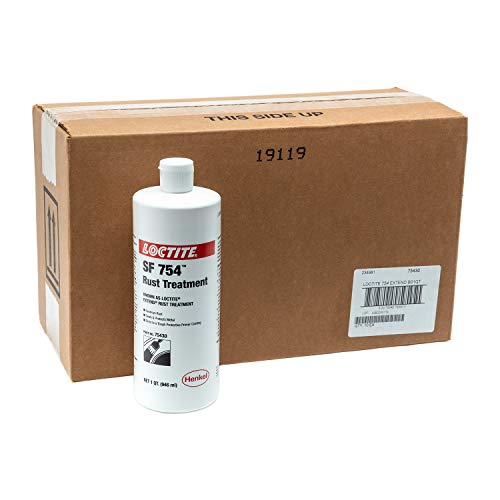
The quart-bottle, 10-pack format is the largest supply, and the maker specifically describes this treatment for use with body filler and fiberglass as well as metal parts. The maker says the cured product acts like a primer for painting and dries black. It is also described as resisting continuous heat aging up to 200°F and short exposure up to 250°F. Those temperature figures are maker claims, not a substitute for checking whether the complete coating system suits a particular job. The multi-bottle quantity is a limitation for anyone seeking only a small treatment.
Bottom line: Choose this for a larger supply and the body-filler or fiberglass use.
Loctite Extend Rust Neutralizer, 8 oz (alternate)

The 8-ounce container makes this a compact Loctite Extend choice, but it is distinguished mainly by its size and product name. That makes it suitable when the priority is an 8-ounce package rather than a particular stated application or coating attribute. The specifications establish no paint compatibility, surface range, color, or working time for this option, so do not infer those from another Loctite Extend package. Its main limitation is the narrower basis for matching it to a project; check the intended metal surface and finishing steps before purchase.
Bottom line: Choose this when an 8-ounce Loctite package is the main requirement.
How to choose a rust converter size
Choose by the metal area and number of jobs, not by container count alone. The options here range from 8 ounces to a quart per bottle, with one format sold as a six-pack and another as a 10-pack. For one small item, a single 8-ounce container avoids buying several bottles; a multi-pack is more relevant when multiple projects need treatment. Rust converter needs existing rust to react with, so it is not the right first coat for clean metal. Compare the package’s surface uses and paint directions before selecting a container. Where those uses are not clear, confirm the surface compatibility and finishing requirements before ordering.
| Project need | Consider |
|---|---|
| One iron or steel item | 8-ounce option with surface use |
| Several separate jobs | Six-container format |
| Bulk supply or filler and fiberglass use | Quart-bottle treatment pack |
How rust converter works on metal
Rust converter is intended to react with existing iron oxide and leave a coating that can serve as a base for later paint. It differs from ordinary primer, which is generally applied to a prepared surface rather than used to transform rust. Loose, flaky rust should be removed first because a converter cannot reliably bond through detached scale. Oil, grease, dirt, and moisture can also interfere with coating adhesion. A measurable decision rule is to remove any scale that lifts or flakes with a hand wire brush before application; if sound metal remains without rust, use a coating intended for clean metal instead. Product-specific cure, coat, and topcoat instructions still govern the finished system.
Preparing and painting rusted metal
Prepare the surface before applying a converter: remove loose rust and debris, then ensure the metal is free of oil and grease. Rust converters are most useful where rust remains firmly attached; applying them over thick scale risks leaving a weak layer beneath the coating. Apply only as directed for the particular formula, since coverage and recoat timing differ. For the 8-ounce formula in this comparison, the maker gives a 20-minute set time per coat and says oil- or lacquer-based paint can be used afterward. A set time is not automatically the same as full cure, so wait for the product’s specified paint-ready condition before topcoating.
Rust converter safety and common mistakes
Use rust converter with eye protection, protective gloves, and ventilation, and keep the product off skin and out of eyes. Rust treatments are chemical coatings; consult the container label and safety data sheet for handling, cleanup, and disposal directions rather than treating them like ordinary water-based paint. Avoid applying a converter over loose flakes, wet metal, or oily surfaces because those conditions can undermine adhesion. Do not assume every treated surface can receive every paint: the coating’s chemistry and the paint type must be compatible. If the job involves a vehicle frame, structural metal, or a heat-exposed part, confirm that the coating is appropriate for that use before relying on it as protection.
Frequently Asked Questions
Can rust converter go over loose rust flakes?
No; remove loose and flaky rust first so the coating can contact rust that remains attached to the metal. A hand wire brush is a practical way to remove scale that lifts or flakes.
Can I paint over Loctite Extend Rust Neutralizer?
The 8-ounce formula is described as paintable with oil- or lacquer-based paint. Its 20-minute set time per coat does not by itself establish that the coating is fully cured or ready for paint.
Does rust converter work on clean metal?
Rust converter is meant to react with existing rust, so clean, unrusted metal is not its intended target. Use a primer or coating designed for clean metal when there is no rust to convert.
Should rust converter be applied to wet metal?
Use a dry, cleaned surface unless that product’s instructions specifically allow otherwise. Moisture can interfere with coating adhesion, just as oil and loose scale can.
What protection should I use when applying rust converter?
Wear gloves and eye protection, and work with ventilation because rust converter is a chemical coating. Check the container label and safety data sheet for product-specific handling and cleanup directions.