
Magnet for Mailbox Door: 5 Closure Options Compared

Mail Nut is the closest match for a mailbox door because its name specifically identifies keeping a mailbox door closed. The other options are cabinet catches or bar magnets, so choose one only if its shape and mounting method suit your door.
A magnetic catch uses attraction between a magnet and a metal strike plate to hold a closed door; confirm the mounting surface and clearance before ordering.
We earn a commission if you buy through links on this page. As an Amazon Associate I earn from qualifying purchases. Products are compared on manufacturer specifications, not hands-on testing.
- Best overall: Mail Nut Mailbox Door Closure – Its purpose is keeping a mailbox door closed, matching the requested use.
- Best for cabinet catches: Jiayi 17 lb Magnetic Catch, 2 Pack – A 17-pound cabinet catch with adhesive or screw mounting.
- Best for custom placement: FINDMAG Adhesive Bar Magnets, 6 Pack – Six 2.36-inch bar magnets come with adhesive pads.
| Product | Best for | Stated purpose | Shop |
|---|---|---|---|
| Mail Nut Mailbox Door Closure | Mailbox doors | Keep mailbox door closed | Check Price on Amazon |
| Jiayi 17 lb Magnetic Catch, 2 Pack | Dual mounting | Cabinet doors | Check Price on Amazon |
| FINDMAG Adhesive Bar Magnets, 6 Pack | Custom placement | Cabinet doors, signs, tools, and DIY | Check Price on Amazon |
| MPJ 15 lb Magnetic Catch, Brown/Bronze | Catch and strike | Shutters | Check Price on Amazon |
| Mousike Black Cabinet Magnets, 4 Pack | Four-catch set | Cabinets, cupboards, wardrobes, closets | Check Price on Amazon |
Magnet for Mailbox Door Options
Compare each option by its purpose, mounting approach, and physical form before choosing a closure.
Mail Nut Mailbox Door Closure

Mail Nut is the only option identified specifically for keeping a mailbox door closed, while the other products are cabinet catches or bar magnets. Its purpose makes it the closest match when you want a mailbox flap to stay shut. The product name does not establish its dimensions, hold rating, or mounting method, so those cannot be compared with the quantified catch options. Confirm that its mounting arrangement fits your mailbox before choosing it, especially if the door has limited clearance or an unusual surface.
Bottom line: Choose this when you want a closure identified for mailbox doors and can confirm its fit.
Jiayi 17 lb Magnetic Catch, 2 Pack

The Jiayi catch stands out for offering both adhesive and screw mounting, unlike the screw-oriented catch package and standalone bar magnets. The black stainless-steel catches measure 2.26 inches long, 1 inch wide, and 0.53 inch high, and the maker gives a 17-pound hold rating. It is designed for cabinet doors, so consider it for a mailbox only if the mounting surfaces, clearance, and exposure suit the installation. Adhesive avoids screw holes; screws offer a mechanical attachment option.
Bottom line: Choose it if dual mounting matters more than a mailbox-specific design.
FINDMAG Adhesive Bar Magnets, 6 Pack
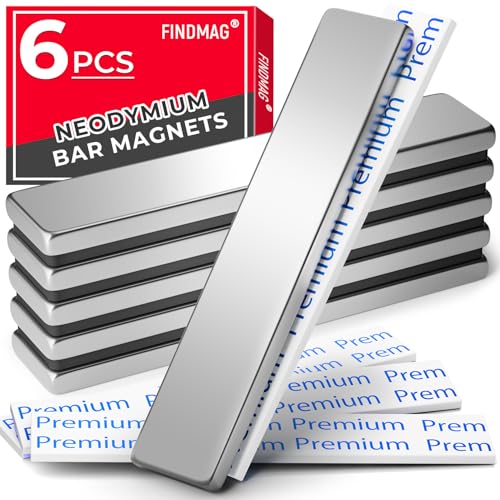
The FINDMAG set uses separate flat bar magnets rather than a catch-and-strike assembly, giving more freedom to position components for a custom layout. Each bar measures 2.36 by 0.39 by 0.12 inches, and the package includes six magnets and six double-sided adhesive pads. The maker identifies neodymium as the magnet material and describes use on metal or, with the pads, nonmetal surfaces. The set has no specified hold rating or dedicated mailbox door alignment system, so it may require more careful fitting.
Bottom line: Choose this for a compact bar-magnet approach and custom placement.
MPJ 15 lb Magnetic Catch, Brown/Bronze

The MPJ option pairs a magnetic catch with a strike plate and includes screws, unlike the adhesive-backed bar magnets. Its features give a 15-pound rating and identify brown/bronze coloring; the retail pack contains two catches. It is identified as shutter hardware rather than mailbox hardware, so its intended application and finish may not suit a visible mailbox flap. Check that the screw locations can be used without interfering with the door or mailbox interior.
Bottom line: Choose it when a catch-and-strike layout and screw attachment fit the door.
Mousike Black Cabinet Magnets, 4 Pack

The Mousike set provides four screw-mounted catches, more pieces than the two-catch package here. The black stainless-steel magnets are intended for cabinets, cupboards, wardrobes, closets, and drawers, and measure 0.6 inch high. The maker describes the magnetic force as making doors harder for children and pets to open, but gives no hold rating for a direct force comparison. Its cabinet-oriented design makes it a possible retrofit only when the hardware fits the mailbox door and mounting surface.
Bottom line: Choose it if you need a four-piece screw-mounted set and the fit works.
How to Choose a Magnet for a Mailbox Door
Choose by mating surface, mounting space, and the way the door closes. A magnetic catch normally pairs a magnet with a metal strike plate; the two parts need to meet squarely for consistent contact. Measure the flat area available on both the door and frame, including the clearance when the door swings shut. With less than 0.6 inch of height, avoid catches taller than that clearance; the catch heights here range from 0.53 to 0.6 inch where given. A loose bar magnet can be positioned to suit a custom layout, but it has no built-in strike-plate alignment. Do not treat a cabinet catch’s force rating as proof that it will suit an outdoor mailbox.
Mailbox Door Fit and Mounting
Mounting compatibility matters more than magnet strength when adapting a catch to a mailbox. Adhesive pads can attach a magnet to a nonmetal surface, but the opposing side still needs a suitable surface or a strike plate. Screw mounting needs enough material behind each screw hole and clearance so the hardware does not obstruct the flap. For a mailbox door, check the mating surfaces and make sure the door can close fully after installation. Keep the magnet and any loose hardware away from the mail path, and avoid a placement that leaves the flap partly open or creates a sharp snag point.
Magnetic Catch Types Compared
Catch-and-strike units, adhesive bar magnets, and mailbox-specific closures solve related but different installation problems. A catch-and-strike unit sets the magnet and target plate as a pair, while a bar magnet gives more freedom to build a custom layout. A product identified for a mailbox door is the most direct fit, but its actual mounting dimensions still matter. Use this comparison to narrow the style, then confirm the measured clearance and mating surface before installation.
| Need | Suitable style | What to verify |
|---|---|---|
| Mailbox flap closure | Mailbox-specific closure | Mounting area and door clearance |
| Paired alignment | Magnetic catch and strike plate | Flat contact and screw space |
| Custom placement | Adhesive-backed bar magnet | Adhesive compatibility and mating surface |
Common Mailbox Magnet Installation Mistakes
A magnet placed too far from its target can fail to hold even when the parts are individually strong. Align the magnet and strike plate with the door closed, and check that contact remains flush instead of edge-to-edge. Adhesive mounting also depends on a clean, dry, compatible surface; uneven or dusty surfaces reduce contact area. Avoid choosing by a pound rating alone: the rating does not establish performance on a different door material, in a different orientation, or with a misaligned strike. Test that the flap closes freely and stays shut without forcing it or blocking access to the mailbox.
Frequently Asked Questions
Can I use a cabinet magnet on a mailbox door?
A cabinet catch can work only when its magnet and strike plate fit the mailbox door and frame. Check the available clearance against the catch height; the catches here with heights are 0.53 and 0.6 inch.
Does a magnetic catch need a metal strike plate?
A catch-and-strike setup needs a compatible target for the magnet to attract. A bar magnet can attach to a nonmetal surface with an adhesive pad, but its opposing surface still needs a suitable magnetic target.
Is adhesive mounting strong enough for a mailbox flap?
Adhesive suitability depends on the surface, contact area, and the force needed to keep the flap shut. Follow the adhesive maker’s cure and surface-preparation requirements, and avoid relying on adhesive where the substrate is uneven or dirty.
How much clearance does a magnetic catch need?
The catch must fit without obstructing the door’s closing path. Measure the available height and compare it with the hardware; a catch measuring 0.6 inch or more will not fit a space under 0.6 inch.
Can a strong magnet damage mailbox contents?
Keep magnets away from magnetic-stripe cards, which can be affected by close exposure to strong magnetic fields. A mailbox magnet should be mounted at the flap or frame, not placed loose among mail or personal items.