
Men’s UA Charged Pursuit 3 Running Shoes Compared

Under Armour Charged Pursuit 3, Gray, 10 is the named Charged Pursuit 3 model, with a breathable mesh upper and Charged Cushioning for runners seeking a neutral daily shoe. Choose Under Armour Charged Pursuit 3, Black, 10.5 if its size 10.5 fits you better; Under Armour Charged Pursuit 4, Gray, 11 is the related Pursuit 4, not the same model.
Running shoes are designed for repetitive forward movement, with fit and intended use mattering more than color. Check your size and preferred fit before choosing between the two Pursuit 3 options.
We earn a commission if you buy through links on this page. As an Amazon Associate I earn from qualifying purchases. Products are compared on manufacturer specifications, not hands-on testing.
- Best overall: Under Armour Charged Pursuit 3, Gray, 10 – The Charged Pursuit 3 in size 10 pairs a mesh upper with padded collar and tongue and Charged Cushioning.
- Best for size 10.5: Under Armour Charged Pursuit 3, Black, 10.5 – It has the same Charged Pursuit 3 features as the size 10 option, in size 10.5.
- Best for Pursuit 4: Under Armour Charged Pursuit 4, Gray, 11 – This related model identifies an 8 mm offset and standard-tie laces.
| Product | Best for | Model | Size | Shop |
|---|---|---|---|---|
| Under Armour Charged Pursuit 3, Gray, 10 | Size 10 runners | Charged Pursuit 3 | 10 US | Check Price on Amazon |
| Under Armour Charged Pursuit 3, Black, 10.5 | Size 10.5 runners | Charged Pursuit 3 | 10.5 US | Check Price on Amazon |
| Under Armour Charged Pursuit 4, Gray, 11 | Pursuit 4 seekers | Charged Pursuit 4 | 11 US | Check Price on Amazon |
Men’s UA Charged Pursuit 3 running shoes
Compare the two Charged Pursuit 3 sizes and the related Pursuit 4 by model, fit, and upper construction.
Under Armour Charged Pursuit 3, Gray, 10

Under Armour Charged Pursuit 3, Gray, 10 is a size 10 Charged Pursuit 3 in Castlerock, Team Orange, and Distant Gray, making fit the key distinction from the other Pursuit 3 option. The performance mesh upper is designed for lightweight breathability, while foam padding at the collar and under the tongue adds a cushioned feel. Its deluxe foam sockliner is designed to mold to the foot, and the Charged Cushioning midsole uses compression-molded foam. Choose this version if size 10 is the right fit; it does not offer the size 10.5 option of Under Armour Charged Pursuit 3, Black, 10.5.
Bottom line: Choose this if size 10 is your preferred fit in the Charged Pursuit 3.
Under Armour Charged Pursuit 3, Black, 10.5
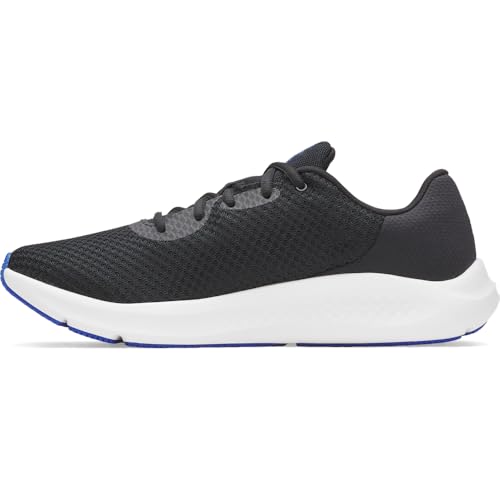
Under Armour Charged Pursuit 3, Black, 10.5 gives runners the Charged Pursuit 3 in size 10.5 and a black, black, and Team Royal color combination. Like the size 10 version, it has a performance mesh upper, padded collar and tongue, deluxe foam sockliner, and Charged Cushioning midsole. The outsole pattern is designed for flex and traction. Select this version when the half-size difference matters to your fit; the available product facts do not establish a separate cushioning or upper advantage over Under Armour Charged Pursuit 3, Gray, 10.
Bottom line: Pick this when size 10.5 is the better fit for you.
Under Armour Charged Pursuit 4, Gray, 11
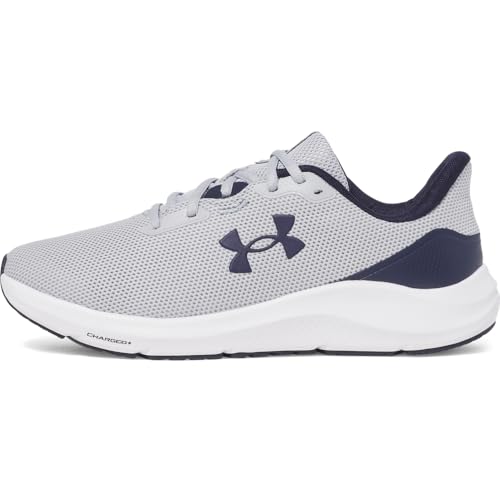
Under Armour Charged Pursuit 4, Gray, 11 is the Charged Pursuit 4, a related model rather than the requested Pursuit 3. Its performance mesh upper, padded collar and tongue, deluxe foam sockliner, and Charged Cushioning resemble the Pursuit 3 features, while this model also identifies an 8 mm offset and standard-tie laces. The maker describes it as a neutral shoe for runners seeking flexibility, cushioning, and versatility. Choose it if you want the newer model and those identified fit characteristics; it is not a like-for-like Pursuit 3 selection.
Bottom line: Choose this if you want the related Pursuit 4 and its 8 mm offset.
How to choose men’s running shoes
Start with fit: leave about a thumb’s width, roughly 1/2 inch, between your longest toe and the end of the shoe. Feet often swell during the day, so trying shoes later can reveal pressure that a morning fitting misses. A snug heel and midfoot should not require painfully tight lacing, and toes should be able to spread without rubbing. A neutral shoe is generally intended for runners who do not seek added stability features; cushioning and upper feel are separate considerations. If your feet differ in length, use the larger foot to guide sizing. Do not assume two adjacent sizes have the same feel just because their materials match.
Charged Pursuit 3 sizing and fit
The Pursuit 3 choices are size 10 and size 10.5, so choose by foot fit rather than color. US men’s shoe sizes are not a measurement in inches; actual length and width can vary among models, and a half-size change may affect toe room. Measure both feet while standing, wearing the socks you plan to run in, and compare against the maker’s sizing guidance. A useful decision rule is to keep approximately 1/2 inch of space ahead of the longest toe while securing the heel without pressure. If either shoe causes numbness, pinching, or heel slip during a short indoor fit check, try another size or shape.
Charged Cushioning and outsole basics
Charged Cushioning in these shoes is compression-molded foam in the midsole, while the sockliner is a separate layer inside the shoe. Midsole foam and outsole rubber serve different jobs: the midsole provides underfoot cushioning, and outsole contact zones meet the ground. The Pursuit 3 features describe a durable outsole pattern intended for flex and traction; the Pursuit 4 also identifies an 8 mm offset, the height difference between heel and forefoot. Runners moving from a shoe with a different offset may notice a change in feel, so a gradual transition over several runs is more prudent than an abrupt switch in all training.
| Need | Choice | Why it fits |
|---|---|---|
| Charged Pursuit 3, size 10 | Under Armour Charged Pursuit 3, Gray, 10 | Exact model and size match |
| Charged Pursuit 3, size 10.5 | Under Armour Charged Pursuit 3, Black, 10.5 | Exact model in the larger half-size |
| Related Pursuit 4, size 11 | Under Armour Charged Pursuit 4, Gray, 11 | Different model with an identified 8 mm offset |
When to replace running shoes
Many runners use 300 to 500 miles as a typical replacement range, but body weight, running surface, gait, and shoe construction can shift that interval. Track mileage and inspect the outsole and midsole regularly: unevenly worn tread, visibly compressed foam, or a changed feel are reasons to reassess the shoe rather than rely on mileage alone. Rotate shoes only if the fit and condition remain suitable; alternating pairs does not restore worn cushioning. Retire shoes that have lost secure traction, especially for wet or uneven routes, where a worn outsole can make footing less predictable.
Frequently Asked Questions
How much room should running shoes have at the toes?
Aim for about 1/2 inch between the longest toe and the shoe’s front. Check while standing in your running socks, since the foot spreads under load.
When should I replace a pair of running shoes?
A common rule of thumb is 300 to 500 miles, but terrain, gait, and wear can change that range. Inspect tread and midsole condition instead of relying only on mileage.
What does an 8 mm shoe offset mean?
An 8 mm offset means the heel sits 8 mm higher than the forefoot. Runners changing from a substantially different offset may prefer a gradual transition over several runs.
Are neutral running shoes right for every runner?
No; neutral shoes are intended for runners who do not seek added stability features. Fit, comfort, and running needs still matter, so a label alone cannot determine the right shoe.
How should I check running shoe fit at home?
Try both shoes while standing in running socks and leave about 1/2 inch ahead of the longest toe. Walk around briefly and reject a fit that pinches, numbs toes, or lets the heel slip.