
Negative-Heel Shoes for Women: 5 Styles Compared

For women seeking a negative-heel, BALLOP AriCare Negative-Heel Slides is the clearest match for its 31-degree toe-up design and adjustable strap. Choose Negative-Heel Recovery Slides, 3.8-Degree Tilt for a gentler 3.8-degree backward tilt; the zero-drop sneakers are alternatives, not negative-heel shoes.
Negative-heel footwear places the heel lower than the forefoot, while zero-drop footwear keeps them level. Choose by the sole geometry you want and the shoe form you need.
We earn a commission if you buy through links on this page. As an Amazon Associate I earn from qualifying purchases. Products are compared on manufacturer specifications, not hands-on testing.
- Best overall: BALLOP AriCare Negative-Heel Slides – Its 31-degree toe-up design and adjustable strap make it the clearest negative-heel match.
- Best for a gentler tilt: Negative-Heel Recovery Slides, 3.8-Degree Tilt – The 3.8-degree backward tilt is less pronounced than the 31-degree design.
- Best for a roomy toe box: Wide-Toe Zero-Drop Casual Sneakers – The casual sneaker has a wide-toe box and zero-drop sole rather than a negative-heel.
| Product | Best for | Shoe type | Sole design | Size | Shop |
|---|---|---|---|---|---|
| BALLOP AriCare Negative-Heel Slides | Adjustable slide fit | Slide sandals | 31-degree toe-up design | Women’s 8 Wide | Check Price on Amazon |
| Negative-Heel Recovery Slides, 3.8-Degree Tilt | Gentler negative-heel | Slides | 3.8-degree backward tilt | Women’s 10 | Check Price on Amazon |
| Wide-Toe Zero-Drop Casual Sneakers | Casual sneaker wear | Casual sneakers | Zero-drop sole | Women’s 8 | Check Price on Amazon |
| WHITIN Wide-Toe Zero-Drop Shoes | Flexible daily footwear | Casual shoes | Zero-drop sole | Women’s 10 Wide | Check Price on Amazon |
| EWUHA Wide-Toe Zero-Drop Water Shoes | Water and trail use | Water shoes | Zero-drop design | Women’s 8–8.5 | Check Price on Amazon |
Negative-heel shoes for women and alternatives
Compare the negative-heel slides first, then consider the zero-drop shoes if level heel-to-toe geometry is what you want.
BALLOP AriCare Negative-Heel Slides
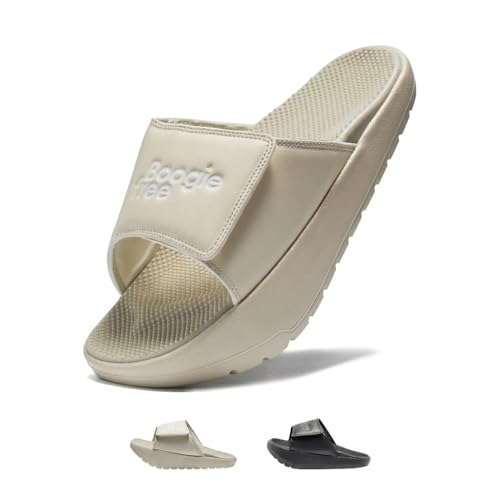
BALLOP AriCare Negative-Heel Slides stands apart with a 31-degree toe-up design, an acupressure footbed, and a wide hook-and-loop strap. The maker says the design encourages calf stretching and muscle engagement during walking; the sandal weighs 0.5 pounds (242 grams). Its adjustable strap makes it a useful option when a fixed upper feels restrictive. The limitation is the pronounced angle: shoppers seeking a mild tilt or a closed-toe shoe should consider another style, and the wide size should suit only shoppers who need that width.
Bottom line: Pick this if you want an adjustable slide with a pronounced negative-heel angle.
Negative-Heel Recovery Slides, 3.8-Degree Tilt

Negative-Heel Recovery Slides, 3.8-Degree Tilt uses a 3.8-degree backward tilt, a much gentler angle than the 31-degree design of BALLOP AriCare Negative-Heel Slides. These cushioned slides are described for home wear and post-workout use, and the pair includes four pairs of shoe charms. The maker says the heel-down geometry creates a calf-stretching feel. This is the more suitable choice for shoppers who want a smaller tilt in a slide format. The fixed size 10 and black color make it a poor fit for anyone needing another size or a different color.
Bottom line: Choose this for a cushioned slide with a smaller backward tilt.
Wide-Toe Zero-Drop Casual Sneakers

Wide-Toe Zero-Drop Casual Sneakers is a zero-drop sneaker, not a negative-heel shoe: its heel and forefoot are intended to sit level rather than tilt backward. It has a wide-toe box, suede patchwork upper, and flexible, slip-resistant rubber sole; an arch-support insole is also claimed. The casual sneaker form suits shoppers who want closed footwear and toe room without a heel-to-toe drop. Its key limitation is the level sole, so it does not meet a preference for negative-heel geometry.
Bottom line: Pick this if a roomy, level-soled sneaker matters more than a negative-heel.
WHITIN Wide-Toe Zero-Drop Shoes

WHITIN Wide-Toe Zero-Drop Shoes differs from the negative-heel slides by using a non-elevated, zero-drop heel and a flexible low-to-the-ground sole. Its wide-toe box and knit upper make it a closed-toe alternative for everyday wear, workouts, or commuting. The features also identify a slip-proof rubber sole. Choose it if you want a wide fit and level geometry; avoid it if your priority is a heel lower than the forefoot. The black color and women’s size 10 wide are the available fit cues here.
Bottom line: Choose this for a wide, flexible zero-drop shoe rather than a tilted sole.
EWUHA Wide-Toe Zero-Drop Water Shoes

EWUHA Wide-Toe Zero-Drop Water Shoes is a zero-drop water shoe, so it offers a different sole geometry from negative-heel slides. Its mesh upper, wide-toe box, and rubber outsole with deep lugs are aimed at walking across varied ground and water settings such as beaches, pools, or boats. The weight is 0.59, but no unit is given, so it cannot be compared directly with the weight of BALLOP AriCare Negative-Heel Slides. This is a more relevant option for water-oriented use; it is not the choice for a negative-heel.
Bottom line: Pick this for water-oriented wear and a level, wide-toe design.
How negative-heel shoes differ from zero-drop shoes
Negative-heel shoes tilt the foot so the heel sits lower than the forefoot; zero-drop shoes keep heel and forefoot level. The products here show why the label matters: BALLOP AriCare Negative-Heel Slides has a 31-degree toe-up design, Negative-Heel Recovery Slides, 3.8-Degree Tilt a 3.8-degree backward tilt, and Wide-Toe Zero-Drop Casual Sneakers, WHITIN Wide-Toe Zero-Drop Shoes, and EWUHA Wide-Toe Zero-Drop Water Shoes are zero-drop alternatives. A toe-up or backward tilt can be described from different reference points, so compare the maker’s geometry rather than assuming the numbers are directly interchangeable. For a negative-heel specifically, choose one of the two tilted slides; choose a zero-drop shoe only if a level sole is acceptable. Shoe shape matters too: slides are open footwear, while the alternatives are closed shoes or water shoes.
Choosing a negative-heel angle and shoe form
Start with the sole angle and then decide whether a slide or closed shoe fits the intended setting. The 31-degree design in BALLOP AriCare Negative-Heel Slides is numerically more pronounced than the 3.8-degree backward tilt in Negative-Heel Recovery Slides, 3.8-Degree Tilt, but the angles use different descriptions and should not be treated as a standardized comparison. Both negative-heel options are slides; neither is a closed-toe sneaker. Use this guide to narrow the choice:
| Need | Choose | Why |
|---|---|---|
| Pronounced stated toe-up design | BALLOP AriCare Negative-Heel Slides | 31-degree design |
| Smaller stated backward tilt | Negative-Heel Recovery Slides, 3.8-Degree Tilt | 3.8-degree tilt |
| Level heel-to-toe sole | Wide-Toe Zero-Drop Casual Sneakers, WHITIN Wide-Toe Zero-Drop Shoes, or EWUHA Wide-Toe Zero-Drop Water Shoes | Zero-drop design |
When switching to a strongly angled shoe, wear it briefly at first and stop if it causes pain or instability. People with foot or balance concerns should ask a qualified clinician whether a tilted sole is appropriate.
Getting the fit right in slides and wide-toe shoes
Use both the marked size and the shape of the upper when selecting footwear. BALLOP AriCare Negative-Heel Slides is a women’s size 8 wide with an adjustable strap, while Negative-Heel Recovery Slides, 3.8-Degree Tilt is a women’s size 10; the other shoes also have specific sizes, and WHITIN Wide-Toe Zero-Drop Shoes is marked wide. A wide-toe box adds room around the toes but does not establish the correct length, so check that the toes do not press against the front and the heel does not slip excessively. Slides rely on the strap and footbed to keep the foot positioned, making a secure, comfortable hold important. Before ordering, confirm that the size and width match your own usual footwear fit, especially if you are between sizes.
When to choose zero-drop shoes instead
Choose zero-drop footwear when a level heel-to-toe sole is your goal, not when you specifically want a negative-heel. Wide-Toe Zero-Drop Casual Sneakers and WHITIN Wide-Toe Zero-Drop Shoes are casual shoe options with wide-toe boxes, while EWUHA Wide-Toe Zero-Drop Water Shoes is described for water, beach, pool, and trail-related use. Level geometry does not guarantee the same feel across shoes: upper material, sole flexibility, tread, and cushioning also influence how footwear feels underfoot. A thin flexible sole may feel unlike a cushioned slide even when both are level. If the main need is a negative-heel, do not substitute a zero-drop model on the assumption that the terms mean the same thing; their heel-to-forefoot relationships are opposite.
Frequently Asked Questions
Are negative-heel shoes the same as zero-drop shoes?
No. Negative-heel shoes place the heel lower than the forefoot, while zero-drop shoes keep them level. Choose based on whether you want a tilted or level sole.
How should I start wearing negative-heel slides?
Begin with a short period of wear and increase only if the shoes feel comfortable and stable. Stop if you experience pain or instability, particularly with a pronounced tilt such as the 31-degree design.
Can I wear negative-heel shoes all day?
There is no universal wear duration that suits everyone. Start with brief periods, and avoid extending wear if the tilt causes discomfort, altered balance, or difficulty walking.
Do wide-toe boxes determine the right shoe size?
No. A wide-toe box provides more space across the toes, but length still matters. Check that the toes do not press at the front and that the heel stays secure.
What is the difference between a 31-degree and 3.8-degree tilt?
The numbers describe different designs, but the products use different wording for their angles, so they are not a standardized comparison. The 31-degree design is labeled toe-up, while the other is described as a 3.8-degree backward tilt.