
NGK Equivalent to Champion RC12YC: Fit Guide

The replacement set that names NGK BKR5E is the closest match here, but its mixed cross-references mean you should confirm the exact engine application before choosing. For a genuine Champion replacement rather than an NGK cross-reference, choose the Champion RC12YC; the other RC12YC-labeled packs are compatible replacement products, not identified NGK plugs.
We earn a commission if you buy through links on this page. As an Amazon Associate I earn from qualifying purchases. Products are compared on manufacturer specifications, not hands-on testing.
- Best overall: RC12YC Spark Plugs (4 pack) – Its cross-reference list explicitly names NGK BKR5E and BKR5ES.
- Best for genuine Champion: Champion RC12YC Genuine OEM, 4-Pack – The features identify it as a genuine OEM Champion replacement.
- Best for broad engine cross-references: RC12YC Replacement, 4-Pack – Its list spans Briggs & Stratton, Kohler, and John Deere references.
| Product | Best for | Pack size | Named applications | Shop |
|---|---|---|---|---|
| RC12YC Spark Plugs (4 pack) | NGK cross-reference | 4 plugs | Briggs, Kohler, John Deere | Check Price on Amazon |
| Champion RC12YC Genuine OEM, 4-Pack | Genuine Champion | 4 plugs | Champion RC12YC | Check Price on Amazon |
| RC12YC Replacement, 4-Pack | Multi-brand fit | 4 plugs | Briggs, Kohler, John Deere | Check Price on Amazon |
| Champion John Deere M78543, 2-Pack | John Deere fit | 2 plugs | John Deere M78543, M87543 | Check Price on Amazon |
NGK equivalent to Champion RC12YC options
Compare the cross-reference numbers and engine applications before selecting a spark plug replacement.
RC12YC Spark Plugs (4 pack)

This four-pack is the only option whose cross-reference text explicitly names NGK BKR5E and BKR5ES, making it the clearest lead for someone seeking an NGK equivalent. The product name also identifies RC12YC and mentions Briggs, Kohler, and John Deere applications. Because the pack combines several application families, match the engine’s required plug number rather than relying on broad compatibility wording. The product is a replacement set, not identified as an NGK-manufactured plug.
Bottom line: Choose this when BKR5E or BKR5ES is the cross-reference your engine calls for.
Champion RC12YC Genuine OEM, 4-Pack

This is the direct-brand alternative: its features call it a genuine OEM Champion replacement, and its title identifies RC12YC in a four-pack. It does not name an NGK equivalent, so it is useful when the engine calls for the Champion number itself rather than when you need to confirm an NGK cross-reference. The title includes several other reference numbers, but the product features only identify Champion part number 71. Verify that RC12YC is the required plug before choosing this option.
Bottom line: Pick this when you want the Champion RC12YC part rather than an NGK cross-reference.
RC12YC Replacement, 4-Pack
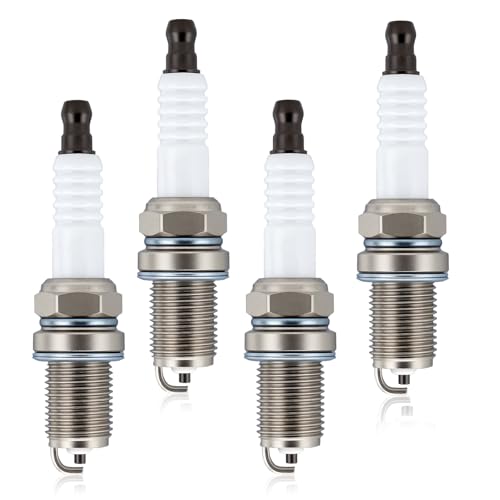
This four-pack is centered on Champion RC12YC replacements and gives a wide set of Briggs & Stratton, Kohler, and John Deere part references. That breadth may help when matching an equipment maker’s part number, but it also makes exact engine identification important: the compatibility should not be treated as universal across every model from those brands.
Bottom line: Choose this if your engine’s replacement number appears among its cross-references.
Champion John Deere M78543, 2-Pack

This two-pack is the narrowest application match among the alternatives: its name and feature both point to John Deere M78543, while the title also names M87543 and RC12YC. It is described as John Deere original equipment, not as an NGK equivalent, so it is best considered when the equipment uses the specified John Deere plug reference. The pack count is two rather than four, and its feature names M78543 specifically; confirm the required reference if your equipment uses M87543.
Bottom line: Pick this for a John Deere application that calls for M78543.
How to identify an NGK equivalent to RC12YC
Match the full plug code specified for the engine, not just the brand name or a broad cross-reference list. In these options, only RC12YC Spark Plugs (4 pack) explicitly names NGK BKR5E and BKR5ES, while the other replacement products identify RC12YC or equipment-maker numbers without an NGK code. Spark plugs are commonly compared by thread diameter, reach, seat type, heat range, and terminal design; matching only the heat-range number is not enough because number scales differ by manufacturer. A cross-reference is a starting point, not proof that two plugs share every dimension. For equipment applications, use the engine model or the original equipment part number as the deciding check.
Fit and plug dimensions to verify
Confirm the engine’s specified plug number and physical fit before installation; thread diameter and reach must match the cylinder head. A plug with the wrong reach can protrude too far into the combustion chamber or fail to seat correctly, while the wrong seat style can prevent a proper seal. Small-engine plugs commonly use 14 mm threads, but do not assume that dimension for a particular engine without its specification. Check terminal style and whether the plug requires a resistor as well. If the engine documentation gives a gap, measure it with a wire-style gauge and adjust only if the plug maker permits it.
This quick check separates the named codes from the broader application references.
| Need | What to compare |
|---|---|
| NGK cross-reference | Confirm BKR5E or BKR5ES against the engine specification |
| Champion replacement | Match the required RC12YC part number |
| Equipment-maker application | Match the Briggs, Kohler, or John Deere number |
Replacing a small-engine spark plug safely
Work with a cool engine and disconnect the spark-plug lead before removing the old plug; hot cylinder-head threads can burn skin and are easier to damage during removal. Clean loose debris from around the plug well so it cannot fall into the cylinder. Start a replacement plug by hand for several turns before using a socket, which helps prevent cross-threading in an aluminum head. Tightening torque varies with plug seat and engine design, so use the engine maker’s torque specification rather than guessing or overtightening. Reconnect the lead only after the plug is seated correctly.
Common spark-plug replacement mistakes
The most common mistake is treating a cross-reference as an exact dimensional guarantee. Heat-range codes are manufacturer-specific, and a number such as 5 does not by itself prove equivalent operating characteristics across brands. A second mistake is selecting by equipment brand alone: manufacturers use multiple engines and plug specifications across product lines. Compare the complete model or part number, and inspect the removed plug for its code and terminal style. Replace a plug with cracked porcelain or damaged threads rather than attempting to reuse it, and avoid changing the gap unless the engine or plug specification calls for that adjustment.
Frequently Asked Questions
Is NGK BKR5E equivalent to Champion RC12YC?
The cross-reference set associates BKR5E and BKR5ES with an RC12YC replacement, but that alone does not confirm fit for every engine. Verify the exact plug code in the engine specification before installation.
How do I confirm a spark plug’s reach?
Compare the plug’s specified reach with the engine manual or the original plug, because reach must match the cylinder head. A common small-engine plug thread size is 14 mm, but thread diameter does not establish reach.
Should I change the gap on a replacement spark plug?
Use the gap specified for the engine, often measured with a wire gauge. Do not assume the factory gap is correct for a different application or force an adjustment if the plug maker says not to.
Can I remove a spark plug from a warm engine?
Wait until the engine is cool before removal; hot metal can burn you and aluminum head threads are vulnerable to damage. Disconnect the spark-plug lead before loosening the plug.
How tight should a replacement spark plug be?
Use the engine maker’s torque specification because the right value depends on thread size, seat, and head material. Start the plug by hand to avoid cross-threading, then tighten with a torque wrench.