
Non-Menthol Cough Drops: 4 Options Compared

For non-menthol cough drops that suppress coughing, choose Mucinex Instasoothe SugarFree Mixed Berry: its dextromethorphan is the deciding difference from the throat-soothing pectin and honey options. Choose another option if you want soothing for throat irritation rather than a cough suppressant; age guidance and active ingredients also differ.
We earn a commission if you buy through links on this page. As an Amazon Associate I earn from qualifying purchases. Products are compared on manufacturer specifications, not hands-on testing.
- Best overall: Mucinex Instasoothe SugarFree Mixed Berry – Dextromethorphan HBr provides cough-suppressant action without menthol.
- Best for younger children: Luden’s Wild Cherry Pectin Drops – Pectin throat drops are described for family use including children age 3 and up.
- Best for individually wrapped drops: Beekeeper’s Naturals Honey Throat Drops – Each sugar-free dextromethorphan drop is individually wrapped.
| Product | Best for | Active ingredient | Count | Age guidance | Shop |
|---|---|---|---|---|---|
| Mucinex Instasoothe SugarFree Mixed Berry | Cough suppression | Dextromethorphan HBr | 40 | Age 6+ | Check Price on Amazon |
| Luden’s Wild Cherry Pectin Drops | Throat irritation | Pectin, 2.8 mg | 90 | Age 3+ | Check Price on Amazon |
| Beekeeper’s Naturals Honey Throat Drops | Honey ingredients | Honey, propolis, vitamin D, zinc | 24 | — | Check Price on Amazon |
| HALLS Soothing Creamy Strawberry | Pectin throat relief | Pectin, 7 mg | 70 | — | Check Price on Amazon |
Non-menthol cough drops and throat lozenges
Choose by whether you want cough suppression or soothing relief for throat irritation.
Mucinex Instasoothe SugarFree Mixed Berry
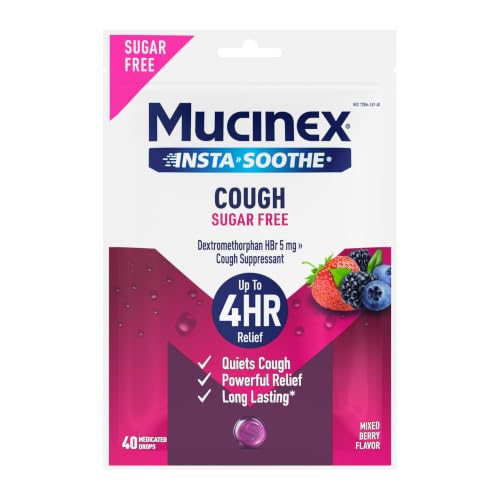
Unlike the pectin and honey throat-soothing options, this sugar-free lozenge uses dextromethorphan HBr as a cough suppressant and contains no menthol. Mucinex says relief lasts up to 4 hours. The 40-count mixed berry package is individually wrapped, and the drops do not contain aspartame. It is intended for adults and children 6 years and older. This is the clearest match when the main goal is suppressing a cough; choose a pectin option instead if you want a throat demulcent rather than a cough suppressant. Do not use it for children under 6.
Bottom line: Pick this if you want a non-menthol cough suppressant and meet its age guidance.
Luden’s Wild Cherry Pectin Drops

For throat irritation rather than cough suppression, this option uses pectin, an oral demulcent, and contains no menthol. Each drop has 2.8 mg of pectin, and the wild cherry bag contains 90 drops. The audience includes the whole family, including children age 3 and up. Pectin soothes and protects irritated mouth and throat tissue; it is a different role from dextromethorphan, which suppresses coughing. Choose these when the discomfort is a scratchy or sore throat, but not when you specifically need a cough suppressant.
Bottom line: Choose this for non-menthol pectin relief from minor throat irritation.
Beekeeper’s Naturals Honey Throat Drops

This honey-based lozenge stands apart from the medicated suppressant and pectin drops by combining raw honey with propolis, vitamin D and zinc. The 24-count package is described as having 1 gram of sugar per drop and no refined sugars. It is positioned for soothing dry, scratchy throats, making it a fit for buyers seeking a honey lozenge rather than a dextromethorphan cough suppressant. The product name and supplied ingredient claims do not explicitly establish that it is menthol-free, so confirm the ingredient panel before choosing it specifically for a no-menthol requirement.
Bottom line: Consider it for honey-based throat soothing only after confirming the ingredients.
HALLS Soothing Creamy Strawberry
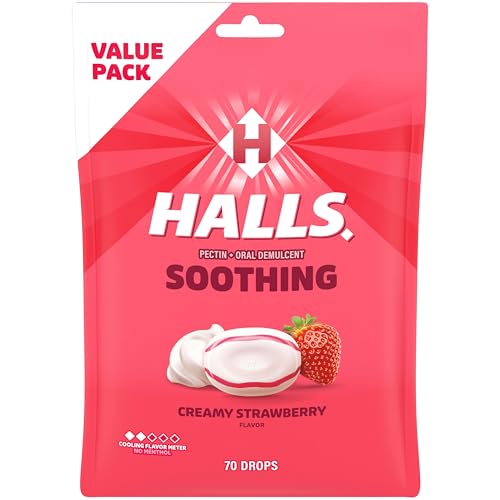
With 7 mg of pectin per drop, this HALLS option provides a different pectin amount from the cherry lozenge and is intended for minor sore-mouth and sore-throat discomfort. The creamy strawberry bag has 70 individually wrapped drops and a resealable package. Its maker describes soothing throat drops but does not explicitly confirm that the formula is menthol-free. Check the ingredient panel before selecting it to meet a strict non-menthol requirement. It is not presented as a dextromethorphan cough suppressant, so it better suits buyers focused on throat irritation than cough suppression.
Bottom line: Pick it for pectin throat soothing if its ingredient panel confirms no menthol.
How to choose non-menthol cough drops
Start with the active ingredient: dextromethorphan HBr is a cough suppressant, while pectin is an oral demulcent used to soothe minor mouth and throat irritation. Honey lozenges offer another soothing format, but do not assume a honey product is menthol-free unless its ingredient panel confirms that. Age guidance matters too: the dextromethorphan option is for ages 6 and older, while the cherry pectin option is described for ages 3 and up. If your priority is cough suppression, choose a dextromethorphan product; if your main complaint is scratchy throat discomfort, a demulcent may fit better. For children younger than 6, do not use the dextromethorphan option.
Use this purpose-to-ingredient guide to narrow the choice.
| Need | Ingredient or type | Example fit |
|---|---|---|
| Suppress coughing | Dextromethorphan HBr | Mucinex Instasoothe SugarFree Mixed Berry |
| Soothe minor throat irritation | Pectin | Luden’s Wild Cherry Pectin Drops or HALLS Soothing Creamy Strawberry, after checking ingredients for menthol |
| Honey-based throat soothing | Honey and bee-derived ingredients | Beekeeper’s Naturals Honey Throat Drops, after checking ingredients for menthol |
What the active ingredients do
Dextromethorphan is used in cough medicines to suppress the cough reflex, while pectin works as an oral demulcent that coats and soothes irritated tissue. These are not interchangeable purposes: a lozenge formulated for throat discomfort may not address coughing in the same way as a cough suppressant. Follow the package directions for dose and timing, and do not combine cough medicines with the same active ingredient without checking the labels. For young children, use only products whose age directions cover them; the dextromethorphan option here excludes children under 6. If symptoms are severe or persistent, consult a clinician rather than relying on lozenges alone.
How to verify a non-menthol formula
Check the active and inactive ingredient panels whenever avoiding menthol is essential. The maker explicitly calls Mucinex Instasoothe SugarFree Mixed Berry non-menthol, while the claims for Luden’s Wild Cherry Pectin Drops say relief is without menthol. The honey and HALLS products are described with soothing ingredients but its maker does not explicitly confirm a menthol-free formula, so verify the package ingredients before choosing either for this requirement. Flavor is not a reliable indicator of ingredients: berry, cherry or strawberry does not establish whether menthol is present. Use the exact package directions for age limits and serving intervals, since lozenge ingredients and doses differ.
Frequently Asked Questions
Do non-menthol cough drops suppress a cough?
Some do, but the active ingredient decides the purpose. Dextromethorphan HBr is a cough suppressant, while pectin is used to soothe minor throat irritation.
Which cough drops are appropriate for children age 3?
The Luden’s pectin drops are described for the whole family including children age 3 and up. Check the package directions for age-specific use before giving any lozenge to a child.
How long can dextromethorphan cough relief last?
Mucinex says its dextromethorphan drops relieve cough for up to 4 hours. Follow the package dosing interval and do not exceed its directions.
How can I confirm a throat drop has no menthol?
Read the ingredient panel on the package, including inactive ingredients. Flavor names such as cherry or strawberry do not establish whether menthol is present.
Are pectin drops the same as cough suppressants?
No. Pectin is an oral demulcent for minor throat or mouth irritation, while dextromethorphan suppresses coughing. Pick according to whether throat discomfort or coughing is the main concern.