
Non-Toxic Wood Sealer for Garden Beds: 4 Compared

Seal It Green Garden Box Armor is the strongest fit for most garden beds because its maker says the clear, plant-based formula has FDA food-contact-safe ingredients and it comes in a 1-gallon size. Choose Garden Box Sealer, 0.25 Gallon instead for a smaller 0.25-gallon package, or a Shabebe option if you want its cream finish.
Wood sealers penetrate or coat wood to slow moisture exposure, but they do not make every bed safe for food crops; follow the product’s directions and cure requirements before adding soil.
We earn a commission if you buy through links on this page. As an Amazon Associate I earn from qualifying purchases. Products are compared on manufacturer specifications, not hands-on testing.
- Best overall: Seal It Green Garden Box Armor – The maker claims food-contact-safe ingredients, and the clear sealer comes in a 1-gallon size.
- Best for small projects: Garden Box Sealer, 0.25 Gallon – The 0.25-gallon package suits a smaller sealing job.
- Best for a cream finish: Shabebe Garden Box Sealer, 32 fl oz – This Shabebe option comes in a 32 fl oz size with a cream finish.
| Product | Best for | Volume | Color | Shop |
|---|---|---|---|---|
| Seal It Green Garden Box Armor | Most garden beds | 1 gallon | Clear | Check Price on Amazon |
| Garden Box Sealer, 0.25 Gallon | Small projects | 0.25 gallon | Clear | Check Price on Amazon |
| Shabebe Garden Box Sealer, 32 fl oz | Cream finish | 32 fl oz | Cream | Check Price on Amazon |
| Shabebe Garden Box Sealer Pro Grade, 1 Gallon | Larger bed projects | 1 gallon | Cream white | Check Price on Amazon |
Non-Toxic Wood Sealers for Garden Beds
Compare package size and finish, then match the maker’s wood compatibility to your bed material.
Seal It Green Garden Box Armor

Seal It Green Garden Box Armor is the clearest match for buyers prioritizing a food-contact safety claim: the maker says its ingredients are FDA food-contact safe and plant-based. It is a clear, 1-gallon sealer for outdoor wood, including cedar, pine, pressure-treated wood and bamboo. The maker says it penetrates wood fibers to help protect against water and weather damage rather than forming only a surface coating. That larger volume may suit multiple boards or a larger bed. The limitation is that the claims do not give a cure time, so check the label for when soil can contact the sealed wood.
Bottom line: Pick this if its clear finish and stated food-contact-safe ingredients fit your priorities.
Garden Box Sealer, 0.25 Gallon

Garden Box Sealer, 0.25 Gallon stands out for its smaller 0.25-gallon package, which can be a more manageable amount for a single compact bed or a limited repair. The maker says its natural oils penetrate wood fibers and protect cedar and other wood types from water and weather damage, with protection lasting a decade or more. Its clear finish preserves the visible wood color. This option is suited to buyers who want a smaller container rather than a gallon-sized supply. The longevity statement is a maker claim, not a universal maintenance interval; sun, standing water and wood condition can affect how often an outdoor finish needs attention.
Bottom line: Choose this for a small bed when a clear finish and smaller container matter.
Shabebe Garden Box Sealer, 32 fl oz
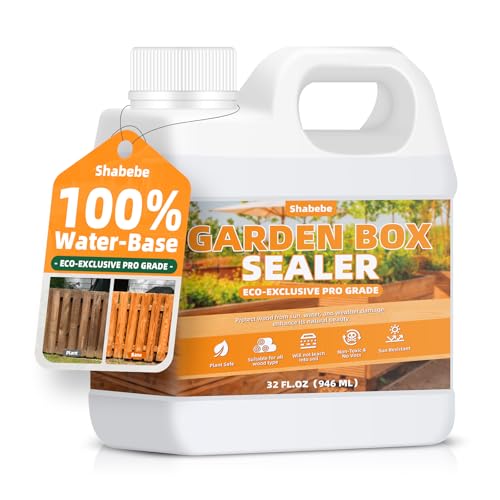
Shabebe Garden Box Sealer, 32 fl oz is the 32 fl oz Shabebe option, with a cream finish rather than a clear one. Its maker says the water-based formula is intended for outdoor wood and is compatible with cedar, pine, hardwood, bamboo and pressure-treated wood; laminated or coated wood is excluded. The uses include garden beds, planters and fences. A water-based formula may appeal to buyers seeking an alternative to strong-smelling solvent finishes, though the maker’s claims do not establish a specific curing period or exposure limit. Confirm that a cream-colored finish is acceptable for the bed’s appearance before coating the boards.
Bottom line: Choose this if you want the Shabebe formula in a 32 fl oz container and cream color.
Shabebe Garden Box Sealer Pro Grade, 1 Gallon

Shabebe Garden Box Sealer Pro Grade, 1 Gallon differs from the smaller Shabebe package with its 1-gallon volume and cream-white color. The maker says the pro grade outdoor formula penetrates wood fibers to help reduce moisture absorption and surface wear from sun and changing weather. It is described for cedar, pine, hardwood, bamboo and pressure-treated wood, plus raised beds, planters and fences. The product’s longer use list may suit a project that includes several outdoor wood surfaces. However, the compatibility wording is cut off after an exclusion begins, so verify the full label’s surface restrictions before applying it to any coated or laminated wood.
Bottom line: Pick this for a larger project when its cream-white finish and compatibility match the wood.
How to choose a garden bed wood sealer
Choose a sealer by matching the wood, finish and intended soil contact, not by relying on a broad “non-toxic” label alone. Penetrating oil products soak into wood fibers; film-forming finishes sit more visibly on the surface and can peel as boards move outdoors. Read the label for its permitted wood types and directions for garden use. Food-contact-safe ingredients do not by themselves establish how a cured coating behaves in every soil or growing condition. If the bed will grow food, follow the label’s cure directions before filling it, and avoid sealing the soil-facing surfaces unless the product explicitly permits that use. Raw, uncoated wood may be a simpler choice when the coating instructions do not address soil contact.
Preparing boards before sealing
Clean, dry, bare wood gives a sealer a better chance to penetrate than dusty or coated boards. Brush off dirt and remove loose finish; a coating cannot reliably penetrate an intact paint or varnish layer. End grain—the exposed ends of boards—soaks up water faster than long-grain faces, so pay particular attention to those cuts when the product directions allow sealing them. A quick water-drop check helps identify existing finishes: drops that bead suggest the surface may already be sealed, while wood that darkens as water absorbs is more open. Do not apply a new treatment over a damp surface, and keep soil away until the label’s cure period is complete.
Garden bed sealer options by project need
Package size and finish are useful first filters, but wood compatibility and intended exposure decide whether an option fits. Clear sealer keeps the wood’s color visible; cream and cream-white finishes visibly change it. Package volume is not a coverage estimate because porous, rough or weathered boards absorb more product than smooth wood. Use this guide to narrow the choices, then confirm the product’s directions for your specific surface and soil-facing use.
| Need | Options to consider | Key distinction |
|---|---|---|
| Clear finish | Garden Box Sealer, 0.25 Gallon, Seal It Green Garden Box Armor | Garden Box Sealer, 0.25 Gallon is 0.25 gallon; Seal It Green Garden Box Armor is 1 gallon. |
| Cream finish | Shabebe Garden Box Sealer Pro Grade, 1 Gallon, Shabebe Garden Box Sealer, 32 fl oz | Shabebe Garden Box Sealer Pro Grade, 1 Gallon is 1 gallon; Shabebe Garden Box Sealer, 32 fl oz is 32 fl oz. |
| Stated food-contact-safe ingredients | Seal It Green Garden Box Armor | Maker claims FDA food-contact-safe ingredients. |
Common mistakes with raised bed sealers
The most important mistake is treating “non-toxic” or “plant-safe” as permission to ignore the label’s application and cure instructions. A finish may be intended for outdoor wood without specifying every soil-contact scenario. Another common error is coating wood that is already sealed: the new product may not penetrate, and adhesion can be poor. Raised beds also need drainage; a sealer does not prevent decay when water remains trapped against wood or the bed lacks drainage openings. Keep the bed’s interior and drainage paths free of product unless the label allows those surfaces, and do not let claims about durability substitute for checking the coating periodically for cracking, peeling or exposed wood.
Frequently Asked Questions
Can I use sealed wood for a vegetable garden bed?
Use a sealer only when its label permits the intended garden-bed and soil-contact use. A claim about food-contact-safe ingredients is not by itself a complete instruction for coating every interior surface.
Should I seal the inside of a raised bed?
Seal the inside only if the product directions permit soil-facing use. The inside stays in contact with damp soil, so drainage and keeping water from pooling against the boards remain important even with a sealer.
How can I tell if garden bed wood is already sealed?
Sprinkle a few drops of water on a clean spot: beading suggests an existing finish, while quick absorption and darkening suggest more open wood. Test a hidden area first, since surface condition can vary across a board.
Does a wood sealer stop raised bed boards from rotting?
No sealer guarantees rot prevention; persistent moisture and poor drainage can still damage wood. Keep the bed draining freely and inspect the boards for soft spots or peeling finish.
Can I apply sealer to damp garden bed boards?
Wait until the boards are clean and dry, then follow the product’s application directions. Damp wood can limit penetration, and the cure period before filling the bed depends on the specific product.