
PGM Golf Balls: 3 Models Compared by Play Style

For most golfers seeking a versatile PGM ball, PGM 3-Piece Golf Balls, 24-Pack is the clearest starting point because its 24-ball pack and three-piece construction are aimed at balancing distance and spin. Choose PGM 2-Piece Distance Balls, 12-Pack instead if bright colors and low-spin distance are priorities, or PGM 3-Piece Golf Balls, 3-Ball Sleeve if a small sleeve and alignment line matter more.
Golf balls are built in layers around a core; construction and cover affect feel, spin and flight. The specifications for PGM 3-Piece Golf Balls, 3-Ball Sleeve conflict on its layer count and cover material, so confirm those before choosing it.
We earn a commission if you buy through links on this page. As an Amazon Associate I earn from qualifying purchases. Products are compared on manufacturer specifications, not hands-on testing.
- Best overall: PGM 3-Piece Golf Balls, 24-Pack – Its 24-ball quantity and three-piece construction are intended to balance distance, spin and control.
- Best for visibility: PGM 2-Piece Distance Balls, 12-Pack – The dozen includes assorted fluorescent colors and a glossy finish for easier visual tracking.
- Best for alignment: PGM 3-Piece Golf Balls, 3-Ball Sleeve – The three-ball sleeve includes a built-in putting alignment line.
| Product | Best for | Construction | Pack count | Cover or finish | Shop |
|---|---|---|---|---|---|
| PGM 3-Piece Golf Balls, 24-Pack | Balanced practice | 3-piece | 24 balls | Durable outer layer | Check Price on Amazon |
| PGM 2-Piece Distance Balls, 12-Pack | Bright visibility | 2-piece | 12 balls | Glossy fluorescent colors | Check Price on Amazon |
| PGM 3-Piece Golf Balls, 3-Ball Sleeve | Putting alignment | Conflicting claims | 3 balls | Conflicting cover claims | Check Price on Amazon |
PGM Golf Balls
Compare the ball construction, quantity and stated play priorities to find a match for your rounds or practice.
PGM 3-Piece Golf Balls, 24-Pack
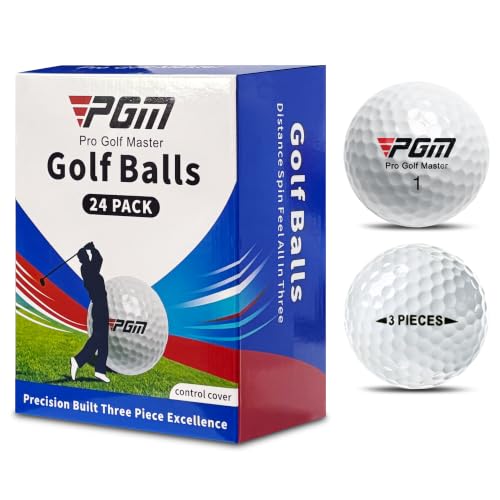
PGM 3-Piece Golf Balls, 24-Pack is the largest pack and the only option here explicitly framed around a balance of distance and spin. Its three-layer build pairs a durable outer layer with a responsive middle layer and a distance-oriented core, according to the maker. The white standard-size balls are intended for indoor practice, outdoor training and competitive play, so they suit golfers who want one construction for several settings.
The 24-ball quantity may be more than a golfer needs when testing a new ball or carrying only a few spares. Choose another option if colored visibility or a putting alignment line is the deciding feature.
Bottom line: Choose this if you want a larger supply of three-piece balls aimed at balancing distance and spin.
PGM 2-Piece Distance Balls, 12-Pack
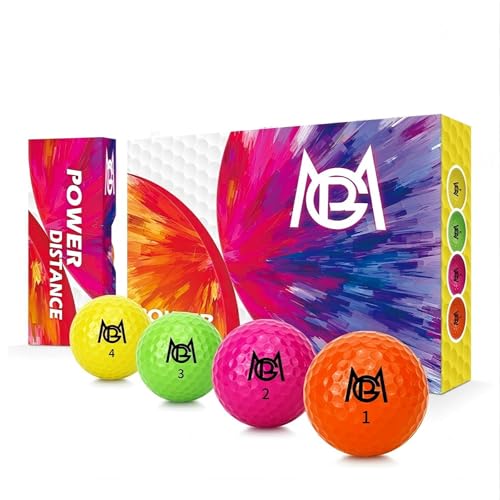
PGM 2-Piece Distance Balls, 12-Pack is the visibility-focused choice: the dozen comes in assorted fluorescent colors, including orange, yellow, green and hot pink. The maker describes a synthetic-rubber core and 332-dimple pattern for high speed and consistent flight, with a low-spin design aimed at distance. Its two-piece construction makes it a straightforward option for beginners or golfers prioritizing tee distance over added shot-shaping features.
Assorted colors improve visual contrast but do not guarantee that every shade will stand out equally against every course background. Golfers seeking the three-layer spin-and-control approach should consider PGM 3-Piece Golf Balls, 24-Pack instead.
Bottom line: Pick this if bright colors and a low-spin distance design matter most.
PGM 3-Piece Golf Balls, 3-Ball Sleeve
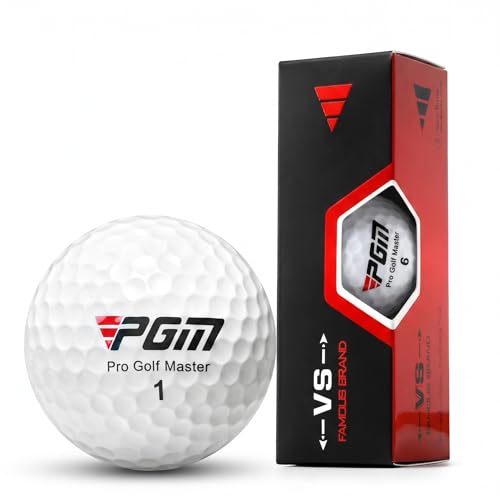
PGM 3-Piece Golf Balls, 3-Ball Sleeve is the only small sleeve and the only option whose name calls out a built-in putting alignment line. That feature may suit golfers who prefer to mark a start line while putting and want only three balls at hand. The specifications also describe a high-density core and distance-and-straight-flight intent.
Construction and cover claims conflict: the name says three-piece with a Surlyn cover, while the maker says two-piece and urethane. Confirm the layer count and cover material before buying if those specifications determine your choice; golfers who want consistent published construction claims can compare PGM 2-Piece Distance Balls, 12-Pack or PGM 3-Piece Golf Balls, 24-Pack.
Bottom line: Choose this only if the alignment line and small sleeve appeal, after confirming its construction.
How to choose PGM golf balls by construction
Start with the tradeoff you care about: two-piece balls commonly emphasize distance and lower spin, while multi-layer designs can support more spin separation and control. That is a general design pattern, not a guarantee of a particular result; cover material, core design and the golfer’s impact all matter. PGM 2-Piece Distance Balls, 12-Pack is the two-piece low-spin distance option, while PGM 3-Piece Golf Balls, 24-Pack is described as a three-piece balance of distance and spin. For PGM 3-Piece Golf Balls, 3-Ball Sleeve, the layer and cover claims conflict, so verify them if construction is central to the decision. A practical rule: choose a two-piece, low-spin ball when reducing driver spin and maximizing simple distance are your priorities; choose a multi-layer option when you want a design aimed at balancing distance with control.
Golf ball size and rules to check
A conforming golf ball must be at least 1.68 inches in diameter and no more than 1.62 ounces in weight under the Rules of Golf equipment specifications. The size shown for PGM 3-Piece Golf Balls, 3-Ball Sleeve is 1.68 inches, matching the minimum diameter threshold, while PGM 2-Piece Distance Balls, 12-Pack and PGM 3-Piece Golf Balls, 24-Pack are called standard size. Standard size alone does not establish conformity: the official rules also include weight and performance requirements. If tournament use matters, confirm the exact ball model against the governing body’s current conforming-ball resources before play. Color does not change the dimensional rule, but visibility can vary with grass, leaves, sky and lighting, so a fluorescent color is not automatically easier to see in every setting.
Distance, spin and visibility compared
For most recreational golfers, the useful distinction is not simply the number of layers; it is the intended balance of flight, feel and short-game response. Lower-spin designs can help limit sidespin and keep tee shots straighter, while additional layers and responsive covers are often designed to offer more greenside control. Cover labels matter: urethane and ionomer/Surlyn are different materials, and the exact design affects feel and spin. Use the table to match the priority rather than treating any construction as universally better.
| Need | Choose | Tradeoff to consider |
|---|---|---|
| Low-spin distance | PGM 2-Piece Distance Balls, 12-Pack | Two-piece design emphasizes distance |
| Distance and spin balance | PGM 3-Piece Golf Balls, 24-Pack | White, standard-size ball |
| Putting alignment mark | PGM 3-Piece Golf Balls, 3-Ball Sleeve | Verify conflicting construction claims |
How to get more useful practice from a golf ball
Use the same ball model during a practice session when comparing launch or short-game feel; changing construction between shots makes the comparison less useful. On the green, point an alignment line along the intended start line, then assess whether the ball begins on that line rather than judging only the final result. For distance checks, compare several shots with the same club and similar strike quality, since mishits and wind can overwhelm small ball differences. Keep practice shots directed away from people and property, and do not assume a high-visibility finish makes a ball safe to hit without checking the landing area.
Frequently Asked Questions
What golf ball size is legal for standard play?
A conforming ball must measure at least 1.68 inches in diameter and weigh no more than 1.62 ounces. The diameter shown for PGM 3-Piece Golf Balls, 3-Ball Sleeve is 1.68 inches, but size alone does not establish conformity.
Do two-piece golf balls usually spin less?
Two-piece balls are commonly designed for distance and lower spin, especially on longer shots. Cover material, core design and strike quality also affect spin, so construction alone does not predict every shot.
Does a golf ball alignment line help putting?
An alignment line can help aim the ball along a chosen start line, but it cannot ensure the putt starts or stays on that line. Use it as a setup reference, then judge the roll and adjust aim or stroke separately.
Are colored golf balls easier to find?
Bright colors can improve contrast against some backgrounds, but visibility depends on grass, foliage, sky and light. Try the color in the conditions where you play most before relying on it.
How often should golf balls be replaced?
Replace a ball when a cut, crack or deep scuff is visible, since damage can disrupt its flight. Minor cosmetic marks do not always mean a ball is unusable, but inspect it after impacts with hard surfaces.