
Protective Gloves for Thin Skin: 3 Fits Compared

For most shoppers, Yearntown Medium Fingerless Gloves is the best starting point because its medium, fingerless design leaves the fingers free while covering the hands and wrists. Choose Chicingyou Medium Full-Finger Gloves instead if you want full-finger coverage, or Chicingyou Large Fingerless Gloves if you need a large fingerless size.
Thin-skin gloves are soft hand coverings intended to reduce direct contact with scrapes and bumps; they are not a substitute for medical care or wound dressings.
We earn a commission if you buy through links on this page. As an Amazon Associate I earn from qualifying purchases. Products are compared on manufacturer specifications, not hands-on testing.
- Best overall: Yearntown Medium Fingerless Gloves – A three-pair, medium-size fingerless set made from breathable nylon.
- Best for full-finger coverage: Chicingyou Medium Full-Finger Gloves – The full-finger design covers the fingers, unlike the other exact-fit options.
- Best for large hands: Chicingyou Large Fingerless Gloves – The set is offered in large and includes three pairs.
| Product | Best for | Size | Finger coverage | Shop |
|---|---|---|---|---|
| Yearntown Medium Fingerless Gloves | Medium fingerless fit | Medium | Fingerless | Check Price on Amazon |
| Chicingyou Medium Full-Finger Gloves | Full-finger coverage | Medium | Full finger | Check Price on Amazon |
| Chicingyou Large Fingerless Gloves | Large fingerless fit | Large | Fingerless | Check Price on Amazon |
Protective Gloves for Thin Skin
Compare the exact-fit options by size and how much of the fingers they cover.
Yearntown Medium Fingerless Gloves
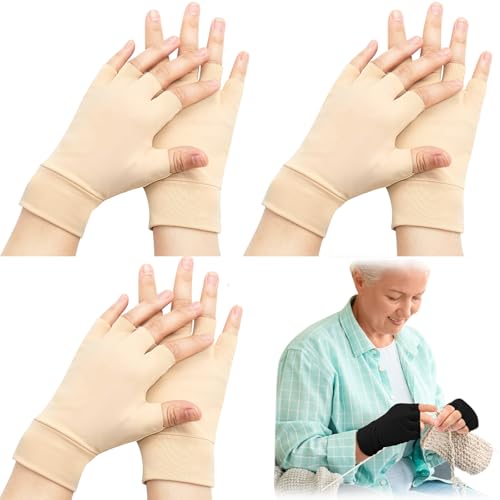
Yearntown Medium Fingerless Gloves is the medium-size fingerless choice among these options, with three pairs in a skin-tone color. The maker says the breathable nylon gloves are intended to help protect sensitive skin from tears, bruises, and abrasions while covering the hands and wrists. Open fingers preserve fingertip access for tasks that need dexterity. This set may suit someone who wants hand coverage without enclosing the fingers; shoppers seeking full-finger coverage should choose a different style. Compare the glove dimensions with the wearer’s hand before selecting a size, since a loose or tight fit can interfere with comfortable movement.
Bottom line: Choose this set for medium-size fingerless coverage and three pairs.
Chicingyou Medium Full-Finger Gloves

Chicingyou Medium Full-Finger Gloves is the only full-finger option among the exact matches, making finger coverage its key distinction. The set contains three pairs in medium, and the glove measurements are 4.5 by 7.5 inches. The maker describes the fabric as breathable and intended to protect sensitive skin from bruises and tears. Full fingers are useful when the wearer wants the fingertips covered as well as the hand, but they may be less convenient for tasks requiring direct fingertip contact. Check the dimensions against the wearer’s hand, especially before choosing this second-skin style.
Bottom line: Pick this set when covering the fingers matters more than fingertip access.
Chicingyou Large Fingerless Gloves

Chicingyou Large Fingerless Gloves offers a large-size alternative to the medium fingerless sets, with three pairs in beige, white, and black. The maker says the breathable nylon gloves cover the hands and wrists and are intended to help protect sensitive skin from tears, scrapes, and abrasions. The open-finger design leaves fingertips accessible. This set suits shoppers who need a larger size or want several colors; it will not meet a need for full-finger coverage. Use hand measurements and the size as a fit check rather than assuming that a large glove fits every wearer.
Bottom line: Choose this set for large-size fingerless coverage in three colors.
How to choose thin-skin gloves
Choose first by coverage: fingerless gloves leave fingertips exposed, while full-finger gloves cover them. A glove that bunches or slips can rub delicate skin, so compare the wearer’s hand dimensions with the product’s sizing measurements and check that the cuff does not constrict the wrist. For a task requiring fingertip precision, an open-finger design preserves direct contact; for coverage over the fingertips, select a full-finger style. Fabric and construction also matter: smooth, breathable fabric is generally preferable for routine wear, while rough seams or tight edges can create friction. These gloves are a clothing layer, not wound care or a barrier rated for medical protection.
Fingerless and full-finger coverage
Fingerless gloves expose the fingertips, while full-finger gloves add fabric over them; that distinction is the main choice among these matches. Neither style can prevent every bruise or skin tear, and fit affects how much rubbing the wearer experiences. Use this quick comparison to match coverage to daily tasks.
| Need | Style to consider | Trade-off |
|---|---|---|
| Direct fingertip access | Fingerless | Fingertips remain uncovered |
| Coverage over fingertips | Full-finger | Less direct fingertip contact |
For repeated dressing or undressing, check that the opening and seams do not catch on fragile skin. A glove should sit smoothly without pulling the skin when the hand opens and closes.
Getting a comfortable fit
A comfortable fit is close enough to stay in place but not tight enough to leave pressure marks. Measure the hand according to the maker’s sizing directions, and compare those measurements with the product’s dimensions when available. Finger length and palm width both affect fit; a glove that matches one but not the other may twist or wrinkle. After putting gloves on, look for bunching, rubbing at the knuckles, or a cuff that digs into the wrist. Remove them if the wearer reports pain, numbness, or persistent redness. Because fragile skin can be injured by friction during dressing, use a gentle approach and avoid pulling the fabric sharply across the hand.
Using and caring for protective gloves
Put gloves on and take them off slowly, supporting the hand rather than tugging on the fabric or cuff. Check the skin after wear, particularly around seams, knuckles, and the wrist, where rubbing or pressure can develop. Keep more than one pair in rotation if gloves are worn daily, and replace a pair when seams fray, fabric holes appear, or the fit changes. Washing can change stretch and softness, so use the care instructions supplied with the garment rather than assuming every fabric can be machine-dried. These gloves do not replace a clinician’s guidance for open wounds, recurring skin tears, or signs of infection; seek medical advice for those concerns.
Frequently Asked Questions
Can thin-skin gloves prevent every skin tear?
No glove can guarantee that a tear or bruise will not happen. Smooth fit and less rubbing can help with routine coverage, but sharp edges, impacts, and tight or bunched fabric remain concerns.
Should I choose fingerless or full-finger gloves?
Choose fingerless gloves when fingertip access is important, and full-finger gloves when you want fabric over the fingertips. Check that the chosen style still allows comfortable hand movement without bunching.
How should thin-skin gloves fit around the wrist?
The wrist opening should stay in place without digging into the skin or leaving pressure marks. Remove gloves if they cause pain, numbness, persistent redness, or rubbing.
When should protective gloves be replaced?
Replace gloves when fabric holes, frayed seams, or a changed fit create rough spots or slipping. Inspect the glove before wear, especially along seams and the cuff.
Can gloves cover an open skin wound?
Gloves are not a substitute for wound dressings or medical advice. Ask a clinician how to protect an open wound, especially if it is painful, worsening, or showing signs of infection.