
Quick Pool Cleaning Tablets: 4 Options Compared

For a tablet marketed to address stains and cloudy water, Multifunction Pool Cleaning Tablets, 2-Pack is the closest match; choose it based on its cleaning claims, not as a substitute for measured sanitation. If you need routine disinfection or pH maintenance instead, choose a chlorine tablet or water-balancing tablet suited to that task.
Pool tablets are concentrated chemicals, and “cleaning” can mean stain treatment, sanitation, or water balance. Test pool water before dosing, and never mix pool chemicals or dissolve different products together.
We earn a commission if you buy through links on this page. As an Amazon Associate I earn from qualifying purchases. Products are compared on manufacturer specifications, not hands-on testing.
- Best overall: Multifunction Pool Cleaning Tablets, 2-Pack – Its purpose is addressing stains, odor, and cloudiness rather than routine chlorine dosing.
- Best for small pools: Clorox XtraBlue 1-Inch Chlorinating Tablets, 5 lb – The 1-inch chlorine tablets are specifically positioned for small pools.
- Best for pH maintenance: ARM & HAMMER Clear Balance, 24 Count – The 24-count tablets are intended to support alkalinity and pH balance.
| Product | Best for | Tablet type | Count or weight | Intended use | Shop |
|---|---|---|---|---|---|
| Multifunction Pool Cleaning Tablets, 2-Pack | Stain-focused care | Cleaning tablet | 2 bottles, 100 g each | Stains and cloudiness | Check Price on Amazon |
| ARM & HAMMER Clear Balance, 24 Count | pH maintenance | pH/alkalinity tablet | 24 tablets | pH and alkalinity support | Check Price on Amazon |
| Clorox XtraBlue 1-Inch Chlorinating Tablets, 5 lb | Small pool sanitation | Chlorinating tablet | 5 lb | Sanitation and algae control | Check Price on Amazon |
| Clorox XtraBlue 3-Inch Chlorinating Tablets, 5 lb | Routine chlorine dosing | Chlorinating tablet | 5 lb | Sanitation and algae control | Check Price on Amazon |
Quick Pool Cleaning Tablets and Alternatives
Choose by the water-care task first: cleaning claims, sanitation, or pH and alkalinity maintenance are not interchangeable.
Multifunction Pool Cleaning Tablets, 2-Pack
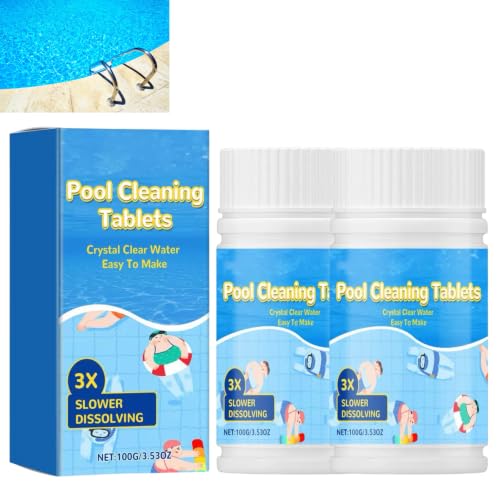
Unlike the chlorine and pH tablets here, these are marketed for stains, odor, greasy buildup, and cloudy water. The package contains two 100-gram bottles and the formula is described as slower dissolving. That makes this the closest fit for someone seeking a tablet specifically framed as a pool-cleaning treatment. The claims do not establish that it sanitizes water or replaces routine water testing, so pool owners who need disinfectant should use a separately appropriate sanitizer and verify compatibility before combining treatments.
Bottom line: Choose this if stain and cloudiness treatment is the task; keep sanitation separate.
ARM & HAMMER Clear Balance, 24 Count

For water balance rather than stain removal, these 24 tablets are designed to support pH and alkalinity; the maker also says they support chlorine performance. The product directs users to add one tablet for each chlorine tablet used, making it a maintenance companion rather than a stand-alone stain cleaner or sanitizer. Pool pH is generally kept around 7.2–7.8, and total alkalinity commonly around 80–120 ppm; test both before adjusting because the right correction depends on the readings. Buyers looking for a treatment that directly targets visible stains should choose a different type.
Bottom line: Pick this for measured pH and alkalinity upkeep, not stain removal.
Clorox XtraBlue 1-Inch Chlorinating Tablets, 5 lb

The 1-inch tablet size distinguishes this chlorine option from the larger 3-inch tablets, and the maker positions it for small pools. It is a sanitizer, not a stain-cleaning tablet: its functions include killing bacteria, controlling algae, and providing sunlight protection with a stabilizer. The product is described as suitable for vinyl, plaster, fiberglass, and tile surfaces. Tablet size alone does not determine a safe dose; pool volume, water test results, and the dispenser or feeder setup matter, so owners seeking a stain-specific treatment should not rely on this as a substitute.
Bottom line: Choose this when small-pool chlorine sanitation is the need.
Clorox XtraBlue 3-Inch Chlorinating Tablets, 5 lb

These 3-inch tablets are the larger-format chlorine alternative, with individually wrapped tablets and a guidance of two tablets weekly per 10,000 gallons. The maker says they kill bacteria, control algae, and include a chlorine stabilizer for sunlight protection; they are not presented as a dedicated stain-removal product. The directions also say to add tablets as needed to maintain adequate sanitation, so test water rather than assuming the weekly amount fits every pool. This format may not suit a small pool or a setup that cannot safely accommodate 3-inch tablets.
Bottom line: Pick this for a compatible feeder and routine chlorine sanitation.
Choose a tablet by the pool-care job
Start by separating stain treatment from sanitation and water balance: those jobs require different products. Chlorine tablets disinfect and help control algae; pH and alkalinity products adjust water chemistry; stain-focused treatments target visible discoloration or deposits. A clear-looking pool is not necessarily sanitized, so use a test kit before making chemical adjustments. Many residential pools aim for free chlorine around 1–3 ppm and pH around 7.2–7.8, but follow applicable product directions and local requirements. If the problem is cloudy water, first check sanitizer, pH, filtration, and circulation rather than adding multiple products at once. Select a treatment only after identifying which measurement or visible issue needs correction.
Compare 1-inch and 3-inch chlorine tablets
One-inch tablets are smaller format chlorine tablets, while 3-inch tablets are commonly used for larger pools and feeders; the right choice depends on pool volume and equipment compatibility. The product-specific directions matter: Clorox XtraBlue 3-Inch Chlorinating Tablets, 5 lb gives a weekly amount per 10,000 gallons, while Clorox XtraBlue 1-Inch Chlorinating Tablets, 5 lb is positioned for small pools. Do not infer dose from tablet size alone. Test free chlorine and stabilizer (cyanuric acid) because sunlight, swimmer load, and water volume affect chlorine demand. A floating dispenser or feeder should be designed for the tablet size being used. Never put different chemical types in the same feeder or handle chlorine tablets with wet hands.
| Need | Tablet category | Decision check |
|---|---|---|
| Visible stains or cloudiness | Cleaning treatment | Confirm it suits the surface and issue |
| Routine disinfection | Chlorinating tablet | Match size to feeder and pool volume |
| pH or alkalinity adjustment | Water-balancing tablet | Test readings before dosing |
Use pool chemicals safely
Keep pool chemicals in their original, closed containers in a cool, dry, ventilated place, away from children, pets, and moisture. Never mix chlorine products with acids or other pool chemicals: dangerous gases or heat can result. Use separate, clean tools for measuring chemicals, wear the protective equipment on the product label, and add products individually as directed rather than combining them. For tablets, use a compatible feeder or dispenser instead of placing them directly where they could contact a pool surface; concentrated sanitizer can damage finishes. If a spill or exposure occurs, follow the label’s emergency guidance and contact poison control or emergency services as appropriate.
Test water before adjusting it
Test pool water at least two or three times weekly during active swimming season, and more often after heavy use, rain, or heat. A basic test should include free chlorine and pH; total alkalinity and stabilizer readings help diagnose recurring swings or rapid chlorine loss. Typical targets include 1–3 ppm free chlorine, pH 7.2–7.8, and total alkalinity about 80–120 ppm, though pool type and product directions can change the target. Adjust one parameter at a time, allow circulation, and retest before adding another chemical. If water remains cloudy despite balanced readings, inspect filter operation and circulation instead of repeatedly increasing tablet doses.
Frequently Asked Questions
Can pool cleaning tablets replace chlorine tablets?
No, unless the product is specifically labeled and dosed as a sanitizer. Keep free chlorine in the pool’s appropriate range—commonly 1–3 ppm—and use a separate sanitizer when a cleaning treatment does not disinfect.
How often should I test pool water?
Test at least two or three times weekly during swimming season, and after heavy use, rain, or hot weather. Check free chlorine and pH at minimum; also monitor alkalinity and stabilizer when readings fluctuate.
Are 1-inch tablets better for small pools?
They may suit small pools, but pool volume and dispenser compatibility decide the dose and fit. Test chlorine levels rather than choosing solely by tablet diameter.
Can I put chlorine tablets directly in the pool?
Avoid placing concentrated tablets on pool surfaces because they can bleach or damage finishes. Use a compatible feeder or dispenser, and keep tablets away from other chemicals.
What causes cloudy pool water after treatment?
Cloudiness can follow imbalanced pH, inadequate sanitizer, poor filtration, or insufficient circulation. Check pH and free chlorine first, then confirm the filter is operating and circulating water effectively.