
Quick Shine Floor Finish: 3 Formulas Compared

For a single finish intended for several floor types, choose Quick Shine Multi Surface Finish, 64 oz because its uses include hardwood, laminate, LVT, LVP, tile and stone. Choose Quick Shine Hardwood Luster, 64 oz instead for a hardwood-specific formula with plant-derived carnauba, or Quick Shine Multi-Surface Finish, 4-Pack if you want four 64-ounce bottles of a multi surface finish.
Floor finish is a coating for renewing a floor’s appearance, not a substitute for cleaning; confirm your floor is sealed and compatible before applying any finish.
We earn a commission if you buy through links on this page. As an Amazon Associate I earn from qualifying purchases. Products are compared on manufacturer specifications, not hands-on testing.
- Best overall: Quick Shine Multi Surface Finish, 64 oz – The 64-ounce bottle is intended for hardwood, laminate, LVT, LVP, tile and stone.
- Best for hardwood: Quick Shine Hardwood Luster, 64 oz – The hardwood formula contains plant-derived carnauba and is intended for clean, dry hardwood.
- Best for a multipack: Quick Shine Multi-Surface Finish, 4-Pack – The multi surface finish comes as four 64-ounce bottles.
| Product | Best for | Intended surfaces | Package size | Notable formula feature | Shop |
|---|---|---|---|---|---|
| Quick Shine Multi Surface Finish, 64 oz | Multiple floor types | Hardwood, laminate, LVT, LVP, tile, stone | 64 oz, 1 bottle | Protective layer; fills micro-scratches | Check Price on Amazon |
| Quick Shine Hardwood Luster, 64 oz | Hardwood floors | Hardwood | 64 oz, 1 bottle | Plant-derived carnauba | Check Price on Amazon |
| Quick Shine Multi-Surface Finish, 4-Pack | Multi-bottle supply | Hardwood, laminate, LVT, LVP, tile, stone | 64 oz, 4 bottles | Protective layer; fills micro-scratches | Check Price on Amazon |
Quick Shine Floor Finishes
Compare each formula by floor compatibility, package quantity and the finish feature that sets it apart.
Quick Shine Multi Surface Finish, 64 oz

Quick Shine Multi Surface Finish, 64 oz is the single-bottle multi surface option, covering more floor types than the hardwood-specific formula. The 64-ounce ready-to-apply finish is intended for hardwood, laminate, luxury vinyl tile and plank, tile, and stone. The maker says it renews shine and adds a protective layer that fills micro-scratches and evens the floor’s appearance; it also identifies the product as an EPA Safer Choice product. The maker’s instructions describe squirting it onto flooring and spreading it with a mop. Its broad surface range is useful when rooms have different materials, but check that each floor is sealed and finish-compatible first.
Bottom line: Pick this if you need one finish for several sealed floor types.
Quick Shine Hardwood Luster, 64 oz
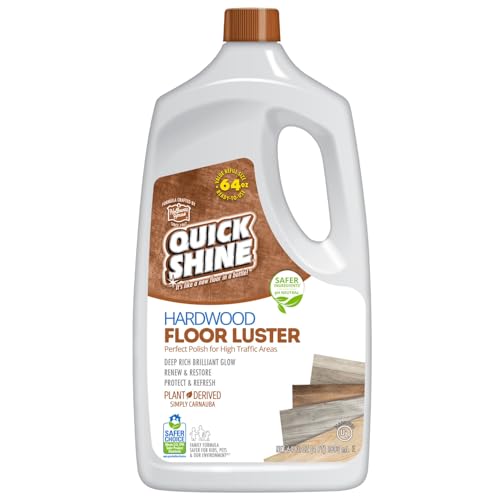
Quick Shine Hardwood Luster, 64 oz stands apart as the hardwood-specific choice, rather than a general finish for tile, stone, or vinyl. Its 64-ounce formula contains plant-derived carnauba, and the maker says it renews hardwood color and richness while adding a protective layer that fills micro-scratches. The instructions call for application to clean, dry hardwood, so it suits someone maintaining a prepared hardwood surface rather than cleaning a dirty floor. The maker also describes the finish as pH neutral and non-slip. Since the intended use is hardwood, choose a multi surface formula for rooms with other floor materials instead of assuming this one fits them.
Bottom line: Choose this for clean, dry hardwood when you want a carnauba-based finish.
Quick Shine Multi-Surface Finish, 4-Pack

Quick Shine Multi-Surface Finish, 4-Pack has the same broad surface purpose as a single-bottle multi surface finish, but its distinguishing feature is the four-bottle package. Each bottle holds 64 ounces, and the uses include hardwood, laminate, LVT, LVP, tile, and stone. The maker says the finish protects and renews floors, and recommends cleaning the floor before application. It is not recommended for unsealed or worn wood, or unsealed ceramic tile or stone, which makes surface condition especially important here. Choose this format when you already know the finish suits your floors and want multiple bottles; otherwise, a single bottle avoids committing to a larger supply.
Bottom line: Choose this if multiple 64-ounce bottles suit your planned use.
How to choose a floor finish
Start with the floor material and whether its surface is sealed; a finish is a coating, while a cleaner is meant to remove soil. Match the intended floor types on the product to the rooms you plan to treat, rather than assuming a multi surface label covers every finish or condition. Apply floor finish only after cleaning and drying the floor, since trapped grit can remain visible under a coating and moisture can interfere with an even result. Use a thin, even application and keep foot traffic off until the coating is dry according to its label. If a floor is unsealed, worn, or has an unknown coating, pause and verify compatibility before applying polish; adding a new film can make later maintenance more complicated.
Surface compatibility and sealed floors
Sealed surfaces are the key fit check: the multi surface product’s maker specifically excludes unsealed or worn wood and unsealed ceramic tile or stone. A sealed floor has a continuous protective coating, while worn areas may expose a different surface that absorbs or holds finish unevenly. Vinyl and laminate are also distinct materials, so do not infer compatibility with every plank or tile product from appearance alone. If any section of a room is worn, peeling, or unsealed, test a small inconspicuous area only if the product instructions permit it, and stop if the finish looks uneven. For a mixed-material space, choose a formula explicitly intended for every floor type you plan to coat.
Finish versus cleaner for floor care
Floor finish and floor cleaner do different jobs: cleaner removes everyday soil, while finish leaves a surface coating intended to renew appearance. Dirt, greasy residue, and old product buildup can keep a new coat from looking even, so begin with a compatible cleaner and a clean mop rather than applying finish over visible soil. Let the floor dry fully before coating, and avoid using more product than needed; excess finish can build up and create an uneven-looking surface. A maintenance routine should also distinguish routine cleaning from periodic refinishing: do not add a fresh coat every time you mop. Use the finish’s label for drying and reapplication timing, because these products can differ.
Applying floor finish without streaks
Preparation and a light, even application help reduce streaks and visible mop lines. Remove loose grit first, clean the surface, and allow it to dry before dispensing finish; grit under a coating can show as rough spots. Work in a manageable section and spread the product consistently with a clean applicator, avoiding puddles at edges and corners. Keep people and pets off a freshly coated floor until it is dry as directed, since walking across wet finish can leave marks and may create a slip hazard. Never use a floor coating to compensate for damaged or peeling material; address the surface condition first and confirm that a coating is appropriate for that floor.
Frequently Asked Questions
Can floor finish be used as a floor cleaner?
No. A floor finish leaves a coating, while a cleaner is meant to remove soil and residue. Clean and dry the floor before applying finish so dirt is not trapped under the new layer.
Should I apply floor finish to unsealed wood?
Avoid applying finish to unsealed or worn wood unless its instructions explicitly allow it. The multi surface formula here specifically excludes unsealed or worn wood, and porous areas can take a coating unevenly.
How should I prepare a floor for finish?
Remove loose grit, clean the floor with a compatible cleaner, and let it dry completely before coating. A clean, dry surface helps the finish spread evenly rather than trapping soil or moisture.
Can I use a hardwood polish on tile?
Use a hardwood-specific polish only on surfaces its directions approve. The hardwood formula here is intended for hardwood, whereas the multi surface choices name tile and stone among their intended surfaces.
When can people walk on a freshly finished floor?
Wait until the finish is dry according to its product directions before allowing foot traffic. Walking on a wet coating can mark it and can present a slip hazard.