
Plate Warmer for Slow Eaters: 3 Options Compared

For slow eaters, the Irishom electric warming tray is the most direct fit because it provides a heated surface with two temperature settings. Choose Classic Cuisine Chef Buddy Marble Warmer if you prefer a microwaveable marble plate, or Cambro Insulated Dome and Pellet Underliner if you need a covered, insulated plate setup for a food trolley.
A plate warmer heats the serving surface or the plate beneath food; it is not the same as reheating the food itself. For food that must stay hot for safety, use a food thermometer rather than relying on a warm plate.
We earn a commission if you buy through links on this page. As an Amazon Associate I earn from qualifying purchases. Products are compared on manufacturer specifications, not hands-on testing.
- Best overall: Irishom Electric Warming Tray – The 27 cm electric tray has two heat settings for adjusting warmth to the meal.
- Best for portable warming: Classic Cuisine Chef Buddy Marble Warmer – The marble insert heats in a microwave and its polypropylene holder stays cool, according to the maker.
- Best for covered service: Cambro Insulated Dome and Pellet Underliner – The dome and thermal underliner are designed for a food trolley and heat retention.
| Product | Best for | Heat source | Size | Settings or heat claim | Shop |
|---|---|---|---|---|---|
| Irishom Electric Warming Tray | Electric table warming | Electric, 80 W | 10.6 in plate | 65°C and 120°C | Check Price on Amazon |
| Classic Cuisine Chef Buddy Marble Warmer | Portable marble warming | Microwave-heated marble | 9 × 10.25 in | — | Check Price on Amazon |
| Cambro Insulated Dome and Pellet Underliner | Covered trolley service | Thermal pellet | 10.4 × 10.4 in | Above 150°F for over 1 hour | Check Price on Amazon |
Plate Warmers for Slow Eaters
Compare the heating method and serving setup to choose a warmer that suits your table and meal pace.
Irishom Electric Warming Tray

Unlike the microwave-heated marble plate, this warmer uses an electric surface and offers two temperature settings. The 27 cm plate (about 10.6 inches) and 80 W design suit a household table where diners want a heated surface within reach during a longer meal. The maker says the tray distributes heat consistently and has a wipeable surface. Its small plate area may limit how many dishes can sit on it at once, so it is a better fit for one serving area than a large spread. The 120°C setting calls for care around the hot surface.
Bottom line: Pick this if you want an electric surface with two settings for a slower meal.
Classic Cuisine Chef Buddy Marble Warmer
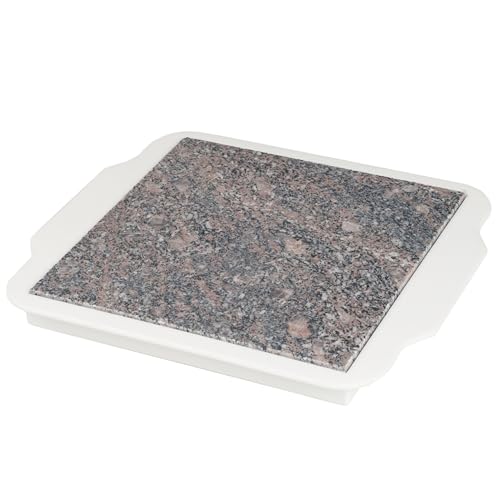
This warmer differs from the electric options because its marble insert is heated in a microwave before serving. Its 9 × 10.25-inch footprint and polypropylene holder make it a portable choice for a plate, bowl, or small serving dish. The maker says the stone becomes hot while the handles remain cool to the touch, and that the holder is safe on all surfaces. Because it has no ongoing electric heat, it suits meals where a preheated surface is enough; diners wanting adjustable heat during a long meal should choose an electric tray instead.
Bottom line: Choose this for microwave-heated portability rather than continuous electric warmth.
Cambro Insulated Dome and Pellet Underliner

This set is a covered plate-service system rather than an open household warming tray: it pairs an insulated dome with a thermal pellet underliner for use in food trolleys. The maker says it keeps hot foods above 150°F for over an hour and that the rim stays 20°F cooler than metal pellets. That makes it relevant where a covered meal needs to retain heat during service, including settings where quiet stacking matters. It is less suited to a home diner who wants to adjust warmth at the table, since its design centers on trolley service and heat retention.
Bottom line: Pick this for covered trolley service, not an adjustable open tabletop warmer.
How to choose a plate warmer for slow eating
Choose by heat source first: electric trays provide ongoing heat, while microwave-heated stone is preheated before serving and insulated covers retain heat around a plate. A 27 cm surface fits one modest serving area; a 9 × 10.25-inch stone offers a similarly compact footprint. For a meal that regularly lasts longer than an hour, favor an electric option over a preheated stone, but check the surface temperature before setting food or touching the warmer. The Cambro set targets covered trolley service rather than table-side adjustment. For hot-food safety, keep food at 140°F or above and verify the food itself with a thermometer; a warm plate alone does not establish a safe holding temperature.
Electric trays, marble plates, and insulated covers
Electric trays, microwave-heated plates, and insulated covers solve different warming problems. A tray heats an exposed serving surface; a preheated stone transfers stored heat to a dish; an insulated dome and pellet reduce heat loss around food. Surface coverage matters: the Irishom has a 27 cm plate, while the Cambro pieces measure about 10.4 inches across. The marble insert measures 9 by 10.25 inches. For a single dinner plate, compare the plate’s base with the usable warming area, not just the total outer width. The table summarizes the type and best-matching use so a buyer can rule out a warmer designed for a different setting.
| Type | Heat approach | Best match |
|---|---|---|
| Electric tray | Ongoing surface heat | Table-side warmth |
| Microwaveable stone | Preheated insert | Portable serving |
| Insulated dome and pellet | Covered heat retention | Trolley service |
Safe temperatures for keeping a meal warm
Hot food should be held at 140°F or higher; the USDA identifies 40°F to 140°F as the danger zone where bacteria can multiply quickly. A warmer’s surface temperature is not the same as the food’s internal temperature, so use a food thermometer to check dishes that need safe hot holding. The Cambro maker claims its pellet and dome keep hot foods above 150°F for over an hour, but that is a product claim, not a substitute for checking the food. Keep hands and loose items away from hot surfaces, especially with an electric tray’s 120°C setting or freshly heated stone. Do not assume a plate warmer can bring refrigerated leftovers back to a safe temperature.
Plate warmer sizing and serving setup
Match the warmer’s footprint to the plate base and allow space around the appliance; a larger dinner plate may overhang a 27 cm warming surface. The Cambro dome and underliner are each about 10.4 inches wide, while the marble insert is 9 by 10.25 inches, so check the actual plate-and-dome fit before choosing the trolley set. Avoid balancing dishes on a narrow edge or placing food directly on a surface unless its design is intended for that use. Electric models also need a stable spot near a suitable outlet, while microwave-heated stone needs a microwave large enough for its dimensions. Set the warmer where a slow eater can reach it without pulling a hot appliance across the table.
Frequently Asked Questions
Will a plate warmer keep food at a safe temperature?
Only if the food itself stays at 140°F or above, the threshold for hot holding. Check the food with a thermometer because a warmed plate can feel hot while the food cools below that point.
How large should a plate warmer be?
Choose a warming surface at least as wide as the plate base, with room for the dish to sit flat. A 27 cm surface is about 10.6 inches across, so compare it with the bottom of your plate rather than its rim.
Can a warming tray reheat cold leftovers?
A serving warmer is intended to keep food warm, not to reheat chilled leftovers. Reheat leftovers to 165°F before serving, then use a warmer to maintain the temperature.
Is a microwaveable marble warmer hot enough to touch?
The stone can become very hot after microwave heating, so handle it by its holder and check it carefully before moving. Never assume the insert is cool just because the plastic handles feel comfortable.
How long can hot food stay out during a meal?
Hot food should remain at 140°F or higher for safe holding. If food is left in the 40°F to 140°F danger zone, the general limit is two hours, or one hour when the room is above 90°F.