
Red Light Therapy for Lips: 4 Devices Compared

For red light therapy focused on lips, LushLips LED Lip Therapy is the closest match because it is designed for the lip and perioral area and offers four wavelengths. Choose Hooga Oral Red Light Device or KELUXE Red Light Lip Device instead if you also want a device designed for teeth and gums.
We earn a commission if you buy through links on this page. As an Amazon Associate I earn from qualifying purchases. Products are compared on manufacturer specifications, not hands-on testing.
- Best overall: LushLips LED Lip Therapy – Designed for the lips and perioral area, with four wavelengths and a 3-minute session claim.
- Best for oral care: Hooga Oral Red Light Device – Combines 660 nm red and 850 nm near-infrared light in a handheld mouthpiece device.
- Best for 630 nm red light: KELUXE Red Light Lip Device – Pairs 630 nm red light with 850 nm near-infrared light in a lip-and-oral-care device.
| Product | Best for | Wavelengths | Design focus | Shop |
|---|---|---|---|---|
| LushLips LED Lip Therapy | Dedicated lip care | 4 wavelengths | Lips and perioral area | Check Price on Amazon |
| Hooga Oral Red Light Device | Lips and gums | 660 nm red; 850 nm near-infrared | Gums, teeth and lips | Check Price on Amazon |
| KELUXE Red Light Lip Device | Dual wavelengths | 630 nm red; 850 nm near-infrared | Lips, teeth and gums | Check Price on Amazon |
| Red Light Lip Plumping Device | Lip and teeth care | — | Lips and teeth | Check Price on Amazon |
Red Light Therapy Devices for Lips
Compare each device’s wavelength information and intended treatment area before choosing.
LushLips LED Lip Therapy

For a device centered on the lips and surrounding lines, LushLips LED Lip Therapy combines four wavelengths with a claimed 3-minute session. The maker says it is FDA 510(k)-cleared for wrinkle reduction and reports results from an 84-day study; those claims do not guarantee an individual outcome. Its focused treatment area may suit someone who does not need a teeth-and-gum mouthpiece. The tradeoff is that the specifications do not give the four wavelength values, so buyers comparing specific wavelengths should confirm those values before ordering.
Bottom line: Choose this if your priority is a dedicated lip-and-perioral device.
Hooga Oral Red Light Device
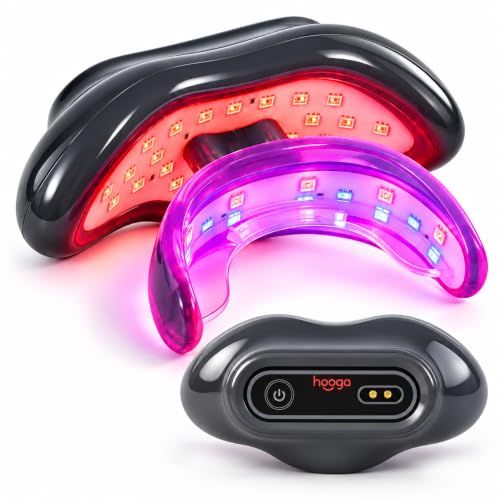
Unlike a lip-only tool, Hooga Oral Red Light Device is a handheld oral-care device designed for gums, teeth and lips, with a silicone mouthpiece. It combines 660 nm red light and 850 nm near-infrared light, and has four modes plus a built-in timer that ends each session. This broader oral focus suits buyers who want a single device for the lip area and other parts of the mouth. Its mouthpiece format may be less appealing if you want a tool devoted only to the lips and surrounding skin.
Bottom line: Pick this for a mouthpiece device that also targets teeth and gums.
KELUXE Red Light Lip Device

With 630 nm red light rather than 660 nm, KELUXE Red Light Lip Device offers a distinct red light wavelength alongside 850 nm near-infrared light. The maker positions it for lips as well as teeth and gums, and its dimensions are about 4.7 inches long, 3.1 inches wide and 1.6 inches high. That compact size may suit buyers comparing physical dimensions as well as wavelengths. The product also makes claims about lip fullness and oral benefits, but those are not assured results; choose it for its dual-wavelength and multi-area design.
Bottom line: Choose this if 630 nm red light and a multi-area design fit your preferences.
Red Light Lip Plumping Device

Red Light Lip Plumping Device combines a lip-focused design with a whitening mouthpiece, making it the option here that explicitly pairs lip care with tooth-brightening use. The maker describes red light use for lips and says whitening effects may vary. Its dimensions are 8.19 inches long, 4.37 inches wide and 2.72 inches high, so compare that footprint with your storage space before choosing.
Bottom line: Consider this if a whitening mouthpiece is part of your intended use.
How to Choose Red Light Therapy for Lips
Start with the treatment area: a lip-focused device is different from an oral-care mouthpiece meant to reach lips, teeth and gums. Wavelength is another practical comparison point: the devices here identify 630 nm or 660 nm red light, while some also pair it with 850 nm near-infrared light. A device that gives a wavelength value is easier to compare on that criterion than one without a value in its specifications. If wavelength is your deciding factor, choose a model with the value you want stated clearly; otherwise, confirm it before ordering. Also compare session controls and mouthpiece design rather than assuming that every red light device is used the same way.
Red Light Wavelengths and Lip Devices
Red light and near-infrared light are different wavelength bands, and a device may include one or both. For the devices compared here, the red light values are 630 nm and 660 nm, and two models pair red light with 850 nm near-infrared light. The number of wavelengths alone does not tell you which values a device uses, so check the actual nanometer values when that distinction matters. This table separates the wavelength information from device focus; it is not a claim that one wavelength produces better results.
| Device type | Wavelength information | Typical focus |
|---|---|---|
| Lip-focused LED device | May use multiple red or near-infrared wavelengths | Lips and surrounding area |
| Oral-care mouthpiece | Can combine red and near-infrared light | Lips, teeth and gums |
Using Light Devices Near the Lips Safely
Keep bright LEDs out of direct eye exposure, especially when a device is held close to the face. Use a device only in its intended position and follow its specific timing and handling directions; one model here has a built-in timer, while another maker describes a 3-minute session. Do not assume that a device intended for gums or teeth has the same fit or use method as a lip-only tool. If a mouthpiece causes discomfort, stop rather than forcing it into position. A device’s marketing claims are not a promise of a personal cosmetic result, so avoid increasing session time in pursuit of faster changes.
Matching a Device to Your Routine
Choose by the area you intend to treat and how you want to hold or position the device. A lip-only focus suits someone who does not need tooth or gum functions; an oral mouthpiece may better match a broader mouth-care routine. Dimensions also affect storage and handling: among the measurements here, one tool is about 8.19 inches long while another is about 4.7 inches long. For a travel kit or small drawer, compare the full dimensions and weight where available rather than relying on a “compact” label. Before buying, verify any wavelength or fit requirement that is essential to your choice.
Frequently Asked Questions
What wavelengths are used for red light therapy for lips?
The devices compared here specify red light wavelengths of 630 nm or 660 nm, and some pair red light with 850 nm near-infrared light. A device’s wavelength count is not a substitute for knowing its actual values.
Can a red light device for lips also treat gums?
Some oral-care mouthpiece devices are designed for both lips and gums, while a lip-focused device may target the lips and surrounding area instead. Choose according to the areas named for the specific device.
How long is a typical lip light therapy session?
Session time is device-specific: one compared device has a built-in timer, and another maker describes a 3-minute session. Use the timing for the particular device rather than extending a session on your own.
Should I look at the LEDs during treatment?
No; avoid looking directly into bright LEDs held near your face. Keep the device positioned as intended and use any eye-safety directions supplied for that model.
Does red light therapy make lips look fuller?
A cosmetic result is not guaranteed, even when a maker claims support for lip volume or appearance. Compare the device’s intended treatment area and wavelength information, and do not assume that every user will see the same change.