
Robert Sorby ProEdge Sharpening System Compared

The Robert Sorby ProEdge Sharpening System is the direct choice for woodworkers who want a belt-based sharpener rather than abrasive wheels. Choose an accessory instead only if you already have a compatible system and need a jig kit or replacement belt.
The ProEdge is a powered belt sharpener; its accessories help guide or supply the sharpening process rather than replacing the main system.
We earn a commission if you buy through links on this page. As an Amazon Associate I earn from qualifying purchases. Products are compared on manufacturer specifications, not hands-on testing.
- Best overall: Robert Sorby ProEdge Sharpening System, Large – The large system sharpens with belts rather than abrasive wheels.
- Best for woodturning setup: Robert Sorby ProEdge Woodturning Accessory Kit – This medium accessory kit is identified for woodturning and repeats the sharpening angle.
- Best for HSS tool work: Robert Sorby Woodworking Sharpening Kit – The 120-grit ceramic belt is intended for cutting HSS turning tools.
| Product | Best for | Type | Size | Dimensions (L × W × H) | Shop |
|---|---|---|---|---|---|
| Robert Sorby ProEdge Sharpening System, Large | Belt sharpening | Belt sharpener | Large | 18.5 × 11.25 × 16.5 in. | Check Price on Amazon |
| Robert Sorby ProEdge Woodturning Accessory Kit | Turning tool angles | Woodturning accessory kit | Medium | 12 × 12 × 12 in. | Check Price on Amazon |
| Robert Sorby Woodworking Sharpening Kit | General tool setup | Woodworking sharpening kit | Medium | 12 × 12 × 12 in. | Check Price on Amazon |
| Sorby ProEdge Ceramic Belt, 120 Grit | HSS tool shaping | Ceramic sharpening belt | 2 × 30⅝ in. | — | Check Price on Amazon |
Robert Sorby ProEdge Sharpening System and Accessories
Compare the main belt sharpener with its sharpening kits and compatible belt accessory before choosing.
Robert Sorby ProEdge Sharpening System, Large
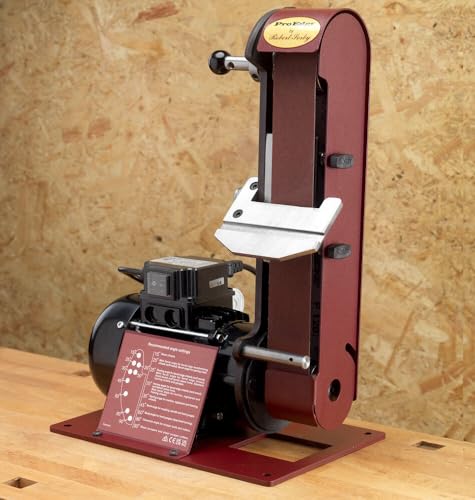
The ProEdge is the only complete sharpening system in this group, and its belt-based approach separates it from wheel sharpeners. The large black unit measures 18.5 inches long, 11.25 inches wide, and 16.5 inches high, which makes bench clearance and storage space worth considering before choosing it. A belt system can suit woodworkers who want to shape or refresh tool edges without using an abrasive wheel. Its main limitation is that it is a full-size machine, not a compact accessory; choose a kit or belt instead only if you already have the compatible sharpener.
Bottom line: Choose this if you need the complete belt-sharpening machine, not just an accessory.
Robert Sorby ProEdge Woodturning Accessory Kit

The woodturning accessory kit is a setup component rather than a standalone sharpener, so it makes sense for owners who already have a compatible ProEdge system. Its purpose is to help reproduce the same sharpening angle, useful when maintaining a chosen grind on turning tools. The red medium kit measures 12 inches in each dimension. That repeatability does not mean every turning tool should use one universal angle: tool shape and preferred grind affect the bevel. The kit’s limitation is its dependence on the main sharpener, so it is not the right pick for someone starting without the machine.
Bottom line: Pick this if you already have a ProEdge and want a repeatable woodturning setup.
Robert Sorby Woodworking Sharpening Kit

The general woodworking kit is differentiated by its broader woodworking label rather than the woodturning-specific focus of Robert Sorby ProEdge Woodturning Accessory Kit. It is a medium red kit measuring 12 inches on each side, and its purpose is to help sharpen at the same angle repeatedly. That can help when returning an edge to a consistent bevel, but the kit is not a complete sharpening machine. Bevel angle remains a tool-specific choice, so establish the desired edge before using a guide to repeat it. This kit suits ProEdge owners seeking a general woodworking setup; buyers needing a full sharpener should choose the system instead.
Bottom line: Choose this for a repeatable general woodworking setup when you own the sharpener.
Sorby ProEdge Ceramic Belt, 120 Grit

The ceramic belt is the consumable option in this group, with 120 grit and a 2-inch by 30⅝-inch size. It is intended for cutting high-speed steel (HSS) turning tools and is an accessory for the ProEdge Deluxe system, sold separately. Its role differs from the angle-setting kits: it provides the abrasive surface rather than guiding the tool. A 120-grit belt is suited to material removal and shaping, not the final polishing step. The key limitation is compatibility; verify that your ProEdge version accepts this belt before choosing it.
Bottom line: Choose this to shape HSS turning tools on a compatible ProEdge Deluxe system.
How to choose a ProEdge system or accessory
Choose the full system if you do not already own a compatible belt sharpener; choose a kit or belt only to add to the machine. Sharpening guides help repeat a selected bevel, but the correct bevel depends on the tool and the grind you want to maintain. A 120-grit belt removes material for shaping, while finer abrasives are generally used to refine an edge. Keep the work area clear and use eye protection around powered abrasives. For tool control, present the edge steadily and avoid pressing hard into the belt, which can remove material quickly and heat the tool. If you need a complete machine, an accessory alone cannot do that job.
What belt grit means for sharpening
Grit indicates abrasive coarseness: lower numbers cut more aggressively, while higher numbers make a finer scratch pattern. The included Sorby ceramic belt is 120 grit, so it fits shaping and edge rework better than final polishing. A typical progression uses a coarser abrasive to establish shape, then a finer abrasive to refine the edge; the number of steps depends on how damaged the edge is and how polished it needs to be. Avoid treating one grit as suitable for every stage. On a turning tool, remove only enough material to restore the chosen bevel, because frequent heavy grinding shortens tool life. Use eye protection and keep fingers clear of the moving belt.
How to keep a consistent tool bevel
A sharpening jig is useful when the goal is to return a tool to the same bevel, but the target angle must be chosen for that tool and grind. Woodturning tools can use different profiles, so a repeatable setup is not the same as a universal angle. Before removing metal, compare the tool’s existing bevel with the guide position and make a small adjustment if needed. Keep the tool supported and move it smoothly across the abrasive rather than dwelling on one spot. Heat can build during grinding, especially when pressure is high; use light contact and pause as needed. Select the woodturning-specific accessory kit when that is the setup need, rather than expecting a general kit or belt to establish every profile.
Sharpening area, storage, and safe use
Measure the bench space and the room needed to handle long tools before selecting a sharpener. The main system measures 18.5 inches long, 11.25 inches wide, and 16.5 inches high, so its footprint is larger than the 12-inch dimensions of either medium kit. Keep the belt path unobstructed and secure the machine according to its setup requirements before use. Wear safety glasses because abrasive work can throw sparks or particles, and keep loose clothing and hair away from moving parts. Do not wear gloves near a moving belt, where material can catch. Allow a hot tool edge to cool before continuing rather than forcing a long grinding session.
Frequently Asked Questions
Can a ProEdge accessory sharpen tools by itself?
No; an accessory kit or belt is not the complete sharpening machine. The ceramic belt is specifically an accessory for a compatible ProEdge Deluxe system.
What does 120 grit do on a sharpening belt?
A 120-grit belt removes material for shaping or reworking an edge rather than polishing it. Use a finer abrasive afterward if a more refined scratch pattern is needed.
How do I choose a bevel angle for a turning tool?
Choose the angle based on the tool profile and the grind you intend to maintain, rather than applying one angle to every turning tool. A guide helps reproduce the chosen angle consistently.
How much space does the ProEdge system need?
The system measures 18.5 inches long, 11.25 inches wide, and 16.5 inches high. Leave additional working room for handling tools and keeping the belt path clear.
What safety gear should I use with a belt sharpener?
Wear safety glasses to protect against sparks and abrasive particles. Keep hands, loose clothing, and hair clear of the moving belt, and do not wear gloves near it.