
Roxy Women’s Ski Jackets: 5 Models Compared by Fit

Roxy Jetty Block Jacket suits most skiers seeking an insulated Roxy women’s ski jacket, with 10K waterproofing, 5K breathability, and 120g body insulation. Choose a different model if you want a removable liner, more breathability, or a tailored fit.
Ski jackets combine an outer layer that resists snow and wind with features that help manage warmth and keep snow out; layering needs and activity level should guide the fit.
We earn a commission if you buy through links on this page. As an Amazon Associate I earn from qualifying purchases. Products are compared on manufacturer specifications, not hands-on testing.
- Best overall: Roxy Jetty Block Jacket – Pairs 10K waterproofing with 120g body insulation and mountain-ready features.
- Best for versatility: Roxy Jetty 3-in-1 Jacket – Its removable fleece liner and shell can be worn together or separately.
- Best for breathability: Roxy Meade Snow Jacket – Its 10K/10K rating exceeds the 5K breathability figures of two other options.
| Product | Best for | Waterproof / breathability | Body insulation | Liner or shell | Shop |
|---|---|---|---|---|---|
| Roxy Jetty Block Jacket | Insulated snow days | 10K / 5K | 120g | Insulated jacket | Check Price on Amazon |
| Roxy Meade Snow Jacket | Removable hood | 10K / 10K | 120g | Insulated jacket | Check Price on Amazon |
| Roxy Jetty 3-in-1 Jacket | Layering versatility | 10K / — | — | Removable fleece liner | Check Price on Amazon |
| Roxy Women’s 10K Ski Jacket | Stretch snow coverage | 10K / 10K | 120g | Insulated jacket | Check Price on Amazon |
| Roxy Billie 10K Snow Jacket | Tailored fit | 10K / 5K | 120g | Insulated jacket | Check Price on Amazon |
Roxy Women’s Ski Jackets
Compare these jackets by their waterproof and breathability ratings, insulation, and layering options.
Roxy Jetty Block Jacket
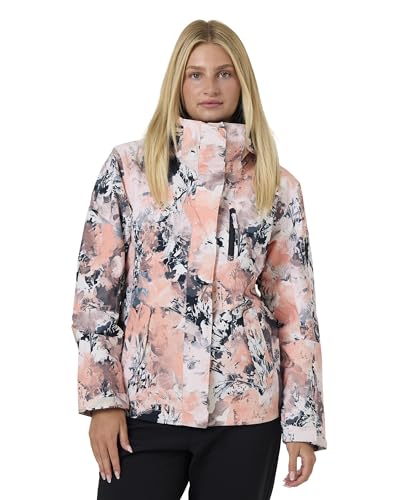
Roxy Jetty Block Jacket pairs 10K waterproofing and 5K breathability with a fixed powder skirt and a jacket-to-pant attachment system. Roxy says its 120g body and 100g sleeve polyfill insulation is intended for cold-weather comfort, and the shell uses 100% recycled polyester with PFAS-free materials. A three-way adjustable hood and mesh-lined venting support changing conditions on the mountain. This regular-fit option suits skiers who want an insulated jacket with snow-sealing features. Its 5K breathability rating is lower than the 10K/10K rating on some alternatives, which may matter during high-output activity.
Bottom line: Choose this if you want an insulated, regular-fit jacket with a fixed powder skirt.
Roxy Meade Snow Jacket

Roxy Meade Snow Jacket stands out for its removable, three-way adjustable hood and 10K/10K waterproof-breathability rating. Roxy says the WarmFlight insulation uses 70% recycled fibers, with 120g in the body, 100g in the sleeves, and 60g in the hood. The jacket also has critically taped seams, a snap-away fixed powder skirt, adjustable cuffs, internal stretch wrist gaiters, and a jacket-to-pant attachment system. Choose it if you want a removable hood and measured insulation in the hood as well as the body. The snap-away skirt is fixed rather than a fully removable powder skirt.
Bottom line: Choose this if you value a removable hood and 10K/10K rating.
Roxy Jetty 3-in-1 Jacket

Roxy Jetty 3-in-1 Jacket is the only 3-in-1 option here: its shell and removable fleece liner can be worn together or separately. Roxy says the shell has 10K waterproofing, critically taped seams, and a PFAS-free water-repellent finish; the outer fabric is approximately 55% recycled polyester. That combination gives you separate shell and liner layers for adjusting coverage as conditions change. It suits skiers who want a jacket that can shift between colder days and milder wet weather. The features do not provide an insulation weight or breathability figure, so choose another option if comparing those measurements is central to your decision.
Bottom line: Choose this if separate shell and fleece-liner wear is useful to you.
Roxy Women’s 10K Ski Jacket

Roxy Women’s 10K Ski Jacket combines a 10K/10K rating with stretch-oriented snow coverage, including a shaped stretch powder skirt with a snap-away system and internal wrist gaiters with thumbholes. Roxy says its WarmFlight insulation is made from 100% recycled material, with 120g in the body, 100g in the sleeves, and 60g in the hood. Fully taped seams and a three-way adjustable fixed hood complete the coverage features. This model suits skiers who prefer a fixed hood and want stretch elements around the waist and wrists. Unlike the 3-in-1 alternative, it is an insulated jacket rather than a shell with a removable fleece liner.
Bottom line: Choose this if stretch snow coverage and 10K/10K ratings matter most.
Roxy Billie 10K Snow Jacket

Roxy Billie 10K Snow Jacket is a tailored-cut snow jacket with 10K waterproofing and 5K breathability. Roxy says the WarmFlight Eco insulation provides 120g in the body, 100g in the sleeves, and 60g in the hood. Its snow-ready features include a three-way adjustable fixed hood, snap-away powder skirt, jacket-to-pant attachment, stretch wrist gaiters, and adjustable sleeve cuffs. The tailored cut makes this a distinct option for shoppers who prefer that silhouette over a regular fit. Its 5K breathability rating is below the 10K/10K options, so consider activity intensity when deciding between these ratings.
Bottom line: Choose this if you prefer a tailored cut with insulated coverage.
How to choose a Roxy women’s ski jacket
Start with the waterproof and breathability figures, then decide how much insulation and adjustability you need. A 10K waterproof rating corresponds to a 10,000 mm hydrostatic-head test; breathability numbers here are given in grams per square meter over 24 hours. Higher figures can help when you spend long periods in wet snow or ski hard, but ventilation and layers also affect comfort. For active skiing, compare the 10K/10K options; for a simpler insulated setup, consider the 10K/5K choices. If you want to vary warmth without packing a separate midlayer, the removable fleece liner is a meaningful difference. Pick a fit that leaves room for a base layer and a midlayer without restricting arm movement.
Use the comparison as a starting point, not a substitute for trying the jacket with your ski layers.
Insulation and layering for ski days
Insulated jackets provide built-in warmth, while a shell-and-liner design lets you adjust how much insulation you wear. The insulated options use 100g to 120g body and sleeve fills where figures are provided, with some also specifying 60g in the hood. Those fill weights describe the insulation amount, not a guaranteed warmth temperature. Start with a moisture-wicking base layer; add a fleece or light synthetic midlayer when conditions call for more warmth. If you run hot or ski hard, use the jacket’s venting features and avoid overdressing. If your planned layers make the shoulders or elbows pull when you reach forward, size or fit may be wrong.
Powder skirts, cuffs, and hood fit
Powder skirts, wrist gaiters, and adjustable cuffs help limit snow entry at common openings, but they do not make a jacket fully sealed against every fall or storm. A jacket-to-pant attachment can help close the gap at the waist. Try the hood over your helmet before relying on its coverage, and check that the brim and adjustment do not block your peripheral vision. With under 2 inches of sleeve cuff exposed when your arms are raised, check the sleeve length and wrist-gaiter reach before choosing a size. Snap-away skirts can be released when you do not want them, while the 3-in-1 design adds a separate liner rather than only changing shell features.
Waterproof care and common mistakes
Wash ski jackets with technical outerwear detergent and skip fabric softener, which can interfere with moisture management. Dirt and body oils can impair a water-repellent finish; when water stops beading on the face fabric, a wash and a care-label-approved heat treatment may help reactivate it. Follow the garment’s care label for wash and drying temperatures because coatings and liners can have different limits. A waterproof rating does not mean the outer face fabric will never wet out: the durable water-repellent finish helps water bead, while the membrane or coating provides the barrier. Avoid storing a damp jacket compressed for long periods, and let it dry fully before putting it away.
Frequently Asked Questions
What does a 10K waterproof rating mean on a ski jacket?
A 10K rating refers to a 10,000 mm hydrostatic-head test of the fabric’s resistance to water pressure. Seams, closures, wear, and the condition of the water-repellent finish also affect protection on the mountain.
Is 10K/10K enough for resort skiing?
A 10K waterproof and 10K breathability rating is a practical middle-ground specification for many resort days. Long exposure to wet snow or high-output skiing makes ventilation, layering, and garment condition important too.
How should a ski jacket fit over layers?
A ski jacket should leave room for a base layer and a midlayer without pulling across the shoulders or restricting reach. Raise both arms and bend forward during a fit check; cuffs should still cover the wrists.
Do powder skirts keep all snow out?
Powder skirts help block snow at the waist, especially when paired with compatible ski pants. They cannot guarantee a dry interior after a fall, and a jacket-to-pant connection can reduce the gap further.
How often should I wash a ski jacket?
Wash a ski jacket when dirt, sweat, or body oils build up or when water no longer beads on the face fabric. Use technical detergent, avoid fabric softener, and follow the care label for drying and heat.