
Rubber Dip for Tool Handles: 5 Options Compared

Kuailaya Black Tool Dip, 300 g is the closest match for general rubber dip for tool handles because its black coating is marketed for hand tools and DIY repairs. Choose another option if color, a smaller container, or an air-dry blue coating matters more.
Tool dip is a liquid coating that cures into a flexible rubberized layer; surface preparation and adequate curing time affect the result.
We earn a commission if you buy through links on this page. As an Amazon Associate I earn from qualifying purchases. Products are compared on manufacturer specifications, not hands-on testing.
- Best overall: Kuailaya Black Tool Dip, 300 g – Black coating marketed for hand tools, with 300 grams per container.
- Best for red coating: Plasti Dip Red, 14.5 oz – Red 14.5-ounce Plasti Dip can with a flexible temperature range.
- Best for small repairs: Stnkeno Black Tool Dip, 5.3 oz – 5.3-ounce black coating intended for small tool dip repairs.
| Product | Best for | Color | Container size | Application or finish | Shop |
|---|---|---|---|---|---|
| Kuailaya Black Tool Dip, 300 g | General tool coating | Black | 10.14 fl oz | Dip; stir or shake first | Check Price on Amazon |
| Plasti Dip Red, 14.5 oz | Red tool grips | Red | 14.5 oz | Dip can | Check Price on Amazon |
| Plasti Dip Blue Air-Dry Coating | Blue air-dry finish | Blue | 1 count | Air-dry; flexible finish | Check Price on Amazon |
| Stnkeno Black Tool Dip, 5.3 oz | Small tool repairs | Black | 5.3 oz | Dip or brush | Check Price on Amazon |
| WANJAO Blue Tool Dip, 150 g | Blue plier handles | Blue | 5.29 oz | Dip or brush; matte | Check Price on Amazon |
Rubber Dip for Tool Handles Compared
Compare these peelable tool coatings by color, container size and the application details that matter to your repair.
Kuailaya Black Tool Dip, 300 g

Kuailaya Black Tool Dip, 300 g is the only option here whose product name directly centers black liquid rubber dip for hand-tool handles. The 300-gram container is described as a flexible, peelable protective film, and the maker says it resists everyday scratches and bumps. Shake or stir thoroughly before applying an even coat. This fits buyers who want a removable black coating for a general hand-tool project. The application guidance does not give a curing time, so confirm the cure time before using the coated tool for work.
Bottom line: Choose this for a black, peelable coating intended for hand tools.
Plasti Dip Red, 14.5 oz

Plasti Dip Red, 14.5 oz differs from the black and blue choices with a red finish and a 14.5-ounce can. The maker describes a flexible, peelable coating for tools and automotive projects, and gives an operating temperature range of -30°F to 200°F. That range may matter for tools exposed to changing temperatures; it is not a curing-time specification. Choose it when red visibility or a larger can is useful. Buyers who want a neutral black finish should choose a different color option.
Bottom line: Pick this when a red coating and its temperature range suit the job.
Plasti Dip Blue Air-Dry Coating

Plasti Dip Blue Air-Dry Coating is the blue air-dry Plasti Dip option, unlike the red can and the black coatings. Its flexible finish is described for tool handles, grips and DIY projects, with peelability and protection from moisture, acids, abrasion and corrosion among its uses. The maker calls for a clean, dry surface, compatibility testing, and following label directions for drying, ventilation and safety. This suits buyers who want a blue coating with explicit preparation guidance.
Bottom line: Choose this for a blue air-dry finish and explicit surface-preparation guidance.
Stnkeno Black Tool Dip, 5.3 oz

Stnkeno Black Tool Dip, 5.3 oz is the smallest container, at 5.3 ounces, and is aimed at small repairs on tools such as wrenches, pliers and tweezers. Unlike the can options, this coating is described as suitable for either dipping or brushing; additional coats make a thicker layer. The black flexible coating is removable and intended to improve grip. It is a practical match for localized work, but buyers covering several full-size handles should confirm that the amount will cover the planned surface area.
Bottom line: Pick this for small black repairs where brush application may help.
WANJAO Blue Tool Dip, 150 g
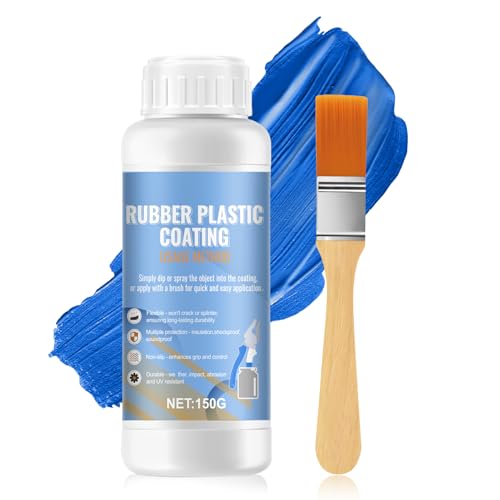
WANJAO Blue Tool Dip, 150 g combines a blue color with a matte finish and a 150-gram container, setting it apart from the blue Plasti Dip option. It can be dipped or brushed, and the maker says to apply small amounts in multiple passes and seal the container promptly after use. Low temperatures can extend curing to at least 48 hours, and smooth surfaces should be sanded to improve adhesion. This is suited to buyers willing to prepare the handle and wait for a longer cure in cool conditions. It requires more care in storage and application than a quick single pass.
Bottom line: Choose this for a matte blue finish when you can apply thin passes and allow extra cure time.
How to choose rubber dip for tool handles
Start with the handle material, coating method and finish you need; the container size alone does not tell you how many tools a can will cover. Tool dip coatings cure as a flexible layer, and brush-on products can help with a small repair while a dip can suits a handle that can be immersed. Clean and dry the surface before coating, and test compatibility on an inconspicuous spot when the label calls for it. For a smooth handle surface, sanding can improve adhesion, but only do so when appropriate for the tool and its finish. Leave enough time for full curing before putting a coated handle back into service; uncured coating can transfer or peel.
Surface preparation and coating thickness
Multiple thin coats give more control than one heavy application: the WANJAO maker specifically recommends small amounts in multiple passes, while the Stnkeno maker says additional coats create a thicker layer. Remove dirt, oil and loose material, then let the handle dry fully so moisture is not trapped beneath the coating. Sanding may improve adhesion on smooth surfaces, but avoid damaging markings, insulation or a precision fit. A thick build can change a handle’s diameter and how tools fit in holders, so stop before the coating interferes with moving parts or tool storage. Apply only as directed on the product label, especially where ventilation and drying are concerned.
Drying time and safe use
Temperature and film thickness can affect how long a liquid rubber coating needs to cure; WANJAO says its product can take at least 48 hours in winter conditions. Treat that as a minimum for that product in cold weather, not a universal cure time for every coating. Do not use a coated tool until the film is fully dry and secure, since a soft layer can shift under hand pressure. For coatings used around electrical tools, do not assume a rubberized handle is certified insulation: none of these product facts establishes an electrical safety rating. Follow the package’s ventilation and safety directions and keep uncured coating away from heat and ignition sources.
Picking a finish for the repair
Color and container format can guide the choice when the coating purpose is otherwise similar. Red and blue can make a coated tool easier to distinguish in a shared toolbox, while black offers a less conspicuous finish; choose by visibility rather than assuming color changes protection. A 5.3-ounce container is oriented to small repairs, while larger stated containers may suit more coverage, though actual yield depends on handle area and coat thickness. This table separates the practical choice by the detail that differs. Check the handle shape before dipping: an open-ended grip may allow coating inside the tool or onto a surface that should remain uncoated.
| Need | Option | Decision point |
|---|---|---|
| Black general coating | Kuailaya Black Tool Dip, 300 g | 300 g container; stir or shake |
| Red finish | Plasti Dip Red, 14.5 oz | 14.5 oz can; stated -30°F to 200°F range |
| Small repair | Stnkeno Black Tool Dip, 5.3 oz | 5.3 oz; dip or brush |
| Matte blue coating | WANJAO Blue Tool Dip, 150 g | 150 g; thin passes and longer cold-weather cure |
Frequently Asked Questions
How many coats of rubber dip should a tool handle get?
Use multiple thin coats when you need to build thickness rather than applying one heavy layer. The Stnkeno maker says additional coats create a thicker coating, while WANJAO recommends applying small amounts in multiple passes.
How long should tool handle dip cure before use?
Wait until the coating is fully dry and secure before handling the tool for work. WANJAO says curing can take at least 48 hours in winter; cure times differ by product and conditions.
Can rubber dip be brushed onto a tool handle?
Some coatings support brush application as well as dipping; Stnkeno and WANJAO describe both methods. Brush application is useful for localized repairs, while the product label should govern coat thickness and drying.
Should a tool handle be sanded before rubber dip?
A smooth surface may need sanding to improve adhesion; WANJAO specifically calls for sanding smooth substrates. Clean and dry the handle first, and avoid sanding markings or surfaces that must remain intact.
Is rubber-dipped tool coating electrical insulation?
Do not treat a rubber-dipped handle as certified electrical insulation based on a coating claim alone. These product facts do not establish an electrical safety rating, so use tools rated for the electrical task.