
Rubber Tires for Power Wheels: Fit and Types Compared

For rubber tires for Power Wheels, GZDQAD Tire Grips, 12-Inch Max suits the named upgrade best if the existing plastic wheels measure up to 12 inches, while 12-Inch Rubber Wheels with Bearings is a full wheel replacement with bearings.
We earn a commission if you buy through links on this page. As an Amazon Associate I earn from qualifying purchases. Products are compared on manufacturer specifications, not hands-on testing.
- Best overall: GZDQAD Tire Grips, 12-Inch Max – Fits over plastic tires up to 12 inches rather than requiring a complete wheel replacement.
- Best for full replacement: 12-Inch Rubber Wheels with Bearings – A 12-inch wheel with a 0.47-inch bore and bearing.
| Product | Best for | Product type | Wheel size | Shop |
|---|---|---|---|---|
| GZDQAD Tire Grips, 12-Inch Max | Plastic wheel covers | Tread grip | Up to 12 in | Check Price on Amazon |
| 12-Inch Rubber Wheels with Bearings | Complete replacement | Replacement wheel | 12 in | Check Price on Amazon |
| 8-Inch Screw-Fixed Rubber Tire Covers | Smaller plastic wheels | Tread cover | 8 in | Check Price on Amazon |
| Rubber Traction Bands, Under 12-Inch Wheels | Cut-to-fit tread | Traction bands | Under 12 in | Check Price on Amazon |
Rubber Tires for Power Wheels Compared
Match the upgrade type and wheel measurements before choosing a tire or cover.
GZDQAD Tire Grips, 12-Inch Max

For an over-wheel upgrade rather than a replacement, this two-piece grip kit wraps around existing plastic wheels up to 12 inches. The maker says it is intended to improve traction on gravel, pavement, and grass, and to reduce noise and absorb shock indoors. It suits a ride-on with intact wheels that need added tread, including worn plastic tires. The limitation is fit: measure the original wheel before ordering, since a larger tire will not fit this cover.
Bottom line: Choose this if the plastic wheels are still usable and measure no more than 12 inches.
12-Inch Rubber Wheels with Bearings

Unlike wraparound grips, this option replaces the complete wheel and includes bearings. Each wheel is described as 12 inches in diameter, 4 inches wide, with a 0.47-inch bore; the maker says the kit is intended for many 12V and 24V ride-on vehicles. It suits owners who need a whole wheel and can match the axle opening and coupler arrangement. Check the vehicle’s axle and mounting compatibility before ordering, since diameter alone does not establish fit.
Bottom line: Pick these when replacing a complete wheel and the axle dimensions match.
8-Inch Screw-Fixed Rubber Tire Covers
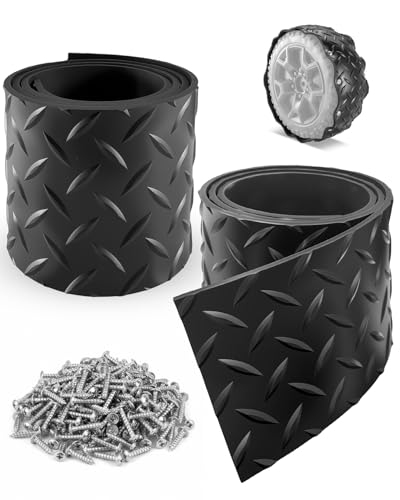
This kit is distinguished by its screw-fixed installation and 8-inch size, making it a candidate for smaller existing plastic wheels rather than the larger wheels addressed by other options. The maker says the rubber covers are intended to add grip, reduce clacking noise, and absorb shock; screws are included for installation. It suits a do-it-yourself upgrade where the original wheel can take screws. Its size limits flexibility, so compare the wheel’s actual diameter and available tread width before choosing it.
Bottom line: Choose this for an 8-inch plastic wheel that can accept screw-fixed covers.
Rubber Traction Bands, Under 12-Inch Wheels

These rubber traction bands stand out for their cut-to-size design, unlike fixed-size tire covers. They are intended for existing plastic wheels under 12 inches and can be attached with screws or glue; the maker says the patterned rubber is designed to improve grip and damp noise and vibration. They suit a DIY project where wheel dimensions vary and trimming is practical. Because installation depends on cutting and fastening the band, measure carefully and make sure it can be secured evenly around the wheel.
Bottom line: Pick these when you need trim-to-fit rubber tread for a wheel under 12 inches.
How to choose a Power Wheels tire upgrade
Choose between a tread cover and a replacement wheel based on the condition of the original wheel. Covers add tread to existing plastic wheels; replacement wheels are for a damaged wheel or a full-wheel change. A cover is practical only when the wheel is structurally sound and its diameter matches the cover. For a replacement, diameter is not enough: bore size, axle shape, hub, and coupler must also align. If the old wheel is cracked or its hub is damaged, choose a matching replacement rather than covering it.
Measure the wheel before buying
Measure the original wheel’s outside diameter across its center, then measure tread width and the axle opening if replacing the full wheel. Keep all measurements in inches and compare like with like: a cover fits around a tire, while a replacement’s bore fits over an axle or hub. For example, the 12-inch replacement specifies a 0.47-inch bore and 4-inch width; a matching diameter alone will not confirm fit. Check whether the vehicle uses a keyed axle or a coupler, especially when changing wheels. A useful decision rule is to select a cover only when the measured wheel falls within its size range; for replacement wheels, confirm both the bore and attachment style first.
Rubber covers, replacement wheels, and EVA compared
Rubber covers keep the existing wheel and add tread, while full replacements change the wheel assembly. EVA is a different material from rubber, even when sold for a similar ride-on application. Use this comparison to narrow the type before checking the vehicle’s fit:
| Upgrade type | What changes | Best fit condition |
|---|---|---|
| Rubber cover | Tread added to existing plastic wheel | Wheel is intact and within cover size |
| Rubber replacement | Complete wheel replaced | Diameter, bore, and mount align |
| EVA solid tire | Complete wheel in EVA compound | Buyer accepts EVA and dimensions match |
For indoor surfaces, a tread cover may also reduce hard-plastic clacking, according to the makers, but installation quality and floor conditions affect the result.
Install ride-on tire covers securely
Install a cover evenly around a clean, dry wheel so the tread does not bunch or shift. Screw-fixed designs need secure fastening without damaging the wheel; cut-to-size bands need a smooth, closely fitted joint. A loose tread band can interfere with wheel rotation, so spin the raised wheel by hand and check for rubbing before a child rides. For screw installation, use the included fasteners and avoid placing screws where they could reach the axle or moving parts. Keep children away during installation and inspect the cover periodically for loosened screws, tears, or separation. Stop using the ride-on if a tire cover shifts or a replacement wheel wobbles.
Frequently Asked Questions
Can rubber tire covers fit any Power Wheels model?
No, covers depend on the original wheel’s diameter and width. Measure the wheel first; the options here target wheels up to 12 inches, under 12 inches, or 8 inches.
How do I measure a ride-on wheel for replacement?
Measure the outside diameter across the wheel center, its width, and the axle opening. A replacement also needs a compatible axle shape or coupler, so matching diameter alone is insufficient.
Are EVA tires the same as rubber tires?
Choose it only if the material difference is acceptable and the tire’s 13-inch diameter and 0.47-inch aperture fit.
Do rubber tire covers need screws to stay on?
Some use screws, while cut-to-size traction bands may use screws or glue. Check that the selected fastening method suits the wheel and that the installed tread does not shift or rub.
When should I replace a ride-on wheel instead of covering it?
Replace the wheel when its hub or structure is cracked or damaged, because a cover adds tread but does not restore a broken wheel. Confirm the replacement’s bore and mounting style as well as its diameter.