
RUBI DC 250 Python Wet Tile Saw Compared by Capacity

The RUBI DC-250 Python suits most buyers seeking a long-reach wet tile saw because its straight-cut length is 48 inches and it has a 33-inch diagonal capacity. Choose a different saw if you need a larger diagonal cut, a high-capacity 36-inch tile rip, or a smaller DIY-oriented saw.
A wet tile saw uses a water-fed blade to cut tile while helping control dust; match its capacities to your tile dimensions and cut plan.
We earn a commission if you buy through links on this page. As an Amazon Associate I earn from qualifying purchases. Products are compared on manufacturer specifications, not hands-on testing.
- Best overall: RUBI DC-250 Python – Its 48-inch straight-cut length and 33-inch diagonal capacity suit long tile cuts.
- Best for large diagonal cuts: RUBI DCX-250 Xpert – Its diagonal cutting length is 52 3/8 inches.
- Best for 36-inch tile rips: DEWALT D36000 High-Capacity Wet Tile Saw – Its 37-inch rip capacity, or 41 inches with plunge, accommodates 36-inch tile.
| Product | Best for | Straight or rip capacity | Diagonal capacity | Speed | Shop |
|---|---|---|---|---|---|
| RUBI DC-250 Python | Long straight cuts | 48 in. straight | 33 in. diagonal | 2,790 RPM | Check Price on Amazon |
| DEWALT D24000S 10-Inch Wet Tile Saw | Included stand | 28 in. max rip with plunge | 18 × 18 in. diagonal | — | Check Price on Amazon |
| RUBI DCX-250 Xpert | Wide diagonal cuts | 49 1/4 in. straight | 52 3/8 in. diagonal | 3,350 RPM | Check Price on Amazon |
| EliteEdge 7-Inch Wet Tile Saw | DIY bevel cuts | — | — | 3,450 RPM | Check Price on Amazon |
| DEWALT D36000 High-Capacity Wet Tile Saw | Large tile rips | 37 in. rip; 41 in. plunge | — | — | Check Price on Amazon |
RUBI DC 250 Python Wet Tile Saws Compared
Compare each saw’s cutting reach and stated operating specifications against the tile sizes and cuts you need.
RUBI DC-250 Python

The RUBI DC-250 Python combines a 48-inch straight cutting length with a 33-inch diagonal length, setting it apart from the other models here for long straight cuts. Its 120 V, 60 Hz direct-drive motor runs at 2,790 RPM, and the saw can make a 2 1/8-inch miter thickness cut. A sliding-bearing motor assembly and steel-plate structure are part of its design. RUBI says its patented ZERO DUST system reduces respirable dust during cutting. The 33-inch diagonal reach is the limitation to weigh against its long straight capacity if your work calls for wide diagonal cuts.
Bottom line: Choose this saw when your priority is a straight cut up to 48 inches.
DEWALT D24000S 10-Inch Wet Tile Saw
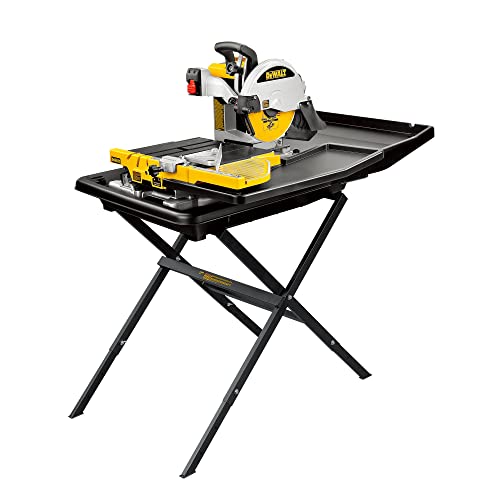
The DEWALT D24000S differs from the RUBI by including a stand and a 10-inch XP4 porcelain tile blade, along with a pump, water pan, trays, extension and guides. Its maximum rip capacity with plunge is 28 inches, and its diagonal capacity is 18 × 18 inches. The saw is 36 × 29 × 24 inches and weighs 69 pounds according to its features. A cutline indicator and stainless steel rollers are specified for accuracy within 1/32 inch over 18-inch cuts. Its shorter rip and diagonal reach make it a less suitable match for buyers who need the RUBI’s 48-inch straight-cut length.
Bottom line: Pick it when the included stand and accessories fit your setup.
RUBI DCX-250 Xpert

The RUBI DCX-250 Xpert stands out for its 52 3/8-inch diagonal cutting length, compared with the DC-250 Python’s 33 inches. It also has a 49 1/4-inch straight cutting length and runs at 3,350 RPM on 120 V, 60 Hz power. The specified miter thickness cut is 1 inch, less than the DC-250 Python’s 2 1/8 inches. Its reinforced aluminum chassis uses a triple-beam system and steel sides; the saw also includes transport wheels and a handle. Choose it for diagonal reach, but compare the miter thickness requirement with your tile before deciding.
Bottom line: Choose it when diagonal capacity matters more than miter thickness.
EliteEdge 7-Inch Wet Tile Saw

The EliteEdge is the smaller, DIY-oriented option in this group, with a 7-inch saw and a 3450 RPM induction motor. It supports bevel cuts from 0 to 45 degrees and has a maximum cutting depth of 1.34 inches. A water reservoir is intended to dampen dust and debris, and the saw includes a reset safety switch. The maker does not provide a straight or diagonal cut length, so buyers planning long-format tile cuts should verify that capacity before choosing it. Its 48-inch size is not a confirmed cutting-length figure.
Bottom line: Consider it for DIY bevel work after confirming the cut length you need.
DEWALT D36000 High-Capacity Wet Tile Saw

The DEWALT D36000 is the high-capacity choice for ripping large tile: its rip capacity is 37 inches, increasing to 41 inches with plunge, and it has 18 inches of cutting clearance left of the blade. The maker says it can rip 36 × 36-inch tile in half and crosscut 8 1/2 inches. A cutline indicator, rigid frame and stainless steel rollers are specified for accuracy within 1/32 inch over 30-inch cuts. At 91 pounds, it is heavier than the D24000S. Its capacities suit large-format work, but its weight matters if frequent carrying is part of the job.
Bottom line: Choose it for large tile rips when its 91-pound weight is workable.
How to choose a wet tile saw by cut capacity
Choose a wet tile saw by comparing the longest straight cut, diagonal cut, and depth your tile requires with the saw’s matching capacity. A 48-inch straight capacity does not guarantee a 48-inch diagonal cut; compare each cut direction separately. For tile wider than 36 inches, prioritize a rip capacity that exceeds the tile dimension, and account for plunge capacity only when the planned cut uses a plunge. Keep a small margin rather than relying on a saw’s maximum for every cut. A wet saw feeds water to the blade, which cools the cutting area and helps suppress airborne dust. Use a blade intended for the tile material, and let the saw’s depth and angle limits determine whether a cut is feasible.
| Cutting need | Capacity to compare | Relevant model |
|---|---|---|
| Long straight cut | 48 inches | RUBI DC-250 Python |
| Wide diagonal cut | 52 3/8 inches | RUBI DCX-250 Xpert |
| 36-inch tile rip | 37 inches, or 41 inches with plunge | DEWALT D36000 High-Capacity Wet Tile Saw |
Wet tile saw cut length and tile fit
Measure the tile and mark the intended cut before selecting a saw; capacity is meaningful only when it matches the direction and type of cut. A 36-inch tile rip calls for at least 36 inches of rip capacity, while a diagonal cut needs a separate diagonal-capacity figure. For cuts near a saw’s limit, allow room to position and guide the tile rather than assuming the maximum leaves no handling constraints. Tile thickness matters too: compare it with cutting depth or miter thickness, since those are different measurements. The DC-250 Python lists a 2 1/8-inch miter thickness cut, while the DCX-250 Xpert lists 1 inch. Confirm the required cut dimension before ordering if the saw’s capacity figure does not match your planned cut.
Water, dust control, and wet saw safety
Wet cutting uses water at the blade to cool the cut and reduce dust, but it does not eliminate the need for safe setup. Place the saw on a stable, level surface, keep electrical connections and plugs dry, and use a GFCI-protected outlet around water. Wear eye and hearing protection; tile fragments can chip, and powered saws are loud. Do not force tile through the blade, since pressure can bind the blade or damage the tile. Keep hands out of the blade path and wait for the blade to stop before handling offcuts. Water management differs by design: some saws use a reservoir or pan, while included trays and pumps can collect or circulate water. Check the actual setup and replenish water as needed during cutting.
Wet saw blade and cut planning
A diamond blade’s suitability depends on the tile material and cut, so check that the blade is intended for the tile rather than relying on diameter alone. Porcelain is dense and can be prone to edge chipping; a steady feed and supported tile help keep the cut controlled. Make a test cut on a scrap piece when edge appearance is important, and avoid pushing the tile faster than the saw can cut cleanly. Bevel and miter capability are not interchangeable with straight capacity: the EliteEdge supports 0-to-45-degree bevel cuts, while the RUBI models give specified miter thickness figures. Plan the cut line, angle, and depth first, then verify that each required dimension falls within the relevant saw specification.
Frequently Asked Questions
What size wet tile saw do I need for 24-inch tiles?
For a 24-inch straight rip, choose a saw with at least 24 inches of rip capacity; for diagonal work, check the separate diagonal capacity. Keep extra room for positioning the tile, especially when the cut approaches the saw’s maximum.
Does a wet tile saw eliminate silica dust?
No, water helps suppress dust but does not make cutting dust-free. Keep water flowing at the cutting area and use appropriate respiratory protection and ventilation for the material and work conditions.
Can I cut porcelain with a wet tile saw?
Yes, provided the blade is intended for porcelain and the saw’s depth and capacity match the cut. Feed the tile steadily and support it to reduce chipping.
What electrical outlet should I use with a wet tile saw?
Use a GFCI-protected outlet where water is present, and keep plugs and connections dry. Stop work if water reaches an electrical connection.
How much cutting capacity do I need for a diagonal tile cut?
Compare the tile’s diagonal dimension with the saw’s diagonal capacity, not its straight rip capacity. For a 36-inch square tile, the corner-to-corner diagonal is about 51 inches, so a saw needs diagonal reach around that size for a full corner-to-corner cut.