
Silicone Eyeglass Nose Pads: 3 Styles Compared

For most plastic-frame glasses, Bloom&Bloom Clear Teardrop Pads is the most direct choice because its clear adhesive pads are 1 mm thin and shaped for the nose bridge. Choose a screw-in style instead if your frames have mounted pads; grip material, pad profile, and available bridge space also affect fit.
We earn a commission if you buy through links on this page. As an Amazon Associate I earn from qualifying purchases. Products are compared on manufacturer specifications, not hands-on testing.
- Best overall: Bloom&Bloom Clear Teardrop Pads – Clear 1 mm adhesive pads with a teardrop shape for plastic frames and sunglasses.
- Best for more replacements: 20-Pair Adhesive Silicone Pads – The pack contains 20 pairs of transparent adhesive pads.
| Product | Best for | Thickness | Pack size | Shop |
|---|---|---|---|---|
| Bloom&Bloom Clear Teardrop Pads | Slim adhesive fit | 1 mm | 6 pairs | Check Price on Amazon |
| 20-Pair Adhesive Silicone Pads | Bulk replacements | — | 20 pairs | Check Price on Amazon |
| Clear 1 mm Adhesive Pads, 20-Pack | Thin daily cushioning | 1 mm | 20-pack | Check Price on Amazon |
Silicone Eyeglass Nose Pads
Compare adhesive and screw-in options by how they attach, their profile, and the number of pairs in each set.
Bloom&Bloom Clear Teardrop Pads

Bloom&Bloom Clear Teardrop Pads is the slim adhesive option here, with clear 1 mm silicone pads and a teardrop shape. The maker says its upgraded adhesive lasts up to three times longer than ordinary nose pads and peels away without residue or frame damage. This style suits plastic frames and sunglasses when you want cushioning without a thick profile. The pack has six pairs, so buyers who want a larger supply may prefer a higher-count set; confirm the pad shape fits the contact area on your frame.
Bottom line: Choose this if a clear, slim teardrop pad matters more than a large pack.
20-Pair Adhesive Silicone Pads
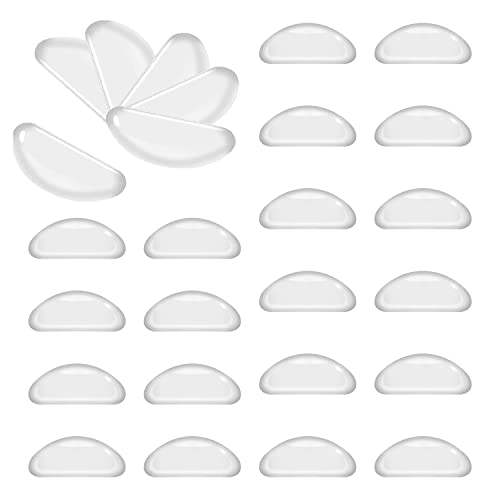
20-Pair Adhesive Silicone Pads stands out for its 20-pair supply and larger 1.9 × 0.8 cm pad size. The transparent, self-adhesive pads are intended for eyeglass frames, including plastic optical frames and sunglasses, and are meant to cushion the nose bridge. Before applying them, clean the frame contact area with rubbing alcohol and let it dry fully; oil or moisture can weaken adhesive contact. Their relatively long 1.9 cm dimension may be a drawback on compact bridges, so compare the pad footprint with the available space first.
Bottom line: Pick this if you want many adhesive replacements and have room for its 1.9 cm length.
Clear 1 mm Adhesive Pads, 20-Pack

Clear 1 mm Adhesive Pads, 20-Pack combines a 1 mm silicone profile with a 20-pack format, unlike the screw-in replacement set. Its clear stick-on pads are described for many plastic frames, sunglasses, safety glasses, and everyday eyewear. The maker notes that grip depends on frame fit, skin oils, and activity, so these pads are better viewed as cushioning and added friction than a guaranteed fix for sliding glasses. Check the bridge shape and available surface area before ordering, particularly for smaller frames; the pack count does not specify the number of pairs.
Bottom line: Pick this for thin adhesive cushioning across compatible plastic-frame eyewear.
How to choose silicone eyeglass nose pads
Start with the frame attachment: smooth plastic bridges generally need stick-on pads, while a metal frame with pad arms needs pads that match its screw or push-in mount. For an adhesive style, compare the pad footprint with the flat area on the bridge; a pad that overhangs can catch during wear. Thickness is another fit variable: thin pads add less lift, while thicker pads can change how high frames sit. Choose by attachment first, then by footprint and profile, not pack count alone. Skin oil and moisture can weaken adhesive contact, so clean and dry the frame before applying a stick-on pad.
Adhesive versus screw-in nose pads
Adhesive pads stick directly to a compatible frame surface, while screw-in pads attach to a separate mount on the frame. The mount determines the type: do not try to use a screw-in replacement on a smooth plastic bridge. Typical screw-mounted replacement pads use a small screw and require the hole and pad shape to line up; a micro screwdriver helps with the small hardware. Adhesive pads are simpler to attach, but surface preparation and the amount of flat frame area matter. The table separates the choices by mount and the situations they suit.
| Pad style | Frame feature | Best fit condition |
|---|---|---|
| Adhesive | Flat plastic contact area | Enough space for pad footprint |
| Screw-in | Existing screw mount | Hole and pad mount align |
How pad size and thickness affect fit
Pad dimensions affect both coverage and frame position. Measure the usable bridge surface in millimeters and compare both pad length and width; the longer dimension can overrun a small contact patch even when the width appears suitable. A 1 mm pad adds less height than a thicker cushion, while a 0.6 mm profile is particularly low. If glasses already sit too high or low, adding thickness can alter lens position, so prioritize a close match rather than stacking pads. For a smaller bridge area, avoid pads whose footprint exceeds the flat contact zone.
Applying and replacing adhesive pads
Clean the frame’s pad area with rubbing alcohol, then let it dry completely before pressing on an adhesive pad. Oils, lotion, dust, and residual moisture interfere with adhesion, and pressing a pad onto a damp surface can cause early lifting. Align the pad carefully before contact; repositioning can reduce adhesive hold. Replace a pad if an edge lifts, dirt collects underneath, or the surface no longer stays in place during ordinary wear. Keep adhesive pads away from children and pets because small parts can pose a choking hazard.
Frequently Asked Questions
How do I keep adhesive nose pads from peeling off?
Clean the frame contact area with rubbing alcohol and let it dry completely before applying the pad. Skin oils, dust, and moisture can interfere with adhesion, so avoid touching the adhesive surface.
Can adhesive nose pads go on metal glasses?
Adhesive pads can attach only where the frame has a suitable flat contact area. Metal frames with separate nose-pad arms typically use mounted replacements, so match the existing mount rather than covering it with an adhesive pad.
How thick should eyeglass nose pads be?
A 0.6 mm or 1 mm pad adds a low profile, with 0.6 mm adding less lift. If your glasses already sit at the right height, choose the thinner profile that covers the contact area.
How can I tell whether glasses need screw-in pads?
Look for a separate pad attached to a small arm with a screw or screw hole. A smooth molded plastic bridge has no screw mount and generally needs a compatible adhesive option instead.
Why do glasses still slide after adding nose pads?
Oil, sweat, activity, and frame fit can all affect grip, and nose pads cannot correct every loose frame. If sliding continues after cleaning, check whether the frame needs adjustment or a pad with a better-matched footprint.