
Silicone Lubricant for Windows: 3 Options Compared

DuPont Silicone Lubricant, 10 oz is the best fit for most window jobs because its silicone spray is specifically intended to reduce squeaking and binding in windows. Choose KEZE Silicone Grease with PTFE, 1 oz or AGS SIL-Glyde, 8 oz instead when you need grease applied directly to a track, channel, or weatherstrip.
Silicone lubricants reduce friction on compatible rubber, plastic, and metal parts; sprays spread quickly, while grease can be placed more precisely.
We earn a commission if you buy through links on this page. As an Amazon Associate I earn from qualifying purchases. Products are compared on manufacturer specifications, not hands-on testing.
- Best overall: DuPont Silicone Lubricant, 10 oz – Its aerosol format and stated use on windows suit broad, quick application.
- Best for sliding tracks: KEZE Silicone Grease with PTFE, 1 oz – The PTFE silicone grease is intended for sliding-door window tracks and can be applied from a tube.
- Best for weatherstripping: AGS SIL-Glyde, 8 oz – The silicone compound is specifically intended for weatherstrip and window channels.
| Product | Best for | Form | Size | Window applications | Shop |
|---|---|---|---|---|---|
| DuPont Silicone Lubricant, 10 oz | General window use | Aerosol spray | 10 oz | Windows, hinges, locks | Check Price on Amazon |
| KEZE Silicone Grease with PTFE, 1 oz | Sliding window tracks | Tube grease | 1 oz | Sliding-door window tracks | Check Price on Amazon |
| AGS SIL-Glyde, 8 oz | Seals and channels | Tube compound | 8 oz | Weatherstrip, sunroof, window channels | Check Price on Amazon |
Silicone Lubricants for Windows
Choose an aerosol for broad coverage or a tube compound when you want to target a channel or seal.
DuPont Silicone Lubricant, 10 oz
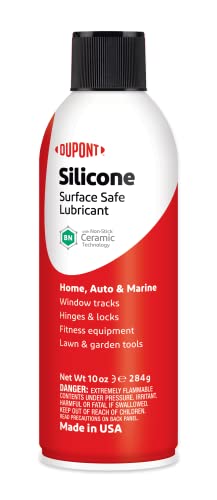
For a window lubricant in spray form, this DuPont aerosol is the most direct match: its uses include eliminating squeaks and binding in windows, hinges, and locks. It is intended for rubber, plastic, vinyl, leather, metal, and wood, making it a versatile option across mixed-material window hardware. The can holds 10 ounces. Choose it when you want to cover more than one part or surface in a pass; a spray is less precise than grease from a tube, so protect nearby glass and trim from overspray.
Bottom line: Pick this for broad window and hardware lubrication across compatible materials.
KEZE Silicone Grease with PTFE, 1 oz

For targeted track work, this KEZE tube contains silicone grease with PTFE and names sliding-door window tracks among its intended uses. Its grease format is suited to placing lubricant along a narrow contact area rather than spraying a wider zone. The product also names plastic, rubber, vinyl, and metal among compatible materials, and its operating-temperature range is -40°F to 428°F. The 1-ounce tube is smaller than the aerosol choices, so it suits spot application better than jobs that call for coating several large areas.
Bottom line: Choose this for precise lubrication on a sliding window track.
AGS SIL-Glyde, 8 oz

For window channels and weatherstripping, AGS SIL-Glyde is the most specifically targeted compound in this group. The silicone grease is intended for rubber, plastic, metal, wood, and glass, and its product features say it will not swell or stain rubber. It comes in an 8-ounce tube, giving you more compound than the 1-ounce track grease while retaining a controlled application format. Choose it for seals and channels rather than broad spray coverage; buyers who need an aerosol for reaching several separate mechanisms may prefer a spray.
Bottom line: Pick this for weatherstripping, sunroof seals, and window channels.
How to choose silicone lubricant for windows
Match the application format to the part: aerosol spray covers wider areas, while tube grease lets you place a small amount along a track or seal. Window assemblies may combine glass, rubber weatherstripping, plastic guides, and metal hardware, so check the lubricant’s material compatibility before applying it. With a narrow channel or a seal you can reach by hand, choose a tube; for several exposed hinges or mechanisms, a spray is more convenient. Apply a thin film, move the window through its travel, then wipe away visible excess. Avoid coating the glass, where lubricant can leave a smear, and keep spray away from surfaces that need traction.
Window tracks, channels, and weatherstripping
Identify the contact surface before lubricating: a sliding track, a rubber seal, and a hinge need different application precision. Sliding windows often use guides or channels that collect grit, so clean loose dirt first rather than trapping it under fresh lubricant. Weatherstripping is flexible rubber or foam that seals the gap around a closed window; use only a product compatible with that material. A tube compound is easier to direct onto a narrow channel or seal than an aerosol. If the window binds after cleaning and lubrication, check for a misaligned sash or damaged guide instead of adding more lubricant, since lubricant cannot correct a mechanical fit problem.
Use this format guide to narrow the choice:
| Window task | Useful format | Reason |
|---|---|---|
| Several exposed mechanisms | Aerosol spray | Broader coverage |
| Narrow sliding track | Tube grease | More precise placement |
| Rubber weatherstrip or channel | Tube compound | Controlled application on seals |
Applying lubricant without making a mess
Clean first, apply sparingly, and cycle the window to spread lubricant across the moving contact surfaces. Dirt in a track increases friction, so wipe out visible grit with a dry cloth before applying any product. For aerosol use, spray a small amount onto a cloth or applicator when the target is close to glass, paint, or upholstery; this reduces overspray. For tube grease, use a thin bead rather than filling the channel. Wipe excess from the frame and glass, and keep aerosol use away from flames or sparks in a ventilated area. If binding remains, inspect the track and window alignment rather than repeatedly adding lubricant.
Frequently Asked Questions
Can silicone lubricant be used on rubber window seals?
Yes, when the product is intended for rubber; silicone lubricants are commonly used on compatible rubber seals. Apply a thin film and wipe off excess so the seal does not leave residue on nearby glass.
Should I use spray or grease on a sliding window track?
Use a tube grease when the track is narrow or you need precise placement; use spray for broader, accessible mechanisms. Clean out grit first because lubricant does not remove debris.
How much lubricant should I put on a window track?
Start with a thin film along the contact area, then move the window through its travel to distribute it. Add only where friction remains after wiping away dirt and excess.
Why does my window still stick after lubrication?
A window can remain stuck if its track contains grit or the sash or guide is misaligned. Clean the track and inspect the moving parts; adding more lubricant will not fix a damaged or poorly aligned guide.
How do I keep silicone spray off window glass?
Shield the glass and aim the spray closely at the moving part, or apply lubricant to a cloth first. Wipe any overspray from glass promptly to avoid a smeared view.